




Indian Gaur Majesty
The Indian Gaur, often referred to as the Indian bison, stands as the planet's largest wild bovine and is sadly categorized as vulnerable. These imposing
yet remarkably shy creatures are a common sight in the Nilgiris, often observed peacefully grazing in open forest clearings and sprawling grasslands. Their presence is a testament to the health of the region's natural habitats, and spotting one of these gentle giants requires a keen eye and a respectful approach. Their sheer size is awe-inspiring, and their role in the grassland ecosystem is significant, as they help shape the vegetation through their feeding habits. Observing them in their natural environment is a truly unforgettable experience, highlighting the wild beauty of the Western Ghats.
The Elusive Pangolin
The Indian Pangolin, a creature sadly renowned for being one of the most trafficked mammals globally, presents a considerable challenge to spot. This is primarily due to its strictly nocturnal lifestyle and inherently solitary nature, which keep it hidden from casual observers. Its most distinctive feature is its body, completely covered in protective keratin scales, offering a unique defense mechanism. As an insectivore, the pangolin plays a vital role in controlling insect populations within its habitat. However, its survival is gravely threatened by the persistent illegal wildlife trade, pushing conservationists to intensify efforts to safeguard this peculiar and vulnerable species from extinction. Its scaled armor is a marvel of evolution, but not enough to deter human exploitation.
Lion-Tailed Macaque
Instantly recognizable by its striking silver-white mane that frames an expressive face, the Lion-Tailed Macaque is a primate that thrives within the dense rainforest canopy. These intelligent and social animals are critically dependent on undisturbed, ancient forests for their survival. Unfortunately, their numbers continue to dwindle as their natural habitat fragments due to human encroachment and development. This habitat loss poses the most significant threat to their long-term existence. Conservation efforts focusing on preserving these vital forest pockets are paramount to ensuring the future of this distinctive primate, a true symbol of the Western Ghats' rainforests. Their arboreal lifestyle makes them masters of their environment, but a vulnerable one.
Nilgiri Laughingthrush
The Nilgiri Laughingthrush, also affectionately known as the Nilgiri Sholakili, is an endangered avian species found exclusively within the unique shola forests of the Western Ghats. This specialized habitat, characterized by its dense evergreen forest patches interspersed with grasslands, is crucial for the bird's survival. Its extremely restricted geographic range, coupled with the ongoing pressures of habitat degradation and loss, makes conservation initiatives within the Nilgiris absolutely critical. Protecting these specific forest pockets is not just about saving a bird; it's about preserving an entire unique ecosystem. The bird’s distinctive call is a characteristic sound of these high-altitude forests, adding to their mystique.
Nilgiri Marten's Domain
The Nilgiri Marten holds the distinction of being India's sole marten species, an elusive and exceptionally rare carnivore that is seldom sighted. This creature prefers the deep, dense confines of evergreen forests, where it navigates with agility and stealth. As a predator, it plays a crucial role in maintaining the delicate ecological balance of its forest home, helping to regulate populations of smaller animals. Its secretive nature and preference for undisturbed environments make it a challenging subject for study, but its presence is a strong indicator of a healthy and thriving forest ecosystem. Protecting its habitat is key to its continued existence, ensuring this unique mammal remains a part of India's rich wildlife tapestry.
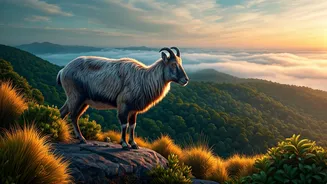
Nilgiri Tahr's Foothills
The Nilgiri Tahr is an endangered mountain ungulate that makes its home exclusively in the high-altitude grasslands of the Western Ghats, particularly in the Nilgiri region. Easily identified by its distinctively curved horns and an uncanny ability to traverse impossibly steep cliff faces with remarkable agility, it has become a flagship species for the entire Nilgiri landscape. These sure-footed herbivores rely on the specific flora found in these montane grasslands for sustenance. Their precarious existence highlights the importance of preserving these unique alpine meadows, which are under constant threat from habitat encroachment and climate change. The Tahr is a symbol of resilience and adaptation in a challenging environment.