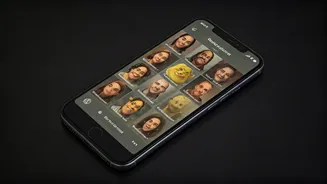




Understanding Shrekking
In the ever-evolving landscape of modern romance, a new term has surfaced among Gen Z: 'Shrekking.' This unconventional dating strategy involves intentionally
pursuing individuals perceived as less conventionally attractive, driven by the belief that they might offer greater loyalty and commitment. The underlying idea is to move away from fleeting connections with those who prioritize looks over substance. Instead, the focus shifts to qualities like consistent communication, reliability, and a desire for a genuine relationship, avoiding the often-frustrating cycle of 'situationships' or ghosting. It's a calculated pivot from chasing an idealized, yet often unreliable, image to valuing dependable character and emotional availability. This trend has largely taken root on platforms like TikTok, where personal anecdotes and discussions about dating disillusionment fuel its popularity. The metaphor of Shrek, the famously unconventional but devoted character, perfectly encapsulates this desire for a partner who might not win beauty contests but is steadfast in their affections and commitment, offering a refreshing contrast to the often-superficial nature of swipe-based dating cultures.
TikTok's Role
The phenomenon of 'Shrekking' has found a powerful amplifier in TikTok, where short-form videos and candid personal narratives allow users to share their dating experiences and insights. Many viral videos have depicted scenarios where individuals opt for partners who are not conventionally striking, with the explicit goal of securing more attentive and reliable treatment. The comment sections of these videos often transform into spaces for collective catharsis, as users share stories of past relationships that crumbled despite initial physical attraction, contrasting them with experiences of being consistently valued and prioritized by partners who might not fit traditional beauty standards. This widespread sharing has cemented the association of 'Shrekking' with the enduring loyalty of characters like Shrek and Fiona from the beloved animated film, who, despite their unusual appearances, share a deep and committed bond. Gen Z, having navigated a dating environment saturated with terms like 'the ick,' 'beige flags,' and 'monkey-barring,' is actively seeking alternatives to the perceived unreliability of partners who excel in superficial charm but lack emotional depth. 'Shrekking' represents a conscious effort to challenge the prevailing narrative that equates attractiveness with dating success, instead championing the 'will they show up?' quotient over mere aesthetic appeal.
The Psychological Underpinnings
While 'Shrekking' may appear as a savvy dating tactic, its roots can often be traced to deeper psychological factors, including past hurts and insecurities. For some, the choice to date someone perceived as 'below league' can be a form of defensive dating, an attempt to preemptively protect oneself from the pain of rejection or betrayal. This often stems from a subconscious belief that by lowering expectations in terms of physical attraction, one can secure a partner who is less likely to stray or cause heartbreak. However, this strategy carries its own set of risks. The notion of 'dating down' can ironically lead to resentment if genuine attraction never develops, leaving individuals feeling trapped in a relationship devoid of passion. Furthermore, the practice of categorizing potential partners into 'leagues' can be dehumanizing, reducing individuals to a set of perceived attributes rather than recognizing their multifaceted worth. For women, in particular, who often face societal pressures to 'lower their expectations' in dating, this trend can perpetuate unhealthy patterns, leading to a cycle of seeking safety at the expense of fulfilling romantic needs. The ironic outcome is that the 'safe' choice might still lead to significant emotional distress, a phenomenon some have termed 'getting Shrekked.'
Advantages and Drawbacks
'Shrekking' presents a unique set of potential benefits and significant drawbacks that warrant careful consideration. On the positive side, this approach champions a shift towards valuing a person's character, loyalty, and overall personality over superficial physical attributes. It actively rejects the often-toxic notion that relationships characterized by initial intense attraction are inherently more fulfilling, and instead promotes a narrative of commitment akin to the devoted partnership seen between Shrek and Fiona. This can foster more authentic conversations about the realities of modern relationships. However, the disadvantages are substantial. The practice is frequently rooted in personal insecurity or unresolved past trauma, leading individuals to make choices based on fear rather than genuine desire. A significant risk lies in the potential for resentment to build if there is a lack of authentic spark or attraction, which can lead to dissatisfaction and emotional distance. Moreover, the concept inherently dehumanizes individuals by assigning them to arbitrary 'leagues,' reducing complex human beings to a simplistic ranking system. This can inadvertently lead to greater heartbreak when the perceived 'safe' option fails to meet emotional needs or when underlying insecurities lead to the relationship's demise, thus backfiring on the initial intention of finding stability.
Beyond Shrekking: Real Connection
The emergence of 'Shrekking' signals a broader exhaustion with the current state of online dating, where apps often feel like gamified marketplaces that reduce individuals to quantifiable metrics like looks, age, and income, reflecting underlying societal biases. While superficial attraction can initially draw people together, it's the depth of connection and shared values that sustain a relationship. True intimacy isn't about a calculated strategy; it's about navigating the complexities of human interaction and forging genuine bonds. The path to healthier relationships isn't found in 'Shrekking' but in self-healing and introspection. This involves addressing defense mechanisms, understanding personal patterns, and potentially seeking professional guidance. Taking breaks from dating, reflecting on what one truly desires in a partner, and prioritizing self-love are crucial steps. While the frustrations of modern dating, such as ghosting, are valid, building one's self-esteem by devaluing others is ultimately counterproductive. Gen Z's renegotiation of love is moving towards substance and away from superficial pursuits. If 'Shrekking' serves as a catalyst for this realization, encouraging a focus on genuine connection, that's positive. However, the ultimate goal should be building relationships from a place of self-assurance, not fear or insecurity, by seeking partners who resonate with one's soul, not just offer a perceived sense of safety.