






The Crucial Missing Piece
For years, the quest to bioengineer hair follicles in a lab hit a significant roadblock. Previous attempts, primarily using epithelial stem cells and dermal
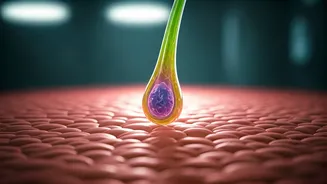
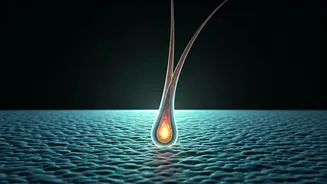
papilla cells, could create follicle 'seeds' but failed to induce actual growth or proper tissue integration. These engineered structures would only develop when surgically implanted into a living host. The breakthrough came when researchers identified a vital third component: accessory mesenchymal cells. These cells act as a microscopic support structure, providing essential scaffolding. By introducing these helper cells early in the follicle's development, the researchers found that they enveloped the follicle's bulge and dermal sheath, offering the necessary physical foundation. This inclusion proved to be the 'missing piece' that enabled the follicles to mature, grow continuously, and connect with surrounding tissues entirely within the lab environment, a feat previously thought impossible without a host organism.
From Mice to Humans
While the recent advancements have generated considerable excitement, it's important to temper expectations regarding immediate human application. The groundbreaking study, detailed in Biochemical and Biophysical Research Communications, was conducted using mouse models. The biological complexities of humans differ significantly from those of mice, meaning a direct translation to a readily available cure for human baldness is still a distant prospect. The journey from a successful mouse trial to a safe, clinically approved treatment for people involves a protracted and rigorous process. This includes developing humanized models to mimic human responses and conducting extensive clinical trials to ensure both efficacy and safety, a path that typically takes many years to navigate successfully.
Beyond a Hair Cure
The implications of this bioengineered hair follicle technology extend far beyond simply addressing baldness. In the immediate future, these lab-grown follicles offer a powerful tool for scientific research. They can be used to test new hair-loss treatments and investigate the fundamental mechanisms of hair growth initiation and cessation, thereby reducing or eliminating the need for animal testing. Looking further ahead, companies like OrganTech, a sponsor of the study, envision a scaled-up application of this three-cell strategy to produce permanent, bioengineered hair transplants for individuals experiencing hair loss. More profoundly, the ability to precisely orchestrate different cell types to construct stable tissue like hair follicles could serve as a foundational blueprint for regenerating larger, more vital human organs. This breakthrough signifies a major step in regenerative medicine, laying the groundwork for future organ bioengineering.