



Millet's Grand Return
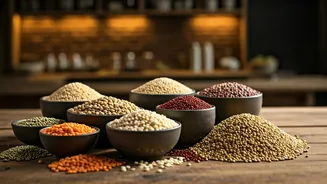
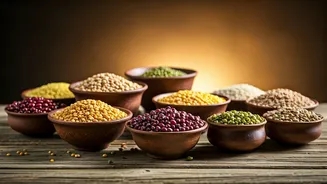
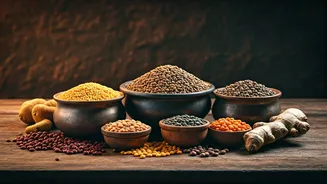
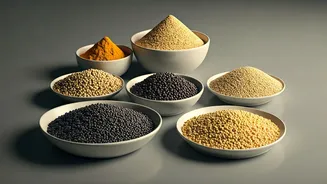
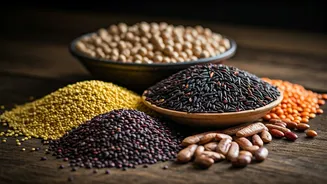
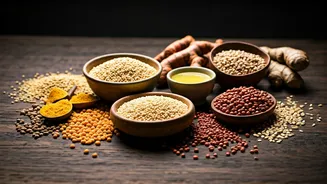
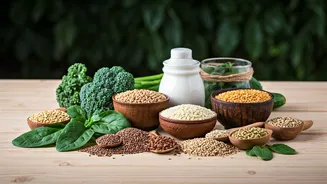
Long before the term 'supergrain' entered the lexicon, millets such as bajra, jowar, ragi, and foxtail millet were the backbone of Indian diets. These
humble grains were routinely transformed into nourishing rotis, wholesome porridges, and satisfying meals that provided sustained energy for demanding days. However, the rise of polished rice and refined flour led to their decline in popularity. Today, millets are experiencing a significant resurgence, lauded for their rich fiber content, essential minerals, and their gentle impact on blood sugar levels. This renewed appreciation reflects a deeper understanding, where what was once an instinctive dietary choice for older generations is now recognized by modern nutrition science as a smart, balanced food option, moving beyond a mere substitute to a celebrated staple.
Jaggery's Sweet Revival
Before the widespread availability of refined sugar, jaggery served as the primary sweetener in countless Indian households. It was a versatile ingredient, stirred into warm milk for comfort, melted into festive sweets, consumed after meals for digestive aid, or incorporated into warming winter dishes. Now, jaggery has been reinvented as a 'natural' sweetener, appealing to those seeking alternatives to processed sugars. Its appeal lies not only in its perceived health benefits but also in its complex, earthy flavor profile and deep cultural resonance. This return to jaggery highlights a growing desire for sweetness that feels more authentic and less manufactured, reconnecting consumers with a taste deeply rooted in tradition.
Curd: The Probiotic Staple
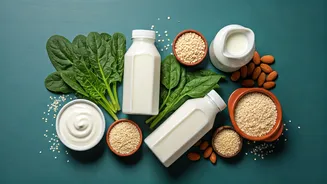
Curd, or dahi, was never considered a culinary trend in Indian kitchens; it was an indispensable daily component. Whether served alongside meals, blended into refreshing chaas (buttermilk), mixed with rice, or used to cool the body during sweltering heat, curd was a constant presence. Its inclusion was based on familiarity and efficacy, not fashion. Today, curd is being lauded as a powerhouse of probiotics, vital for gut health, boosting immunity, and aiding digestion. While the scientific validation is more prominent now, the practice remains unchanged. For generations, curd has been the go-to remedy for an upset stomach, a heavy meal, or a hot afternoon, proving that some foods don't need reinvention, just acknowledgment of their inherent value.
Makhana: The Light Snack
For a considerable period, makhana (fox nuts) occupied a modest space in Indian culinary traditions, primarily consumed during fasting periods or lightly roasted with ghee and spices as a simple snack. It was more of a quiet pantry staple than a focal point. Children would often snack on it during afternoon tea, while elders recognized its lightness and ease of digestion. In recent years, makhana has undergone a remarkable transformation, now marketed as a premium, health-conscious snack. Packaged attractively and promoted for its high protein and low-fat content, it appeals to those seeking mindful eating options. This shift from a humble household item to a designer snack is striking, yet its enduring appeal as a versatile, easily adaptable, and genuinely light food explains its sustained popularity.
Ghee's Flavorful Comeback
Ghee, clarified butter, was once a foundational element in Indian cooking, generously used on rotis, rice, dals, and in preparing sweets without a second thought. However, it faced a period of scrutiny due to evolving dietary recommendations and was often viewed with suspicion. Now, ghee is making a strong comeback, embraced in moderation by individuals seeking enhanced flavor, satiety, and a connection to culinary heritage. For previous generations, ghee was never about indulgence but about sustenance, comfort, and providing essential nourishment. Its renewed popularity reflects a broader societal shift towards valuing foods that are not only beneficial for health but also offer emotional grounding and a sense of tradition.
Fermented Foods' Health Halo
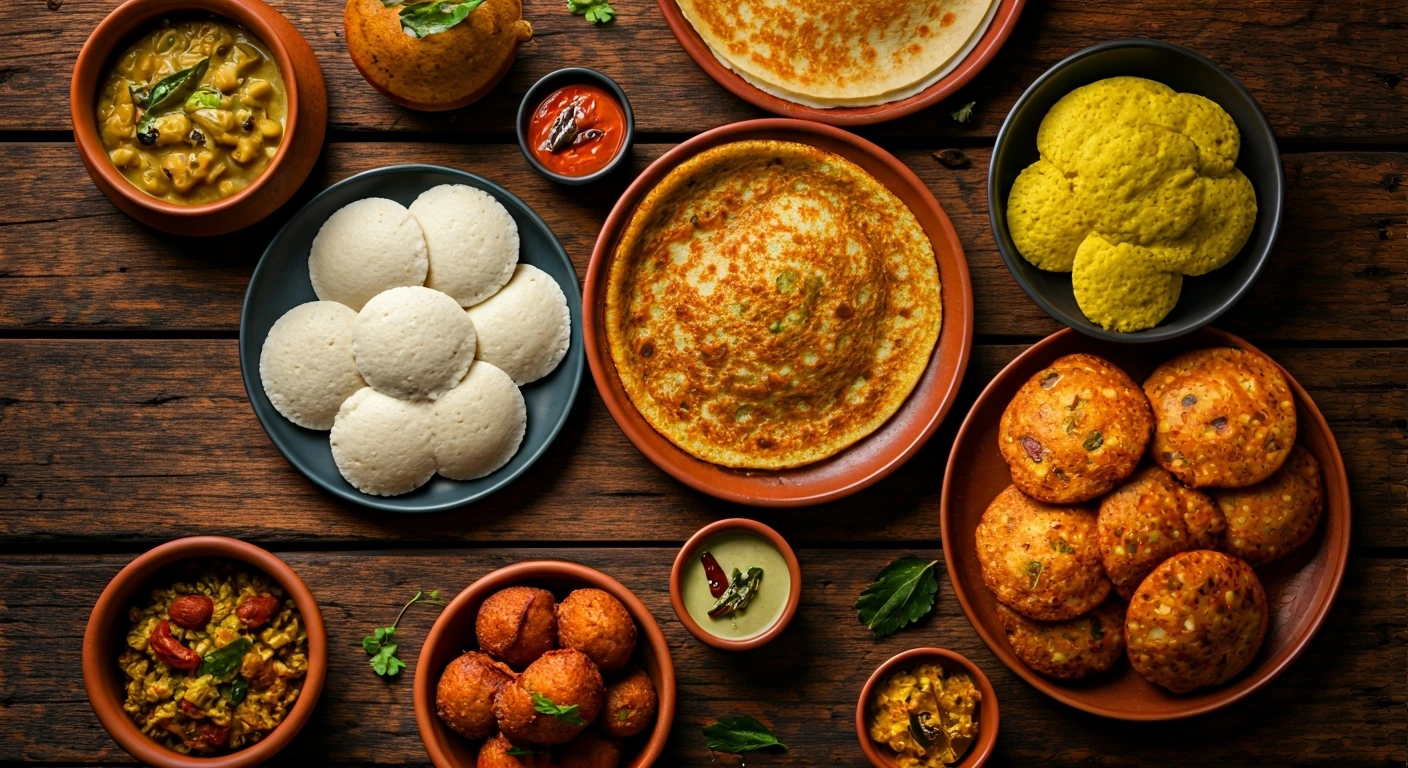
Long before the concept of the 'microbiome' gained traction, Indian kitchens were adept at fermenting foods like idlis, dosas, dhokla, kanji, and pickles. These preparations were rooted in practical, seasonal needs and generations of accumulated household knowledge, rather than being conceived as wellness products. Today, fermentation is a globally recognized food trend, celebrated for its positive impact on digestion and gut health. In India, however, this practice has always been an integral part of everyday cooking. What appears novel to many today is, in fact, an ancient tradition. This duality highlights the enduring charm of fermented foods, carrying both historical significance and scientific validation within each bite.
Chutneys and Spices: Flavorful Essentials
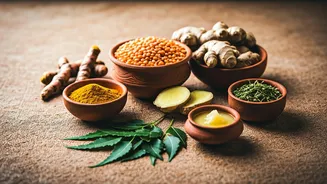
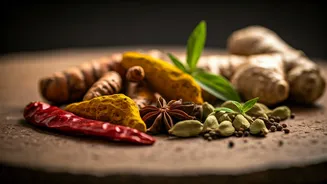
Indian grandparents never viewed chutneys as mere accompaniments; they were integral to the meal, adding essential zing, freshness, and depth. From coconut and peanut to mint and tomato, numerous regional variations enhanced the dining experience. Alongside chutneys, spices like ajwain, jeera, methi, turmeric, and black pepper were daily essentials, employed not for garnish but for their digestive and flavoring properties. Contemporary food culture is now rediscovering this age-old wisdom: that flavor and functional benefits can coexist harmoniously. The resurgence of chutneys and spices underscores how simple meals are elevated and how the most insightful culinary practices often originate from kitchens unconcerned with fleeting trends.