


A Textile's Distinctive Mark
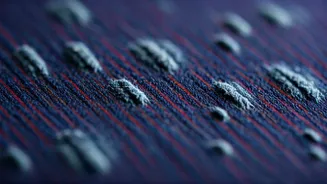
In the Surendranagar district of Gujarat lies a textile heritage known as Tangaliya, a craft instantly recognizable for its characteristic raised dots,
or 'daanas.' This technique is unique because these decorative elements are woven directly into the fabric as it is created, rather than being applied afterward. This integrated process results in a textile with a surface texture and structural integrity that sets it apart from other decorated fabrics. The patterns of these dots emerge organically as the cloth is woven, each motif growing steadily from the loom, a testament to the weaver's skill and precision. This method is fundamentally different from techniques where patterns are printed or embroidered onto a finished cloth, embedding the art directly into the very structure of the textile itself, making it a structural marvel as much as a visual one.
Roots in Pastoral Life
The Tangaliya craft is deeply intertwined with the Dangasia community of the Saurashtra region, with its origins tracing back centuries in the villages around Surendranagar. Initially, these textiles were primarily fashioned for the Bharwad pastoral community, serving as essential garments worn around the lower body. The very name 'Tangaliya' is believed to be derived from this traditional usage. Over generations, the scope of this craft expanded significantly. What began as everyday apparel for shepherds gradually evolved to include an array of items such as shawls, wraps, stoles, and lengths of fabric that now reach markets far beyond their native Gujarat, showcasing the adaptability and enduring appeal of this artisanal practice.
The Loom's Intricate Dance
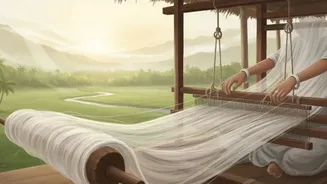
At the heart of Tangaliya production lies a weaving process that demands exceptional precision and a rhythmic cadence. These textiles are meticulously crafted on traditional pit looms, often situated within the weavers' homes. The loom's design, set slightly below ground level, allows the weaver to operate the foot pedals efficiently, maintaining consistent tension across the warp threads. The initial stage involves the careful arrangement of yarn, a process known as warping and setting the 'paana,' which dictates the loom's structure, width, and the layout of the fabric. This preparatory phase can be quite time-consuming, often taking many hours, as the accuracy of the subsequent patterns depends entirely on the precise placement of each thread before the weaving commences, underscoring the importance of meticulous preparation.
Crafting the Signature Dots
The hallmark of Tangaliya weaving is the creation of the distinctive raised dots, the 'danas.' During the process of weaving the base fabric, the artisan introduces an additional weft thread. Using only their fingers, this extra thread is skillfully twisted and looped around a small cluster of warp threads. Typically, four or five warp threads are selected for each dot, and the contrasting yarn is wrapped and then tightened to form a knot resembling a bead. This technique is repeated numerous times, often hundreds or even thousands of times across the entire cloth. The cumulative effect is the gradual formation of geometric designs that can evoke the appearance of constellations or tiny grains, a truly remarkable feat of handcraftsmanship.
Dual-Sided Beauty
A truly astonishing aspect of the Tangaliya technique is that these raised dots appear simultaneously on both sides of the fabric. This means the motif is not merely an applied decoration but is intrinsically embedded into the weave itself. Because the pattern emerges organically as the weaving progresses, the weaver must constantly engage in a mental calculation of placement, spacing, and thread tension. There are no mechanical aids or guides to direct the pattern; instead, the entire design exists within the weaver's memory and years of practiced experience, often passed down through generations within artisan families. This reliance on human skill and memory is central to the craft's authenticity and its enduring charm.
Evolving Threads and Textures
The materials used in Tangaliya weaving have seen a notable evolution over time. Initially, the craft relied almost exclusively on locally sourced wool, often from sheep herded in the very region. As trade routes expanded and market demands shifted, weavers began incorporating other fibers, including cotton, silk, and various blended yarns. Each type of fiber imparts a distinct character to the finished textile. Wool produces heavier, more robust shawls well-suited for the traditional needs of pastoral life. In contrast, cotton and silk lend themselves to lighter fabrics, making Tangaliya suitable for contemporary garments and fashion accessories, demonstrating the material versatility of this ancient technique.
Patterns of Everyday Life
Tangaliya patterns, while constructed from simple visual units like dots, are arranged with remarkable complexity and artistry. These dots are skillfully manipulated to form lines, intricate grids, or clustered motifs that often draw inspiration from the weaver's immediate surroundings and daily life. Some designs might subtly represent elements such as trees, birds, or agricultural crops, while others lean towards purely abstract geometric compositions. Specific pattern names like Ramraj, Dhusla, Lobdi, Gadia, and Charmalia are recognized within the craft tradition, each referring to distinct, developed motifs. Stylized representations of the peacock, mango tree, and date palm are frequently seen, all rendered through the precise placement of these iconic dots.
Structural Elegance
The inherent structure of Tangaliya fabric itself is a key characteristic. Typically, the material is woven in narrow lengths, which on a traditional pit loom can extend up to approximately twenty feet. Once these long lengths are completed and removed from the loom, they are often cut and skillfully joined together to achieve the desired width for garments, shawls, or other items. This method reflects not only the technical limitations of the loom design but also the historical practice of producing textiles within domestic settings rather than large-scale workshops, highlighting a practical approach to textile creation.
A Labour of Love
Creating a single Tangaliya piece is an intensely labor-intensive process, often requiring several weeks to complete, depending heavily on the intricacy and density of the pattern. The time dedicated to forming each individual dot, maintaining consistent thread tension, and weaving the base fabric makes this a demanding craft. Frequently, multiple family members contribute to different stages of production, from preparing and dyeing the yarn to assisting with the complex setup of the loom. In many artisan villages, the loom is a central feature of the living space, signifying that the craft is an integral part of daily life, rather than an isolated industrial pursuit, weaving community into its fabric.
Sustaining the Heritage
Master weavers play a vital role in preserving the intricate knowledge and techniques of Tangaliya. Artisans like Jaha Bhai exemplify the continuity of this practice across generations, their work a testament to the skill needed for pattern accuracy and speed, especially when meticulously twisting the extra weft threads. The craft has faced challenges from mass-produced textiles and faster manufacturing methods. However, recognition, such as the Geographical Indication (GI) tag awarded to Tangaliya shawls in 2009, has bolstered its identity within India's rich textile landscape and underscored the necessity of its preservation. Collaborations with organizations have also introduced Tangaliya to wider audiences, demonstrating how traditional crafts can adapt and thrive in contemporary markets while staying true to their hand-crafted origins.