






Navratri's Spiritual Dawn
Chaitra Navratri marks the beginning of the Hindu lunar year, offering a profound opportunity for spiritual renewal and a deep connection with divine feminine
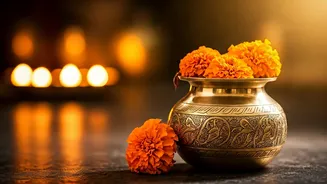
energy. This nine-day festival is a time to transition from the quiet discipline of Ghatasthapana, the ritualistic installation of the goddess, to the vibrant celebrations of Ram Navami, commemorating Lord Rama's birth. More than just a series of rituals, Navratri is a masterclass in accessing and harnessing one's inner Shakti, or power. The period is characterized by unique sensory experiences: the auspicious sound of the kalash being prepared, the fragrant scent of marigolds, and the communal enjoyment of traditional foods like Sabudana Khichdi. This spiritual reset button encourages mindfulness, whether one is observing strict fasts or simply aiming for a more conscious approach to daily life, making it a truly significant time for personal and collective rejuvenation.
Connecting Through Digital Wishes
In today's interconnected world, extending Chaitra Navratri greetings through digital platforms has become an integral part of the celebration. A simple WhatsApp message or an Instagram story transcends mere digital notifications; it becomes a tangible way to share blessings and connect with loved ones, bridging geographical distances. This practice acknowledges the evolution of traditions, allowing the sentiment of the festival to reach across screens and hearts. The curated collection of wishes, messages, and quotes serves as a valuable resource for individuals seeking to convey their heartfelt sentiments during this auspicious occasion. It transforms digital communication into an act of devotion, ensuring that the spirit of Navratri is shared widely and meaningfully, fostering a sense of community and shared spiritual experience even when physically apart.
The Human Heart of Navratri
Navratri resonates deeply through its sensory richness and the profound human connections it fosters. It's experienced in the gentle flicker of a diya illuminating a darkened room, the sweet satisfaction of creamy kheer after a day of fasting, and the heartwarming tradition of Kanya Pujan, where young girls, embodying the divine feminine, are honored. At its core, Navratri celebrates the nine distinct forms of Maa Durga, known as the Navadurgas. These aren't merely ancient archetypes but represent different stages and facets of human life and strength. From Shailputri, symbolizing the daughter, to Brahmacharini, the seeker, and Skandamata, the mother, these forms reflect the inherent power within each individual. Utilizing the provided messages and mantras isn't about superficial performance but about intentionality – choosing the right words, whether a passage from the Durga Chalisa for elders or an uplifting wish for friends, to convey care and include them in the spiritual celebration.
Blessings for 2026
As Chaitra Navratri 2026 approaches, a wealth of devotional blessings is available to imbue the nine days with divine grace and spiritual fulfillment. Each day is dedicated to a specific form of Maa Durga, offering unique energies and blessings. For instance, Day 1 honors Shailputri Maa, asking for the purification of hearts, while Day 2 invokes Brahmacharini's resolve through her austerities. Chandraghanta's victory over fears is celebrated on Day 3, and Kushmanda Maa ignites cosmic light on Day 4. The nurturing maternal love of Skandamata is present on Day 5, followed by devotion on Day 6. Katyayani Maa's power to destroy adharma is invoked on Day 7, and Mahagauri's purity on Day 8. Finally, Siddhidatri on Day 9 bestows divine blessings upon pure hearts. Beyond the daily invocations, wishes extend to the foundational ritual of Ghatasthapana, reminding us of Maa's omnipresence. Chants like 'Om Dum Durgayei Namah' amplify devotion, and the overarching theme is of new beginnings and the infinite mercy of the divine feminine, offering strength and peace for the year ahead.
Mantras for Divine Connection
Powerful mantras serve as conduits for divine intervention and protection throughout Chaitra Navratri. These sacred utterances are more than just words; they are vibrations that connect the chanter to the divine energy of Maa Durga. A foundational mantra for invoking protection is 'Om Dum Durgayei Namah.' For auspiciousness and the fulfillment of all desires, the powerful 'Sarva Mangala Mangalye Shive Sarvartha Sadhike...' mantra is often recited. During Ashtami, a particularly potent mantra is 'Om Aim Hreem Kleem Chamundayei Vichche,' believed to invoke the fierce yet benevolent form of the goddess. Each day of Navratri also has specific mantras dedicated to the presiding deity, such as 'Om Shailputriyai Namah' for Day 1, 'Om Brahmacharinyai Swaha' for cultivating endurance on Day 2, and 'Om Chandraghantayai Phat' to bolster courage on Day 3. Further mantras include 'Om Kushmandayai Namah' for cosmic energy on Day 4, 'Om Skandamatayai Swaha' for motherly mercy on Day 5, 'Om Katyayanyai Namah' to remove obstacles on Day 6, and 'Om Mahagauriyai Namah' for purity on Day 8, culminating in 'Om Siddhidatryai Namah' for blessings on Day 9. These chants provide a direct pathway to experience Maa's grace.
Timeless Wisdom and Quotes
The spiritual journey of Chaitra Navratri is enriched by timeless wisdom encapsulated in profound quotes drawn from scriptures and the teachings of saints. These words offer guidance, encouragement, and deeper understanding of the festival's essence. The powerful affirmation 'Jai Mata Di,' signifying victory in the name of the Mother Goddess, resonates deeply, echoing the sentiment from the Durga Chalisa that fear vanishes in her name. The Devi Mahatmya reminds us that 'Devi resides in pure hearts,' emphasizing the importance of inner purity. From the Ramcharitmanas comes the profound truth that 'Shakti wins over shakti-less,' highlighting the triumph of divine power. Traditional verses speak of 'Nine days, eternal grace,' and praises of Siddhidatri note that 'Maa's glance bestows siddhi.' The act of fasting is elevated by the sentiment, 'Fast with faith, feast on mercy,' and Navratri is described as 'From tamas to satva—Navratri's gift,' signifying a transformation towards goodness. Chants like 'Om Shaktiye Namah' praise the primal force, and the Devi Bhagavata encourages worship for conquering all. Ultimately, these quotes guide us towards surrender, inner awakening, and the eternal victory of righteousness.