
Shifting Wedding Styles
The era of mandated matching wedding attire, where couples felt compelled to wear identical colors or patterns, is gradually fading. For a long time, the
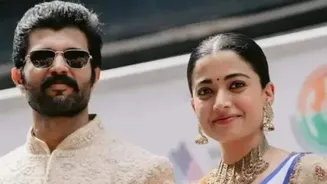
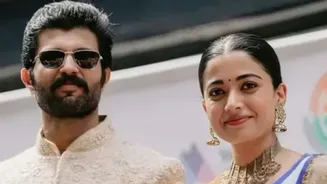
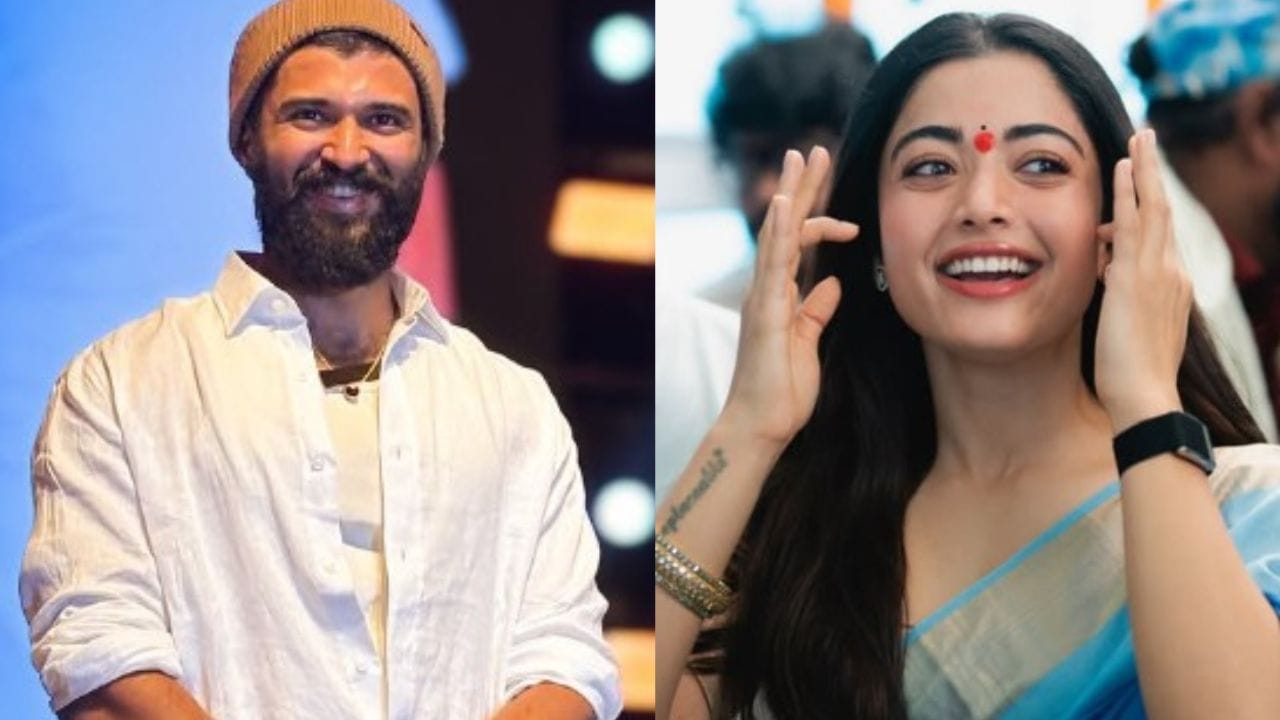
expectation at high-profile weddings was complete sartorial synchronicity, often leading to couples appearing as if they were dressed in a unified 'uniform.' This approach, while ensuring visually cohesive photographs, could sometimes overshadow the couple's personal style and felt less like a deliberate choice and more like an obligation. Thankfully, the wedding fashion landscape is evolving, allowing partners to express their distinct personalities while still appearing as a harmonious unit, a sentiment beautifully exemplified by the wedding looks of Vijay Deverakonda and Rashmika Mandanna. Their styling demonstrates that true unity doesn't require a literal color match, paving the way for a more nuanced and personal approach to bridal fashion.
Achieving Asymmetrical Unity
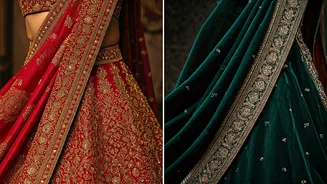
To master the art of asymmetrical wedding coordination, couples can adopt a few key strategies. One effective method is the 'Anchor and Accent' technique, where one partner wears a vibrant, dominant color, while the other builds their ensemble around foundational neutrals like cream, beige, or charcoal. This creates a dynamic visual balance. Crucially, only a single, carefully chosen accessory is needed to link the two looks. This could be a traditional safa, a pocket square, or a shoulder stole in a color that complements the other partner's main hue. Another powerful technique is prioritizing 'Texture Over Color.' Instead of fixating on exact color matches, coordinate complementary fabrics. For instance, if one partner is in a rich Kanjeevaram silk, the other could opt for a raw silk kurta or incorporate matching silk borders onto their dhoti or kurta. A sophisticated trick for enhancing a neutral outfit involves sourcing high-quality silk borders that match the partner's primary shade, which typically adds a manageable ₹3,000 to ₹7,000 to the tailoring budget, proving that elegant coordination can be cost-effective.
The Power of Subtle Details
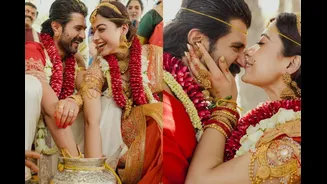
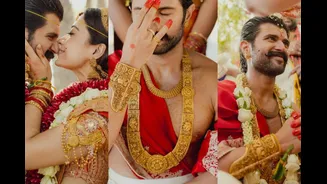
Observing the styling in the portraits of Vijay Deverakonda and Rashmika Mandanna offers a clear illustration of this sophisticated approach. Rashmika's striking vermilion Kanjeevaram silk saree, with its intricate gold zari work and traditional drape, naturally draws the eye. Had they adhered to the older convention, Vijay might have worn a matching red sherwani, potentially diluting the impact of both their outfits. Instead, his ensemble was anchored by a crisp, ivory dhoti, providing a neutral foundation. The true connective element was his vermilion angavastram, a shoulder drape that subtly referenced her saree's vibrant color without direct replication. This allowed his meticulously crafted antique gold temple jewelry to shine without clashing with a loud fabric. This intentional contrast and subtle echo of color demonstrate a deeper understanding of visual harmony, proving that a single, powerful accessory can create a stronger bond than an identical outfit.