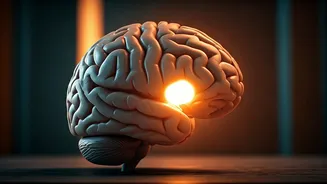







Brain Maturation and Love
Around the age of 25, a significant milestone in cognitive development is reached: the full maturation of the brain's frontal lobe. This region, crucial
for complex thought processes like planning, decision-making, and impulse control, undergoes its final developmental stages. While this maturation is often seen as a positive step towards greater maturity and better judgment, it can also trigger a re-evaluation of past life choices, particularly those made in romantic relationships during younger years. The heightened cognitive clarity that comes with a fully developed prefrontal cortex can lead individuals to critically examine relationships they entered into before this developmental phase. This phenomenon, dubbed the 'frontal lobe breakup,' suggests that as our brains become more adept at foresight and less prone to impulsive actions, we may suddenly recognize that a long-term partnership, once seemingly suitable, is no longer aligned with our evolved understanding of compatibility and future aspirations.
Cognitive Clarity in Relationships
The concept of a 'frontal lobe breakup' posits that as the prefrontal cortex reaches full development, typically by the mid-to-late twenties, individuals gain enhanced cognitive abilities. This includes improved impulse control, sharper judgment, and more effective emotional regulation. For many, this newfound mental acuity illuminates past romantic decisions made during their more impressionable years. Suddenly, they might find themselves questioning the foundations of their current relationships, which were perhaps formed with a less developed capacity for long-term planning and consequence assessment. Social media platforms have seen numerous personal accounts of individuals hitting their mid-twenties and experiencing a profound realization that they need to end relationships they previously felt committed to. This shift isn't about a sudden loss of affection, but rather a clear-eyed assessment of compatibility and future happiness, driven by a brain now better equipped to think ahead and avoid acting solely on immediate emotions or social pressures.
Beyond the Brain Switch
While the idea of a 'frontal lobe breakup' is gaining traction, it's important to understand that brain development isn't an abrupt switch. Neuropsychologists emphasize that the brain evolves gradually, shaped by a lifetime of experiences rather than a single event. Therefore, while enhanced cognitive function in the mid-twenties can indeed influence relationship views by improving impulse control and emotional awareness, it's rarely the sole cause of a breakup. Increased emotional maturity might highlight unhealthy patterns that were previously overlooked, or reduce the tendency to stay in relationships out of fear or habit. However, external life changes occurring around this age, such as completing higher education, embarking on a career, and experiencing newfound independence, play equally significant roles. These life transitions can strain existing relationships or reveal underlying issues, making a breakup more likely due to existing cracks rather than a sudden cognitive awakening.
Not All Breakups Inevitable
It is crucial to recognize that the maturation of the frontal lobe does not automatically guarantee relationship endings. For many, this developmental stage can actually reinforce the positive aspects of their existing partnerships. Instead of finding reasons to leave, individuals might appreciate their relationships more with their enhanced emotional maturity and understanding. The development of the brain does not inherently mean outgrowing personal connections. For individuals who are emotionally mature and have resolved past issues, this period can simply be a phase of personal growth with minimal impact on their relationships. However, for those carrying unresolved emotional baggage or past traumas, this phase of increased self-awareness can indeed be transformative, potentially leading them to seek healthier connections or to fundamentally alter their approach to existing ones.