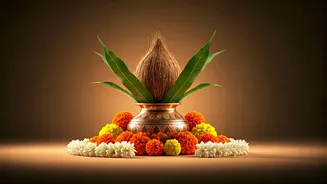









Ugadi's Auspicious Date
Ugadi, a pivotal festival marking the commencement of the New Year for Telugu and Kannada communities, is scheduled for March 19, 2026. This day aligns
with the Chaitra Shukla Pratipada, signifying the dawn of the waxing moon in the Chaitra month of the Hindu lunisolar calendar. This date is not merely a temporal marker but is steeped in mythological significance, believed to be the day when Lord Brahma initiated the creation of the universe. Furthermore, Ugadi often coincides with other regional new year celebrations, such as Gudi Padwa in Maharashtra and Yugadi in specific parts of Karnataka, highlighting its widespread cultural resonance as a symbol of renewal and the advent of spring.
Rituals and Preparations
The Ugadi festivities commence with the sacred Abhyanga Snanam, an early morning ritualistic oil bath taken before sunrise, aimed at spiritual purification, followed by adorning new attire. Homes are meticulously decorated, often with torans crafted from auspicious mango leaves adorning doorways, believed to invite prosperity and positive energy. Intricate rangoli patterns are drawn outside homes, adding to the festive ambiance. A unique culinary tradition is the preparation of Ugadi Pachadi, a special dish representing the multifaceted nature of life by blending six distinct tastes: bitterness (neem flowers), sweetness (jaggery), tanginess (raw mango), sourness (tamarind), heat (green chilli), and salt. This dish serves as a poignant reminder that life is a composite of diverse experiences, each contributing to our human journey.
Spiritual and Cultural Resonance
Central to Ugadi is the ritual of Panchanga Sravanam, where elders or priests recite the almanac's predictions for the year ahead, offering insights into potential rainfall, agricultural prospects, economic trends, and overall prosperity. This practice acts as a spiritual guide, providing direction and fostering anticipation for the coming months. Beyond these observances, Ugadi is a vibrant occasion for cultural expression, featuring traditional poetry recitals, particularly among Telugu communities. The festive spread includes beloved dishes like pulihora, bobbatlu, and various mango preparations, capitalizing on the seasonal availability of mangoes. Many also visit temples to seek blessings for health, success, and well-being in the ensuing year, visiting deities like Lord Vishnu and Lord Venkateswara.
The Deeper Meaning
Beyond its festive trappings, Ugadi carries a profound philosophical weight. It encourages introspection on the past year's experiences while fostering optimism and hope for the future. The festival underscores the cyclical nature of time, acknowledging that both joy and challenges are inherent parts of life's progression. The symbolic Ugadi Pachadi perfectly encapsulates this philosophy, emphasizing that life's essence lies in its blend of emotions and that embracing each experience with equilibrium and resilience is crucial for moving forward. For the millions celebrating in southern India and across the global Telugu diaspora, Ugadi transcends its role as a mere calendar change; it is a heartfelt celebration of renewal, gratitude, and the enduring promise of new beginnings.