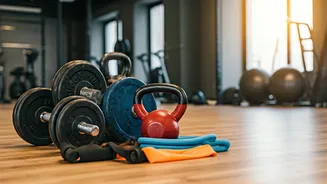








What Is Functional?
Functional fitness centers around movements you perform daily. Unlike isolating exercises on machines that target specific muscles, functional exercises engage
multiple muscle groups simultaneously. Think of movements like squatting, bending, pushing, and pulling – these are the foundation of functional fitness. This approach aims to enhance your ability to perform everyday tasks with greater ease and efficiency. It prioritizes overall bodily function, improving balance, coordination, and proprioception. Whether it’s carrying groceries, playing with children, or simply getting out of a chair, functional fitness prepares your body for life's demands. This holistic training style focuses on real-world movements, making it a practical and effective way to improve physical performance and quality of life.
Beyond Machines
The popularity of functional fitness has led people to reconsider their gym habits. The machine-focused approach often isolates muscles, neglecting the integrated way our bodies naturally move. These exercises sometimes fail to translate to practical strength and can contribute to muscle imbalances. Functional fitness, on the other hand, emphasizes compound movements, involving several muscle groups in unison. This approach more closely mimics how we move in real life, making it a more effective path to overall strength and fitness. The focus on multi-joint exercises like squats, lunges, and deadlifts builds a more robust and adaptable physique. It reduces the risk of injuries because the body is trained to coordinate and stabilize during movement. Ultimately, this leads to improvements in balance, coordination, and core stability, making everyday tasks easier and more enjoyable.
Benefits Aplenty
Functional fitness offers a multitude of benefits that extend beyond mere aesthetics. Firstly, it enhances functional strength, making everyday movements easier and more efficient. Secondly, it improves balance and coordination, reducing the risk of falls and injuries. Furthermore, functional exercises often engage the core muscles, leading to better posture and spinal stability. Moreover, this form of training promotes better body awareness and proprioception, helping you understand where your body is in space. It's also known to boost metabolism, which can aid in weight management and improve overall cardiovascular health. It can be adapted for individuals of all fitness levels, from beginners to athletes. The focus on real-world movements makes it highly transferable to sports and other physical activities. Additionally, functional fitness fosters a more holistic approach to health, emphasizing the interconnectedness of different muscle groups and bodily systems.
Getting Started
Embarking on a functional fitness journey requires a shift in mindset. Begin by understanding your current fitness level and setting realistic goals. Start with basic bodyweight exercises such as squats, push-ups, lunges, and planks. Gradual progression is crucial; add resistance or increase the intensity as your strength improves. Consider seeking guidance from a certified personal trainer, especially when starting. They can provide personalized workouts, assess your form, and prevent injuries. Incorporate a variety of exercises that challenge different muscle groups and movement patterns. Focus on proper form over the amount of weight lifted or repetitions performed. Listen to your body and prioritize rest and recovery. This includes adequate sleep and proper nutrition to support muscle repair and growth. Remember that consistency is key; regular workouts will deliver sustainable results. Ultimately, functional fitness is about empowering yourself to move better and live a more active life.