






Sanctuary of Inspiration
The picturesque Lunuganga Estate, once architect Geoffrey Bawa's personal haven, served as the evocative backdrop for Lovebirds' resortwear 2026-2027 presentation.
This twenty-five-acre landscape, meticulously sculpted over decades, embodies a profound integration of architecture and the natural environment, a principle that deeply resonated with the brand's founders, Amrita Khanna and Gursi Singh. Bawa’s vision of Tropical Modernism, characterized by minimalist aesthetics, the judicious use of indigenous materials, and a profound respect for local craft, directly informed the collection's conceptual framework. The estate’s serene beauty and its inherent dialogue between built structures and ecological dynamics provided a potent metaphor for Lovebirds' approach to design: a precise, restrained, and harmonious expansion of contemporary Indian wardrobes. This return to Sri Lanka, after a decade of brand building, offered a chance for the duo to revisit early inspirations with newfound clarity and a deeper understanding of their own design language, mirroring Bawa's philosophy of intentionality and deliberate simplicity.
Harmony in Design
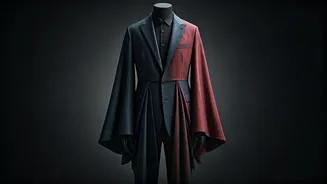
The collection itself unfolded with understated elegance against the natural splendor of Lunuganga. A simple white ramp and the golden hour light set a minimalist stage, allowing the meticulously crafted 60 looks to take center focus. Spanning both womenswear and menswear, the designs showcased a seamless fusion of form and function, emphasizing sharp, structural silhouettes and geometric precision. The brand’s characteristic minimalism was evident, yet thoughtfully adapted to the cultural nuances of Sri Lanka, aligning with Bawa’s holistic design ethos. Central to this collection was the reimagining of traditional Sri Lankan crafts, including batik, handwoven linens, silks, and cottons. Batik, a prominent technique, was celebrated through intricate crackle patterns and sarong-inspired motifs, evident in the show invitations, guest sarongs, and eight distinct looks. This artisanal collaboration, undertaken with Sri Lankan entities like Paradise Road and the One World Foundation, underscored the brand's commitment to engaging with local heritage authentically, transforming it into a core element of contemporary design rather than mere embellishment.
Timeless Resortwear
Lovebirds aimed to elevate resortwear beyond its conventional perception as ephemeral holiday attire, emphasizing structure and longevity as integral to its narrative. The designers articulated that a truly cohesive collection emerges from rigorous curation, where every element, every detail, serves a distinct purpose and contributes to the overall integrity of the piece. This discipline imbues clothing with a sense of enduring relevance. Rather than relying on craft as superficial decoration, Lovebirds integrated these artisanal elements structurally, ensuring they form an intrinsic part of the garment’s logic and design, thereby enhancing its longevity. This approach resonates with the brand's established community-centric ethos, appealing to a discerning audience that values authenticity and eschews tradition for tradition’s sake. The brand seeks to encapsulate cultural heritage not as nostalgia or abstract interpretation, but as a foundational design principle, carefully considering how textiles, embroidery, and prints best complement specific silhouettes and proportions, fostering a cross-cultural dialogue rooted in minimal intervention and intuitive creativity.
Essence of Authenticity
Reflecting on their Sri Lankan experience, the designers emphasized the power of stripping away the superfluous to reveal the essential, a clarity they intend to carry forward in future collections. Lunuganga reinforced Lovebirds’ core belief in the non-negotiable values of integrity, authenticity, and community. The brand’s growth, they observed, has been a direct result of immersing themselves in new environments, crafts, and ideas. Moving forward, the next decade for Lovebirds is envisioned as a period of deepening their craft, embracing experimentation, and continuous evolution, all while remaining steadfastly committed to their foundational principles. This commitment ensures that their work remains a genuine expression of their distinct design philosophy, celebrating a harmonious blend of global relevance and local roots, inspired by the serene landscapes and rich artisanal heritage of Sri Lanka.