



Fennec Fox's Desert Charm
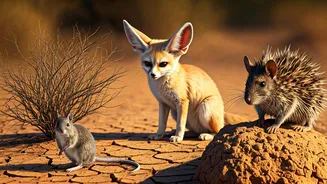
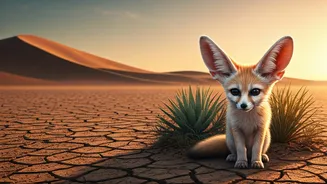
The fennec fox, a small canine native to the vast Sahara Desert, exhibits an extraordinary ability to subsist without direct water intake. Its survival
hinges on a diet rich in moisture-laden prey, including insects, rodents, and various plants. This clever adaptation allows it to remain active and healthy in one of the planet's most parched landscapes. The fox's large ears, while aiding in thermoregulation by dissipating heat, also play a subtle role in its overall arid-environment strategy, complementing its efficient water acquisition methods. Its physiology is finely tuned to extract every possible drop of moisture from its food, minimizing reliance on external water sources and making it a true desert survivor.
Jerboa's Water Wisdom
Jerboas, small hopping rodents found across arid and semi-arid regions, have mastered the art of surviving with minimal water. These creatures primarily derive their hydration from the seeds and vegetation they consume, effectively turning their meals into their water supply. Furthermore, their metabolism is incredibly efficient, generating water as a byproduct of breaking down food. This internal water production, combined with their ability to extract moisture from dry plant matter, means they seldom, if ever, need to seek out traditional water sources. Their existence is a testament to the power of biological ingenuity in overcoming extreme environmental challenges, showcasing how life can adapt to even the driest conditions.
Kangaroo Rat's Hydration Hack
The kangaroo rat is a remarkable desert dweller that can actually live its entire life without ever taking a drink. Its survival is ingeniously managed by extracting all necessary moisture directly from the dry seeds it eats. This rodent takes this water conservation to an extreme level; it produces incredibly concentrated urine, meaning it excretes very little water from its body. This means that even the water derived from its food is meticulously preserved. The kangaroo rat's specialized kidneys are key to this process, efficiently filtering waste while retaining as much water as possible, allowing it to thrive where other animals would perish from dehydration.
Koala's Eucalyptus Diet
Most famously known for their sleepy nature, koalas also possess an impressive ability to avoid drinking water in their natural Australian habitat. Their primary source of hydration comes from the moisture-rich eucalyptus leaves they exclusively feed on. These leaves contain a substantial amount of water, which the koala's digestive system is adept at processing and extracting. While they can and sometimes do drink water, especially during periods of extreme heat or drought when leaf moisture content might decrease, their typical diet largely negates the need for regular water consumption. This unique dietary dependency showcases a specialized adaptation to their arboreal environment.
Naked Mole-Rat's Underground Oasis
Living in extensive underground tunnel systems in East Africa, naked mole-rats have evolved to meet all their hydration needs through their diet. They consume tubers and roots, which are a good source of moisture, eliminating the necessity of venturing to the surface to find water. Their subterranean lifestyle keeps them in a relatively stable, humid environment, but their primary strategy for hydration is simply consuming water-rich plant matter. This adaptation is crucial for their survival in often dry, above-ground conditions, as it allows them to remain safely within their colonies without risking exposure to predators or harsh elements in search of a drink.
Thorny Devil's Moisture Capture
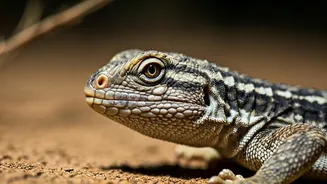
The thorny devil, a striking reptile from Australia's arid interior, employs a truly unique method for obtaining water. Instead of drinking, this lizard absorbs moisture directly through its specialized skin. Microscopic grooves cover its body, channeling dew and rainwater to its mouth, effectively allowing it to 'drink' through its skin. This remarkable adaptation means the thorny devil can collect moisture from damp sand or even fog. It allows the animal to survive in extremely dry conditions where traditional water sources are virtually nonexistent, highlighting an extraordinary evolutionary solution to hydration challenges.