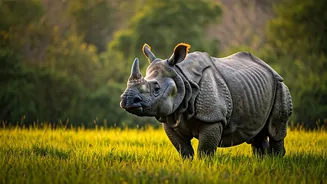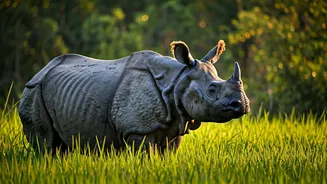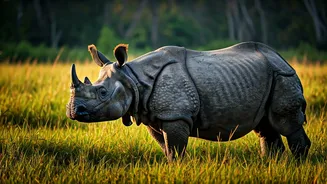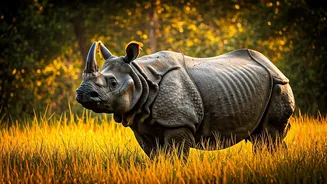



Rhino's Majestic Presence
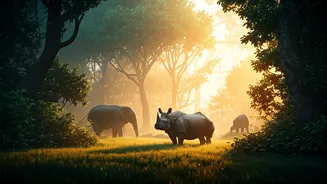
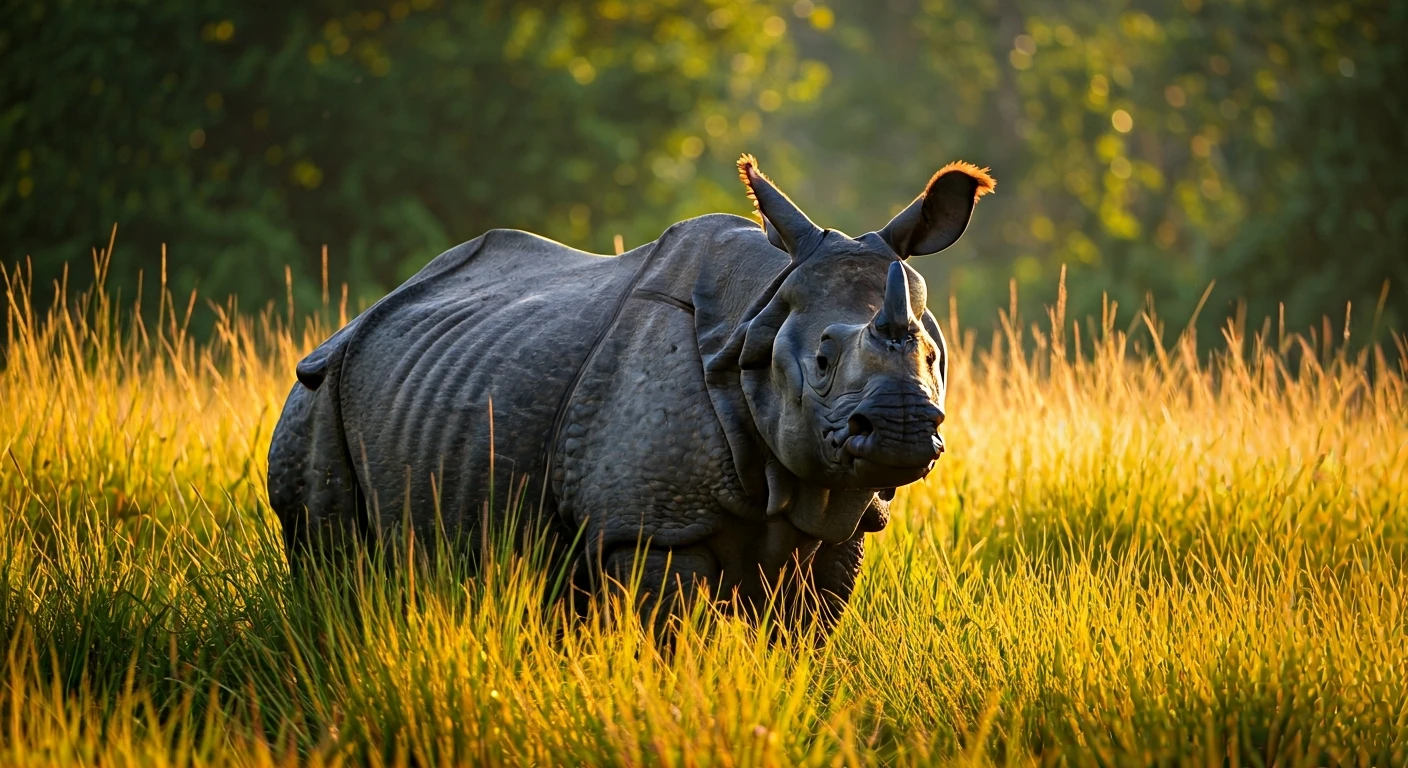
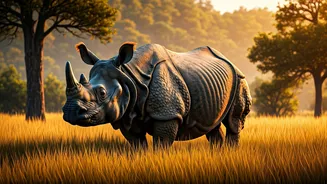
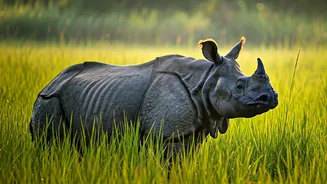
Kaziranga National Park is globally renowned for harboring the largest population of the Indian one-horned rhinoceros. These magnificent, large herbivores
are a symbol of conservation success in Assam, despite their vulnerable status. Visitors often find them leisurely grazing in the park's expansive grasslands or near tranquil wetlands, a truly awe-inspiring sight that embodies the spirit of this protected landscape. Their presence is a testament to the dedicated efforts to preserve these unique creatures and their habitat, making them a prime attraction for anyone visiting this natural wonderland.
Gentle Giants Roam
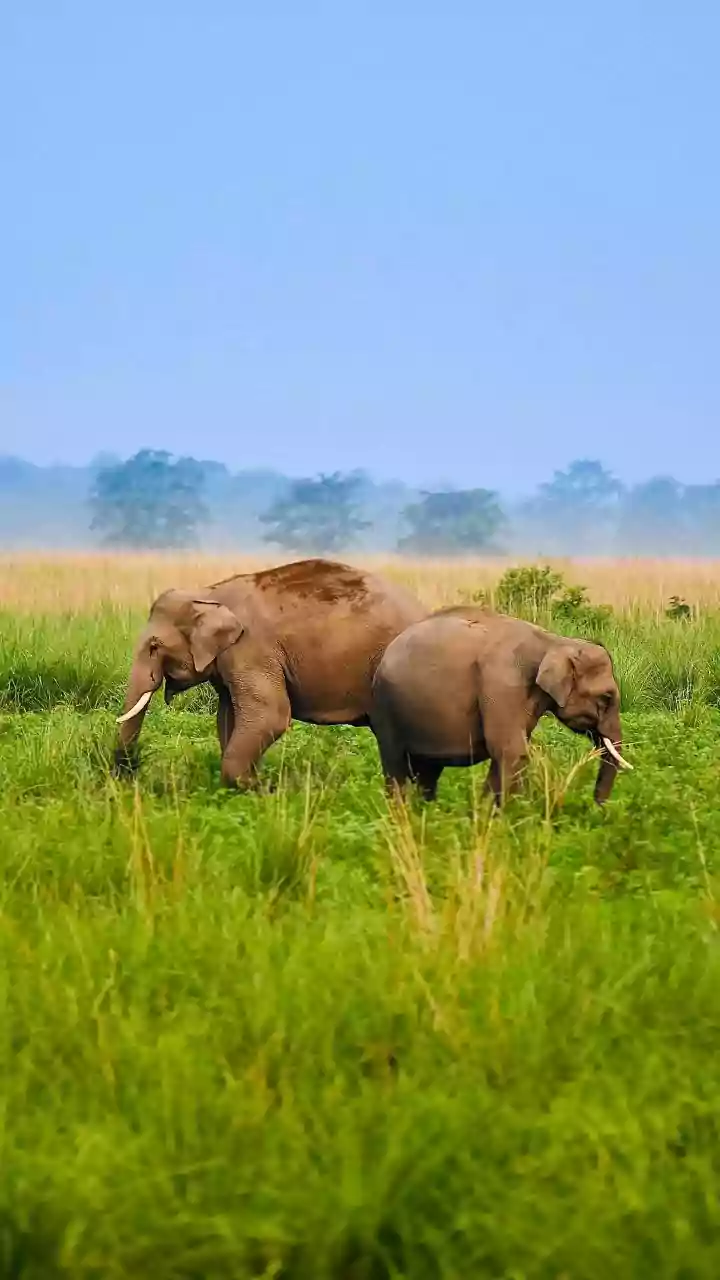
The Asian elephant is another spectacular highlight of Kaziranga. These intelligent social animals are frequently observed in large herds as they traverse the park's diverse terrains, including the lush grasslands and dense forest patches. Kaziranga provides a vital home to a significant population of wild elephants, whose presence is crucial for maintaining the ecological balance. Through their foraging and movement, they actively shape the vegetation and aid in seed dispersal, playing an indispensable role in the park's ecosystem. Spotting a herd of these majestic creatures is an unforgettable experience.
The Elusive Tiger
Kaziranga boasts one of the highest densities of Bengal tigers found in any protected area across India. These powerful predators, known for their stealth and beauty, inhabit the park's dense, tall grasses and forested regions. While sightings are considerably rarer than those of rhinos or elephants, the park's designation as a tiger reserve underscores its importance in safeguarding these apex predators. The thrill of even a fleeting glimpse of a Bengal tiger adds an element of exhilarating mystery to any Kaziranga safari, a true testament to the wildness of the park.
Water Buffalo's Domain
Among the largest of the bovine species worldwide, the Wild water buffalo is a common sight within Kaziranga's marshy lowlands and water bodies. The park plays a crucial role in protecting one of the most significant remaining populations of this endangered animal. These powerful animals are often seen wallowing in the muddy waters or grazing in the abundant grasslands, their sheer size and presence a formidable aspect of the park's fauna. Their continued survival in Kaziranga highlights the park's success in providing a safe haven for vulnerable wildlife.
Swamp Deer's Grace
The wetlands and open grasslands of Kaziranga are an ideal habitat for the Eastern swamp deer, also known as Barasingha. These elegant cervids are easily recognizable by their impressive, multi-tined antlers, which can grow quite extensive. They are frequently observed peacefully grazing in open clearings, their slender forms a beautiful addition to the park's diverse landscape. The successful conservation of this subspecies within Kaziranga is vital, showcasing the park's ability to support specialized habitats for its varied inhabitants.
Leopard's Shadow
While more reclusive by nature, the Indian leopard also calls Kaziranga its home. These agile and powerful felines typically favor the denser, forested areas of the park. Their nocturnal or crepuscular habits, meaning they are most active during the early morning or late evening, make them notoriously difficult to spot. However, with a bit of luck and keen observation during a safari, a sighting of this beautifully spotted predator is a rare and exhilarating possibility, adding to the mystique of Kaziranga's wild encounters.
Hog Deer Grazing
The Hog deer stands out as one of the most frequently encountered herbivores within Kaziranga National Park. Distinctly smaller than the swamp deer, these animals are well-adapted to the park's dense, tall grass environments and are often seen foraging near the numerous water sources. Their inquisitive nature and tendency to remain in open grassy areas make them a common and charming sight for visitors, providing a consistent and delightful wildlife observation experience throughout the park.
Sloth Bear's Habits
Although less commonly sighted, the Sloth bear is another fascinating species that inhabits Kaziranga. These bears are typically found in the more forested sections of the park and are easily identifiable by their shaggy black fur and distinctive white 'V' marking on their chest. Their diet primarily consists of insects, particularly termites and ants, which they expertly extract with their long claws, along with a variety of fruits. Spotting a Sloth bear offers a glimpse into a more specialized niche within the park's rich biodiversity.