






ICE Deployment Explained
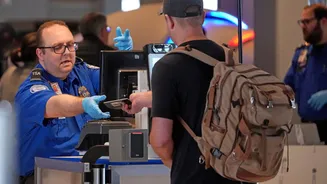
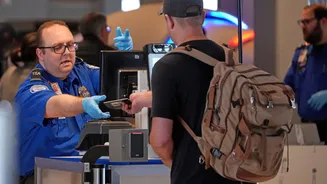
Recent shifts have seen Immigration and Customs Enforcement (ICE) agents present at various airports nationwide, a measure enacted to support the understaffed
Transportation Security Administration (TSA) during a period of DHS funding challenges. While their stated purpose is to alleviate passenger wait times, this deployment has understandably raised concerns about potential immigration-related questioning and enforcement. Immigration attorney Saimithra Reddy has provided insights, emphasizing that while these agents aren't on official immigration enforcement duties, their inherent authority allows for broader discretion. This means they possess the capacity to inquire about an individual's residency status and request supporting documentation. This situation necessitates a careful understanding of personal immigration standing for travelers.
Travelers to Reconsider
Certain individuals are strongly advised by immigration experts, including attorney Saimithra Reddy, to postpone non-essential travel. This recommendation specifically targets those whose immigration status falls into a 'gray area,' meaning their validity or ongoing applications are not definitively clear-cut. This includes individuals with pending applications before the U.S. Citizenship and Immigration Services (USCIS), those who have encountered any criminal charges or arrests, individuals whose visas have been revoked or have expired, and those currently on temporary statuses such as Temporary Protected Status (TPS), parole, or Deferred Action for Childhood Arrivals (DACA). Furthermore, individuals in their 60-day grace period following an H-1B visa should also exercise extreme caution regarding travel during this period of heightened ICE activity.
Essential Documentation is Key
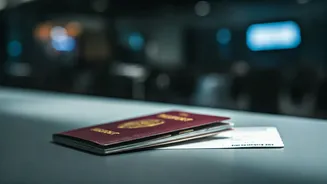
For those who must travel or are deemed to be in a secure immigration standing, carrying the correct documentation is paramount. It's crucial to have verifiable proof of your valid visa status. This typically includes your physical passport bearing the visa stamp, or an official approval notice from USCIS. Additionally, if you possess an Employment Authorization Document (EAD), you must carry the physical card itself. ICE agents, by law, have significant authority and can indeed question individuals, including lawful permanent residents and U.S. citizens, about their legal status. Failure to provide satisfactory documentation or refusal to comply with lawful requests can lead to more intensive screening, further questioning, and potentially, detainment. Ensuring all your immigration documents are current, valid, and readily accessible can mitigate these risks significantly.
Understanding Your Rights
It's vital for all travelers to be aware of their rights when interacting with law enforcement, including ICE agents. Legal experts consistently advise that U.S. citizens have the fundamental right to remain silent when questioned by authorities, beyond providing basic identification in certain circumstances. Lawful permanent residents and individuals holding valid visas also possess significant rights, though their situations can be more intricate. Non-citizens, especially those without authorized immigration status, might face more extensive questioning. However, even in these scenarios, fundamental rights persist: the right to stay silent, the ability to refuse consent for searches of personal belongings under specific conditions, and the right to request legal counsel if detained. Awareness of these rights empowers travelers to navigate potentially stressful encounters more effectively.
Airports with ICE Presence
The presence of ICE agents has been noted at a number of key airports across the United States, as well as in Puerto Rico. Travelers utilizing these specific airports should be particularly mindful of the information discussed regarding documentation and rights. The listed airports include Chicago O’Hare International Airport (ORD), Cleveland Hopkins International Airport (CLE), Hartsfield-Jackson Atlanta International Airport (ATL), Houston’s William P Hobby Airport (HOU), John F Kennedy International Airport (JFK), New York’s LaGuardia Airport (LGA), Louis Armstrong New Orleans International Airport (MSY), Luis Muñoz Marin International Airport in Puerto Rico (SJU), Newark Liberty International Airport (EWR), Philadelphia International Airport (PHL), Phoenix Sky Harbor International Airport (PHX), Pittsburgh International Airport (PIT), and Southwest Florida International Airport (RSW). Being aware of these locations can help travelers prepare accordingly.