





The Cleaning Paradox
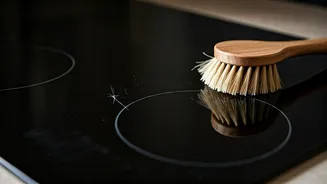
It's a common frustration: the glossy allure of a glass cooktop, marred by an insidious network of tiny, web-like scratches. While heavy cookware often
gets blamed, the true culprits might be lurking right in your cleaning caddy. The initial instinct to scrub away dried-on spills with a dry brush or cloth, while seemingly efficient, is akin to using fine-grit sandpaper on the delicate surface. This abrasive action, especially when done dry, erodes the cooktop's protective layers. These microscopic grooves, initially imperceptible, accumulate over time, progressively deepening into noticeable lines that compromise the cooktop's aesthetic and functionality, making it harder to clean in the long run.
Friction, Physics, Coatings
Glass cooktops, despite their robust appearance, are protected by ultra-thin coatings designed to minimize glare and facilitate easy spill cleanup. These sophisticated layers, however, are surprisingly vulnerable to mechanical abrasion. Research investigating the effects of cleaning on photovoltaic glass coatings has revealed that dry brushing is exceptionally damaging. In studies, dry brushes exhibited the highest 'abrasion factors,' meaning they wore away protective layers significantly faster than other methods. Although the research focused on outdoor glass, the underlying principles apply directly to your kitchen appliance. Each time a dry bristle drags a minuscule particle of salt or dust across the glass surface, it acts like a miniature abrasive tool, etching a microscopic line into the protective coating and, subsequently, the glass itself.
The Wet Cleaning Advantage
To safeguard your glass cooktop's polished finish, experts strongly advocate for a wet cleaning methodology. Employing moist sponges and soft microfiber cloths is key, as the water acts as a lubricant, allowing debris to be gently lifted rather than scraped. This approach is crucial for preserving the integrity of the protective coatings. The aforementioned research suggests that a wet sponge, possibly paired with a squeegee, is the most effective cleaning combination. This method ensures that particles are suspended in water, preventing them from grinding against the glass. Furthermore, household grit, like airborne dust and mineral deposits from tap water, can settle on the cooktop even when it's not in use. Wiping these dry particles with a paper towel can push them into the surface, causing more damage. Even organic residues can harden and increase friction during cleaning, emphasizing the need for a lubricated approach to maintain the cooktop's longevity and pristine appearance.
Soak, Slide, Shine
Adopting the 'soak-and-slide' technique is an excellent strategy for maintaining your cooktop's beauty over time. This method involves gently loosening stubborn residue by covering the affected areas with a warm, damp microfiber cloth. Once the grime has softened, it can be effortlessly wiped away with a sponge. To finish, a quick swipe with a squeegee or a clean microfiber towel will leave the surface gleaming. By shifting from aggressive dry brushing to these more mindful, wet cleaning practices, you can ensure your cooktop remains spotless and free from unsightly marks for years to come, enhancing your cooking experience without the worry of damaging your appliance.