



The Stubborn Grime Dilemma
Many home cooks face the frustrating battle against stubborn, burnt-on food residues that transform cookware into hardened messes. Traditional methods
often involve arduous overnight soaking or vigorous scrubbing, leading to sore hands and damaged utensils. Fortunately, a growing community of home enthusiasts has unearthed an ingenious, low-energy approach to conquer these tenacious kitchen challenges. By harnessing the power of localized steam generated within a microwave, this technique softens even the most baked-on grime, rendering it effortlessly removable without resorting to abrasive tools or caustic cleaning agents. This innovative method presents a significant departure from conventional, labor-intensive cleanup routines, promising a simpler and more effective path to pristine cookware.
Steam's Superior Cleaning Power
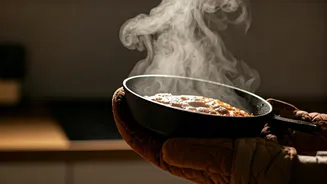
The efficacy of this steam-based method lies in the fundamental principles of physics and chemistry. While microwaves are primarily known for heating, their true cleaning prowess in this scenario stems from their ability to generate steam. Similar to how steam from a boiling pot on a stove penetrates and loosens hardened food particles, microwave-generated steam creates a localized, high-pressure environment. This intense moisture infiltrates the micro-cracks and molecular structure of burnt-on residues. Scientific research, including studies published in journals like 'Food Chemistry' and 'Innovative Food Science & Emerging Technologies,' explains that heat and moisture combined actively break down the structural integrity of tough food remnants. Unlike cold water soaking, which merely sits on the surface, steam's high-pressure action expands and disrupts the molecular bonds holding food to cookware, effectively undoing the dehydration that occurs during overcooking. This means stubborn particles remain pliable and easy to wipe away, preventing them from re-hardening as you clean.
Preserving Cookware & Planet
Beyond its remarkable cleaning capabilities, this steam hack offers significant benefits for cookware longevity and environmental sustainability. Harsh scrubbing with metal scrapers or abrasive brushes can inflict micro-scratches on non-stick surfaces, inadvertently creating more areas for food to adhere in the future. Research in food science journals highlights that such abrasive methods compromise delicate coatings. In contrast, the gentle yet effective action of steam maintains the integrity of these surfaces, extending the lifespan of your pots and pans. Furthermore, this technique champions environmental responsibility. Many commercial cleaners contain volatile organic compounds and potentially leave chemical residues on food preparation surfaces. By using only water and microwave energy, this method is inherently eco-friendly. Studies in chemical engineering journals validate the efficiency and safety of using microwave energy to break down organic residues without harmful additives, making it a cleaner choice for both your kitchen and the planet.
Effortless Steam Hack Steps
Implementing this clever steam cleaning hack is remarkably straightforward. Begin by pouring approximately half a cup of water into a microwave-safe dish. Position this dish inside the microwave, ideally near the cookware you intend to clean. Set the microwave to high heat for a duration of three to five minutes. Once the timer concludes, resist the urge to open the door immediately; allow it to remain closed for an additional minute. This brief waiting period ensures maximum steam penetration. Upon opening the microwave, you'll find that the previously stubborn food particles have softened into a manageable, paste-like consistency, ready to be wiped away with minimal effort. This simple process significantly reduces scrubbing time, freeing up your schedule to enjoy your home while keeping your cookware in pristine condition.