





What is Seat Divorce?
Air travel often presents a unique set of challenges, particularly for couples navigating the complexities of journeys alongside work, childcare, and the general
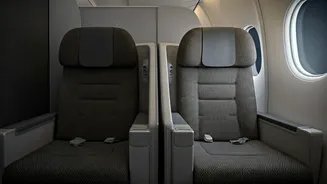
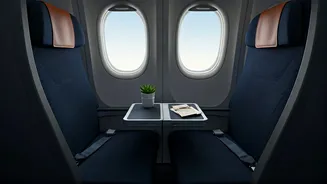
airport hustle. Imagine a scenario after a long, tiring day – managing meals, bedtime routines, and jet lag – only to face a partner's desire for an intense discussion at 35,000 feet. In such moments, the need for personal space and quiet can feel overwhelming. The solution emerging for some is 'seat divorce' – the deliberate choice to occupy separate seats during a flight. This isn't an indicator of relationship strain; rather, it's a burgeoning travel strategy adopted by couples who recognize that a little physical distance can actually fortify their emotional bond. Rather than adhering to the expectation of sitting side-by-side, some partners intentionally opt for different seating arrangements. This could mean an aisle and a window seat, or even seats in separate rows, enabling each individual to rest, immerse themselves in a movie, read a book, or simply disengage without any sense of obligation or guilt. Many adherents report that the overall trip, and the subsequent time spent together upon arrival, is significantly more enjoyable when they've had the opportunity for this vital breathing room.
The Rise of Separate Seating
On the surface, choosing to sit apart during a flight might seem unconventional, especially within a societal framework that often links physical togetherness with intimacy. However, a growing number of couples are embracing this practice as a pragmatic, even romantic, decision. Consider the common sight of couples who, despite the effort to sit together, end up spending the entire flight disengaged, scrolling on their phones, or appearing distant. This often resembles a performance of closeness rather than genuine connection. 'Seat divorce' subverts this narrative by empowering partners to select their preferred seating – be it a window or an aisle – without the discomfort of being confined to a middle seat. For individuals who are taller or have broader physiques, the middle seat can be genuinely uncomfortable, and by opting for separate seating, both partners can ensure their comfort throughout the journey, avoiding silent suffering. Similar to the concept of 'sleep divorce,' where couples opt for separate rooms to improve sleep quality, many find that physical separation on a plane significantly enhances the quality of their interactions once they land.
Boosting Relationships in the Air
Therapists are beginning to validate the experiences that couples are discovering independently. Family therapist Tawanna Marie Woolfolk points out that our culture often conditions us to associate physical closeness with the health of a relationship. Consequently, when couples choose to sit apart, onlookers might feel compelled to offer seat-switching assistance, assuming they 'should' be together. As Woolfolk explains, this reaction often reflects a collective unease with intimacy that isn't outwardly performed, rather than an assessment of the couple's relationship strength. Adding to this perspective, therapist Dan Auerbach suggests that constant side-by-side proximity can, paradoxically, diminish connection. Prolonged periods sitting next to someone can lead to a state of background noise – half-watching a movie, half-listening to each other, but not truly present. In contrast, couples who opt for separate seating frequently report feeling more intentional in their interactions. They might briefly exchange movie recommendations, share a laugh over snacks, or simply check in with each other. These brief moments of deliberate connection often carry more significance than hours of mandated co-presence.
Practicalities of Space
Numerous practical considerations underpin the adoption of 'seat divorce.' Firstly, the contemporary air travel experience is often fraught with discomfort – cramped seating, delays, noise, the presence of children, and lengthy queues. Within this context, any enhancement to comfort is highly valued. When couples insist on sitting together, one invariably ends up in the middle seat, rarely a preferred option for anyone. Granting both partners a seat they genuinely prefer, whether window or aisle, without the intrusion of a neighbor, makes a considerable difference, particularly on extended flights where every inch of personal space is appreciated. Beyond the physical, many value the emotional benefit: the ability to disconnect, unwind, and recharge without the pressure of 'performing' as a couple. The parent who has spent the night attending to a toddler, or the partner who has just navigated a high-stress workday, can finally achieve peaceful rest, indulge in reading, or engage in meditation. This chosen space doesn't signify relational distance; instead, it's a conscious decision to conserve energy, enabling them to be more present, patient, and considerate upon the flight's conclusion.
Communication and Boundaries
Like any aspect of a relationship, 'seat divorce' functions optimally when both partners are in mutual agreement. The objective is not to avoid one another, but rather to honor each individual's unique needs. Couples who adopt this approach typically discuss their preferences beforehand, considering factors like who requires more personal space, who is a nervous flyer, or who has a strong aversion to the middle seat. This open dialogue actively strengthens trust, as decisions are made collaboratively, circumventing potential resentment or unilateral sacrifice. Fundamentally, 'seat divorce' embodies a lesson in balance. If one partner consistently relinquishes their comfort, prioritizes their needs last, or endures conditions they genuinely dislike – whether during travel or in everyday life – it can foster a subtle yet persistent sense of imbalance. Opting for separate seating offers an opportunity to reclaim personal space. Ultimately, this practice is not a reflection of a relationship in distress; quite the opposite. Many couples report that granting personal space during travel enhances their mutual affection. When not physically confined, competing for armrests, or dealing with minor irritations, they arrive at their destination feeling more serene, lighter, and inclined towards greater generosity towards each other, setting a more positive tone for the entire trip. This approach aligns with a broader evolution in how couples perceive intimacy, emphasizing emotional attunement, clear communication, and respect for individual boundaries over mere physical proximity.