






A Welcoming Tradition
Upon entering Diya Kumari's official Jaipur residence, guests are immediately immersed in the essence of Rajasthani hospitality, epitomized by the phrase
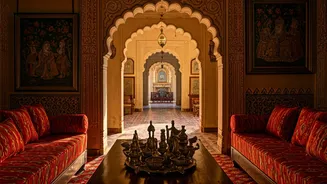
'Atithi Devo Bhava' (the guest is God). This philosophy extends beyond a mere greeting, influencing the entire aesthetic and atmosphere of the home. The residence is meticulously curated to showcase Rajasthan's rich cultural tapestry, integrating traditional artworks and crafts into its design. This thoughtful approach aims to create an environment that not only welcomes visitors but also instills a profound sense of cultural pride and belonging. The psychological impact of such an environment is significant, as it anchors individuals to their heritage and fosters emotional grounding, making the home a repository of memory and identity rather than just a physical space. This deep connection to cultural roots reinforces self-perception and establishes a sense of continuity, bridging past, present, and future.
Walls of History
The walls of Diya Kumari's Jaipur home are adorned with artworks that do more than just decorate; they narrate the rich history of Rajasthan. A prominent painting of Amber Fort, once the capital, serves as a powerful reminder of the state's glorious past and architectural grandeur. The conversation around such pieces naturally expands to encompass other significant historical sites like Kumbhalgarh Fort, renowned for its extensive wall, and the imposing citadels of Chittorgarh and Jaisalmer. These structures are not merely stone and mortar but are imbued with stories of valor and heritage. From a psychological perspective, these visual anchors of collective history evoke a strong sense of pride and connection to a larger narrative that transcends personal achievements. They act as constant reminders of ancestry, traditions, and shared values, thereby reinforcing self-identity and contributing to emotional stability. This sense of continuity is psychologically reassuring, allowing individuals to feel part of an enduring legacy.
Personal Touches Flourish
Although designated as an official residence, Diya Kumari has imbued her Jaipur home with a deeply personal design ethos, prioritizing and showcasing local handicrafts. This infusion of personal taste is evident in the carefully selected art and decorative elements that were not part of the original official furnishing. Visitors will notice the prevalence of traditional Sanganeri prints on soft furnishings, the delicate beauty of blue pottery, and the intricate charm of miniature paintings, for which Rajasthan is globally acclaimed. Kumari's deliberate effort to incorporate these local crafts transforms the residence into a vibrant gallery of Rajasthan's artistic traditions. A particularly striking piece is a blue pottery representation of Srinathji, which beautifully merges devotional art with the region's renowned ceramic artistry. These elements collectively reinforce a sense of belonging and emotional grounding by surrounding the inhabitants with tangible representations of their history and cultural roots.
Spiritual Resonance Beyond Borders
While Rajasthani art forms are prominent, the residence also embraces pieces that hold personal spiritual and historical significance beyond the state's borders. One notable artwork is a serene painting of the ghats of Varanasi, a city historically linked to Kumari's family through Raja Man Singh's contributions. This painting serves as more than just decor; it has become a cherished spot for morning reflection and work, transforming a corner into a contemplative sanctuary. The artwork's spiritual aura provides peace, making it a focal point for quiet contemplation amidst the demands of public life. This practice of incorporating art that resonates on a personal and spiritual level highlights how individual sanctuaries within a home can contribute to emotional balance and mental clarity. These spaces offer a retreat for the mind, allowing for restorative moments that are crucial for maintaining equilibrium.
The Office Sanctuary
Despite the aesthetic richness of her home, Diya Kumari reveals that her most cherished space is her office. This seemingly practical area is where she finds significant peace and is able to work without disturbance, making it both a functional workspace and a personal sanctuary. For a public figure managing numerous responsibilities, such a dedicated space is crucial for maintaining focus and emotional balance. Psychologically, personal corners like these offer a sense of control and safety, allowing individuals to transition between social engagement and private solitude. These areas are vital for cognitive regulation, creativity, and stress reduction, as they provide a predictable and calming environment that the brain associates with productivity and rest. Over time, these restorative spaces become essential for maintaining overall well-being.
Treasures from Travels
Beyond the local crafts and historical artworks, Diya Kumari's residence also features a curated collection of art acquired during her travels, both domestically and internationally. Each piece, whether a handicraft or a painting, serves as a tangible memory of a place visited. However, this practice extends beyond personal mementoes; it reflects a deeper commitment to supporting global artisans and promoting their beautiful creations. By bringing these pieces into her home, Kumari provides a broader audience and platform for these artists, transforming her residence into a quiet, global gallery of diverse craft traditions. This act of collecting and displaying art from various cultures enriches the living space and fosters an appreciation for craftsmanship worldwide, while also reinforcing the idea that homes can be dynamic reflections of personal journeys and broader cultural connections.
Courtyard Light and Air
The architectural design of the residence incorporates a central courtyard, a traditional feature in Indian homes, which bathes the surrounding rooms in abundant natural light. This element not only enhances the aesthetic appeal by creating bright and airy spaces but also connects the home to older architectural styles that prioritized climate and daily life. The presence of sunlight is something Kumari particularly appreciates, finding it to be 'very nice and light and airy.' Psychologically, such open and naturally lit spaces can function as 'mental reset zones,' offering a temporary escape from social roles and external pressures. These moments of solitude are vital for emotional regulation and maintaining mental clarity, helping to reduce the cognitive overload that can result from constant stimulation and interaction. The courtyard thus serves as a serene space that promotes well-being and a connection to nature.
Heirlooms of Legacy
Beyond the visual arts and architectural features, Diya Kumari's personal wardrobe also tells a story of inherited history, particularly her extensive collection of sarees. Many of these pieces are not merely garments but carry significant emotional weight, having been inherited from her grandmother and mother. Additionally, sarees received as gifts and those she acquires during her travels contribute to this cherished collection. This practice of preserving and wearing heirloom sarees is a profound way of maintaining a tangible connection to past generations and continuing family traditions. The act of acquiring sarees from different places is described as 'taking a piece with you,' symbolizing the carrying forward of heritage and personal experiences. This reverence for heirlooms underscores the residence's theme of preserving and celebrating history and personal legacy within a contemporary setting.