




Patteda Anchu: Ancient Eco-Drape
Journey to North Karnataka and uncover the Patteda Anchu, a remarkable cotton saree with origins tracing back to the 10th century. This ancient textile
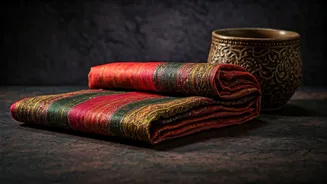
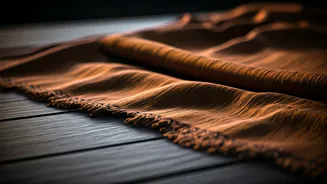
is a testament to sustainable fashion, boasting a sturdy cotton weave adorned with striking mustard or red borders against a checked expanse. Its genius lies in its complete reversibility, allowing wear on either side, and its practicality – requiring no fall, lining, or ironing. Once a staple in rural markets, its decline mirrors the rise of inexpensive synthetic fabrics. However, for those seeking eco-conscious and low-maintenance clothing, the Patteda Anchu remains an unparalleled choice, embodying a forgotten era of functional elegance and environmental harmony.
Himroo & Mashru: Woven Comfort
Delve into the sophisticated weaves of Himroo and Mashru, originating from Aurangabad and Patan respectively. Himroo, with roots in the Mughal era, artfully blends silk and cotton, its name reflecting its near-silk quality. This fabric offers the opulent appearance of heavy brocade while remaining breathable, a crucial feature for India's climate. Unfortunately, authentic Himroo faces stiff competition from counterfeit power-loom versions. Mashru, born in Gujarat, cleverly addresses religious mandates against pure silk touching the skin. Its intricate weave features luxurious silk on the exterior and soft cotton on the interior, creating a 'comfort-luxury' textile. Acquiring genuine, handwoven Mashru today is an increasingly rare endeavor.
Siddipet Gollabhama: Woven Tales
Experience the narrative power of the Siddipet Gollabhama from Telangana, a saree that literally tells a story. This exquisite textile features intricate motifs of the 'Gollabhama,' a milkmaid carrying a pot, woven directly into the fabric using a complex extra-weft technique. These are not mere embellishments but integral parts of the weave, demanding immense skill and patience from the artisans. The labor-intensive nature of this traditional craft, coupled with insufficient remuneration for weavers, is sadly driving younger generations away from this meticulous art form, threatening the continuation of these unique woven narratives.
Kunbi: Goa's Tribal Drape
Venture beyond Goa's famous beaches to discover the Kunbi saree, traditionally worn by tribal communities. This striking red-and-black checkered drape was ingeniously woven on backstrap looms. Designed for practicality, women wore it short, without a blouse or petticoat, facilitating ease of movement for paddy field work. The encroachment of Portuguese colonial dress codes and the advent of modern power looms nearly led to its extinction. Today, the knowledge of its weaving technique is held by only a select few, yet its breathable, minimalist aesthetic makes it remarkably suited for contemporary fashion trends.
Sungudi & Karvath Kati
Explore two more vital saree traditions from the South and West: Sungudi and Karvath Kati. Hailing from Madurai, Tamil Nadu, authentic Sungudi sarees were meticulously crafted by Saurashtrian weavers who employed thousands of tiny hand-tied knots before dyeing fine cotton with natural hues. These sarees are exceptionally breathable and ideal for the intense Southern summers. Sadly, the market is now saturated with screen-printed imitations. Meanwhile, in Maharashtra's Vidarbha region, the Karvath Kati saree, woven from pure wild Tussar silk, faces a similar plight. Named for its distinctive geometric, saw-tooth-like borders, it offers a unique, earthy elegance often overshadowed by more flamboyant silk sarees.
The Fast Fashion Threat
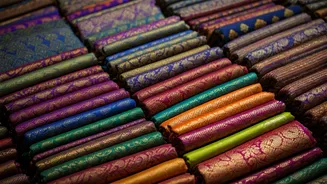
While grand celebrations often showcase opulent Kanjeevarams and Banarasis, the bedrock of India's handloom legacy lies in its functional, localized, and intelligently designed everyday sarees. The current landscape, dominated by inexpensive synthetic materials and the relentless efficiency of power looms, is causing hundreds of historical Indian weaves to quietly vanish. The allure of fast fashion provides immediate gratification, but this convenience comes at a steep price: the erosion of our invaluable textile heritage. It is imperative that we recognize and actively support these traditional crafts before they are lost forever.