







Physical Form Differences
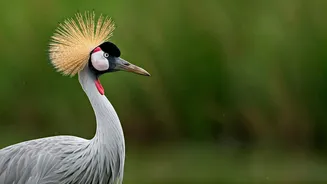
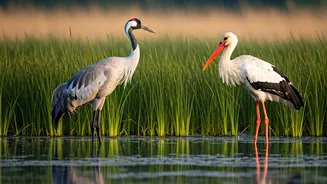
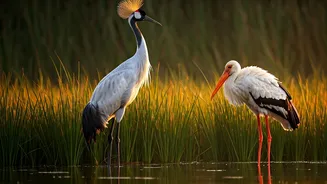
Observing the silhouette of these long-legged, long-necked avian wonders is the first step to differentiation. Cranes typically present a more streamlined
appearance, maintaining a straighter, more slender neck, whether they are standing still or in flight. In contrast, storks often appear more robust, with a noticeably heavier build and a longer bill. When at rest, storks might curve their necks more significantly than the upright poise of a crane. A common visual cue is the head: cranes often display bare red skin or a distinct crown, whereas storks tend to have fully feathered heads. While both stand tall, the crane's elegance is often juxtaposed with the stork's sturdier frame. This distinction in neck posture—straight and extended for cranes, often tucked in or curved for storks when on the ground—is a primary visual identifier.
Size and Wingspan Insights
When it comes to sheer aerial presence, cranes tend to have an edge in wingspan, often measuring between 5.5 to over 8 feet. The Sarus crane, for instance, ranks among the tallest birds capable of flight. Storks, while still impressive, generally have wingspans ranging from 5 to 7.5 feet, although some species like the Marabou stork can rival certain cranes in size. In terms of perceived height, cranes often appear to stand taller due to their upright posture, giving them a more commanding presence in open fields. Storks, while substantial, may look more compactly built. While there's natural variation across different species within both families, cranes are generally recognized for their superior height, making them appear to tower above their surroundings.
Behavioral Contrasts Unveiled
The social dynamics and expressive behaviors of cranes and storks offer a stark contrast. Cranes are renowned for their intricate courtship rituals, which involve elaborate dances characterized by bows, jumps, and even the tossing of small objects, often performed to secure lifelong mates. They are also quite vocal, engaging in loud duets that can carry for long distances. Storks, on the other hand, are considerably quieter. Their primary mode of communication, particularly during courtship or social interactions, involves bill-clattering rather than vocalizations. While cranes often gather in large flocks during migration, storks tend to forage individually or in smaller groups. This suggests cranes are more outwardly expressive and socially oriented, whereas storks prioritize efficient hunting and less demonstrative bonding.
Flight Patterns and Diet
The way these birds navigate the skies and what they consume further differentiates them. Cranes exhibit a distinctive flight pattern, characterized by steady wingbeats, often forming V-formations, with their necks held straight out and frequently emitting trumpeting calls mid-air. Storks, conversely, prefer a more effortless aerial display, utilizing thermals to glide silently, appearing buoyant and serene. Their dietary habits also vary significantly. Cranes are omnivorous, feeding on a diverse diet that includes seeds, roots, insects, and amphibians. Storks, however, are more carnivorous, primarily hunting fish, reptiles, and small mammals in shallow water bodies, and they are also known to scavenge when opportunities arise.
Nesting Habits Examined
The choices these birds make for their nesting sites and how they raise their young highlight another set of unique traits. Cranes typically opt for ground-level nests, often situated in wetland areas, where they lay one to two eggs. Both parents are fiercely protective of their clutch. Storks, in contrast, favor elevated nesting locations, building substantial nests high up in trees, on cliffs, or even on rooftops. These nests can become quite large, sometimes weighing hundreds of pounds, and are often reused and expanded over time. Storks generally lay between two to five eggs. This difference in nesting strategy—cranes preferring the relative anonymity of wetlands and storks seeking the security of heights—reflects distinct approaches to protecting their offspring.