






Pioneering Space Computing
The future of artificial intelligence is reaching for the stars with a bold initiative from India's space-tech sector. Pixxel, a prominent space technology
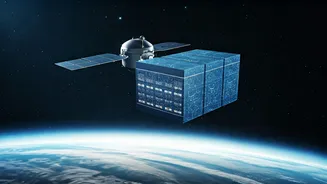
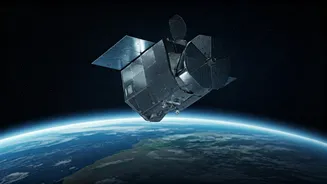
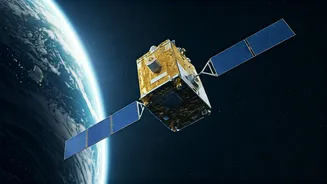
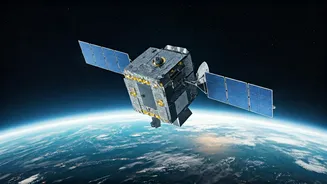
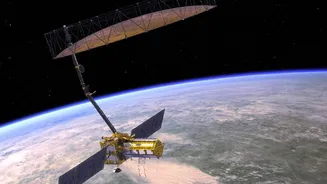
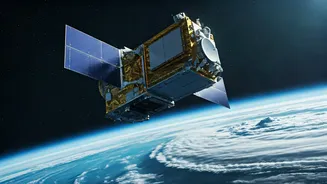
firm, has joined forces with Sarvam AI, a leader in large language models (LLMs), to create "The Pathfinder." This revolutionary satellite, slated for an end-of-2026 launch, is envisioned as India's inaugural orbital data centre. Unlike traditional satellites that use energy-efficient processors designed for longevity in space, The Pathfinder will be equipped with powerful GPUs, mirroring the hardware found in terrestrial data centres. This significant upgrade is specifically intended to facilitate the complex training and operational processes (inference) of Sarvam AI's advanced language models. This venture emerges as global tech giants and innovative startups increasingly explore space as a solution to the escalating energy demands and power constraints associated with Earth-based data centres. As the need for massive computing power grows, so does the interest in leveraging the unique environment of space for such critical tasks.
Addressing Earth's Limits
The drive towards building orbital data centres is significantly influenced by the immense power requirements of conventional, ground-based facilities. Projections indicate a substantial rise in global data centre capacity, with estimates suggesting it could reach 200 GW by 2030. In India alone, projections show a six-fold increase in data centre capacity, growing from 1.8 GW to approximately 10.5 GW by 2031. However, this expansion comes with substantial energy demands, leading to public scrutiny and prompting tech companies to seek innovative solutions beyond our planet. Companies like SpaceX are contemplating deploying up to a million data-centre satellites, while Meta is exploring space-based solar energy to power its own data centres on Earth. Even India's own space agency, ISRO, is investigating next-generation satellites capable of on-board data processing and storage. Despite these advancements, some experts remain skeptical, citing the high cost of rocket launches and the practical challenges of maintaining and repairing space-based hardware, particularly GPUs essential for AI training.
Pixxel-Sarvam Collaboration
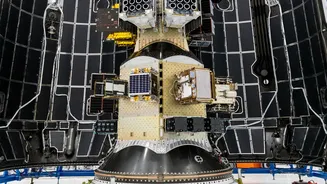
The partnership between Pixxel and Sarvam AI is designed to bring The Pathfinder satellite to fruition, with Pixxel taking charge of its end-to-end development. This includes the design, construction, launch, and ongoing operation of the satellite. The satellite itself will be manufactured at Pixxel's forthcoming Gigapixxel facility, a state-of-the-art site engineered for high-volume satellite production, aiming for up to 100 units. While specific technical details about The Pathfinder remain undisclosed, the agreement clearly outlines Sarvam AI's role in executing AI model training and inference directly within orbit. This means the sophisticated language models and their operational platforms will function independently of any foreign cloud or ground-based infrastructure, ensuring a sovereign AI capability. The mission is poised to rigorously test real-time AI operations in the demanding conditions of space, evaluating performance, power management, thermal stability, and data workflow efficiency. Ultimately, it aims to lay the crucial technical and commercial groundwork for future orbital data centre systems.
Sovereign AI in Orbit
The vision for orbital data centres extends beyond simply overcoming Earth's power constraints; it opens up a new realm of possibilities for computing. By harnessing abundant solar energy available in space and situating computational resources closer to space-based data sources, these facilities can transcend terrestrial limitations. Pixxel's CEO emphasizes the importance of actively shaping this emerging field rather than passively observing it. Similarly, Sarvam AI's CEO highlights that this collaboration allows them to extend their fully indigenous AI platform into space. The prospect of running India-developed models on an India-built satellite signifies a critical step towards the nation's self-reliance in its intelligent infrastructure. Furthermore, The Pathfinder will integrate a hyperspectral imaging camera. This advanced sensor will capture high-resolution hyperspectral data, which can then be processed and analyzed directly on the satellite using the very foundation models trained in orbit. This capability eliminates the need to transmit vast amounts of raw imagery back to Earth, enabling real-time pattern recognition, change detection, and insight generation for applications like environmental monitoring and infrastructure management.