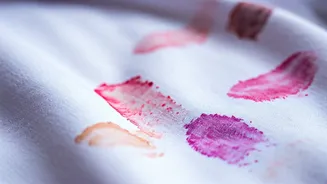

Lipstick Stain SOS
Lipstick stains, often caused by accidental rubs or spills, can be some of the most visible and stubborn. The first line of defense is a pre-treatment.
Gently scrape away any excess lipstick with a dull knife or the edge of a credit card, being careful not to spread the stain further. Next, apply a stain remover specifically designed for oily stains or a small amount of dish soap directly to the affected area. Work the cleaner into the fabric, using a soft toothbrush or your fingertips, and let it sit for about five to ten minutes. After the pre-treatment, rinse the fabric thoroughly with cold water. Finally, wash the garment according to its care label, checking to ensure the stain is gone before putting it in the dryer, as heat can set any remaining stain. For particularly persistent lipstick stains, repeating this process may be necessary.
Foundation Stain Solutions
Foundation stains present a different challenge, often involving pigments and oily components. Similar to lipstick, start by gently removing any excess foundation. A dry sponge or a clean cloth can be used for this purpose. Then, pretreat the stain. One effective method is to apply a small amount of shaving cream or a stain remover to the area and allow it to sit for a few minutes. Another option involves mixing a small amount of liquid laundry detergent with water to form a paste, which you can apply directly to the stain. After pretreating, rinse the fabric under cold water and then launder as usual. Remember to always check the garment after washing and before drying to ensure that the stain has completely disappeared. If the stain remains, repeat the process. Test any cleaning solution on a hidden part of the garment first to ensure it doesn't cause discoloration.
Mascara Marks Minimized
Mascara, with its combination of pigments and oils, can create dark, challenging stains. The approach is similar to that used for lipstick and foundation, emphasizing prompt action. Begin by blotting the mascara stain with a clean, dry cloth or a paper towel. Avoid rubbing, as this can worsen the stain. Once the initial excess is removed, the next step involves pre-treating the affected area. Many people find success using a makeup remover containing oil or a stain remover. Apply it to the stain and let it sit for a few minutes to break down the makeup's components. After pretreatment, rinse the fabric with cold water. Finally, launder the garment according to its care instructions. Inspect the item after washing. If the stain persists, repeat the steps, or consider taking the garment to a professional dry cleaner for more stubborn marks.
Eyeshadow Stain Strategies
Eyeshadow stains, resulting from the powder pigments used in their composition, can present a moderate challenge. The first crucial step is to gently remove any loose eyeshadow particles by tapping the affected area. Avoid brushing or rubbing, as this could cause the stain to set further into the fabric. Following this, vacuuming can be helpful to remove loose powder. A stain remover or a small amount of liquid detergent can then be used to pre-treat the stain. Apply the chosen cleaner directly to the area, gently working it in with your fingertips or a soft brush. Let the cleaner sit for about five to ten minutes to allow it to penetrate the fibers of the fabric. Rinse the garment thoroughly with cold water. Lastly, launder it as per the care instructions. It is critical to examine the fabric after washing, and if traces remain, the process must be repeated or a professional cleaning service considered.
Blush and Bronzer Battle
Blush and bronzer stains, like eyeshadow stains, are mostly pigment-based, and benefit from similar handling. Initially, shake off any excess powder. A gentle tapping action is best to remove the loose particles without spreading the stain. Next, use a vacuum cleaner with an appropriate attachment to lift away any remaining powder residue from the garment. Apply a stain remover or a small quantity of laundry detergent to the affected zone and let it penetrate the fabric for approximately five to ten minutes. After the pretreatment phase, thoroughly rinse the item under cold water. Proceed with washing the garment according to its care label. Ensure you check for stain remnants after washing but before putting the garment in the dryer. If a stain remains, repeat the process or seek help from a professional cleaner for the best outcome.
Nail Polish Nightmare
Nail polish spills can be one of the most difficult makeup-related stains to address because of the solvents in the polish formula. Because nail polish dries quickly, fast action is essential. Do not rub the stain; instead, gently blot it with a clean cloth. The best approach is often to use nail polish remover that does not contain acetone, which can damage certain fabrics. Test the remover in an inconspicuous area of the garment first to ensure it won't cause color changes. Dab the remover onto the stain with a clean cloth, working from the outside of the stain inwards to prevent it from spreading. Keep blotting until the stain lifts. Once the nail polish is removed, rinse the area with cold water, and then wash the garment using the usual laundry process. Be aware that heavily stained items or delicate fabrics may require professional cleaning.