


The Crispy Conundrum
We’ve all experienced the crushing disappointment: painstakingly achieving the ideal frying temperature for chicken or fritters, only to have the finished
product turn greasy and limp. The culprit isn't usually the frying itself, but what happens immediately after the food leaves the hot oil. Traditionally, fried items were placed on paper towel-lined plates, a seemingly logical step that unfortunately creates a moist environment. This trapped steam and residual oil prevents the crust from staying delightfully crunchy, turning what should be a culinary triumph into a soggy setback. This common practice, while intuitive, actively works against the goal of achieving that coveted crisp texture that defines great fried food.
The Wire Rack Wonder
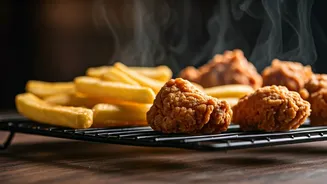
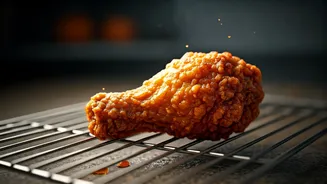
The true key to superior crispiness lies not in the frying process, but in the crucial post-frying handling. By simply swapping your traditional plates for a wire cooling rack, you unlock a world of crunchy perfection. This minimal adjustment allows your fried creations to 'breathe' from all sides, facilitating the escape of excess heat and moisture. Unlike a plate, which traps oil and steam directly beneath the food, a wire rack permits these elements to drain away freely. This simple change dramatically enhances the texture, ensuring that satisfying crunch you crave with every bite, mimicking the techniques used in professional kitchens.
The Science of Cooling
It's often misunderstood that most oil absorption occurs during the frying process itself. While hot food does absorb some oil, the primary and most significant oil uptake happens during the cooling phase. As the fried item cools, the outer crust contracts, creating a slight vacuum. This pressure difference draws oil from the surface deeper into the porous structure of the food. Research highlights that the porous nature of the fried surface acts as a prime pathway for this oil diffusion. Therefore, the treatment immediately following frying is critical for managing the final fat content and texture, making the cooling method paramount.
Gravity's Crispy Aid
The orientation of your food during cooling plays a surprisingly vital role in oil separation. When placed horizontally on a flat surface, oil tends to form a film underneath the food. However, research suggests that positioning fried items vertically or even at a tilt encourages the oil to break into smaller droplets. A wire rack facilitates this by allowing gravity to pull these droplets away from the crust before they have a chance to reabsorb into the food. This gravity-assisted draining significantly reduces the amount of oil retained on the surface and within the food compared to a horizontal resting position.
Healthier Bites, Better Texture
Beyond achieving that delightful crispy sound, reducing excess oil in fried foods offers substantial health benefits. High concentrations of compounds formed during the Maillard reaction, which contribute to desirable flavor and texture, can have adverse health effects when consumed in excessive amounts. By minimizing oil absorption through proper cooling, you consequently reduce these compounds. Furthermore, the wire rack prevents the formation of a 'steam room' effect that occurs when hot food rests on a plate. This trapped steam instantly turns crispy coatings soggy. A rack ensures continuous ventilation, maintaining that perfect crisp exterior and leading to a healthier, more enjoyable eating experience.
Pro Tips for Home Cooks
To achieve optimal crispiness at home, position a wire rack over a baking sheet. This setup allows for maximum oil drainage while catching any drips. Arrange your fried food pieces in a single layer, ensuring they are not touching each other. This separation is crucial for allowing air to circulate evenly around every piece, promoting consistent crisping. While paper towels can still be used, they should be placed on the baking sheet beneath the rack, not directly under the food. This simple yet effective method elevates your home-cooked fried dishes to a professional standard, ensuring a consistently satisfying crunch.