


The Moisture Theory Explained
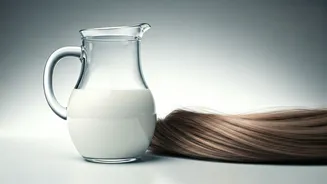
The widely discussed "moisture theory" suggests that keeping hair well-hydrated is the key to making it grow longer and appear healthier. The underlying
idea is straightforward: dry hair is brittle and prone to snapping, whereas hair that is adequately moisturised is more pliable, softer, and less likely to break. Consequently, when hair doesn't constantly break off, it gives the impression of growing more rapidly. It's crucial to understand that moisture doesn't actually expedite the rate at which hair grows from the scalp. Instead, its primary benefit lies in preserving the length you already possess by minimizing damage. This understanding is fundamental to managing expectations and adopting effective haircare practices that contribute to visible length retention.
Hair Growth: An Internal Process
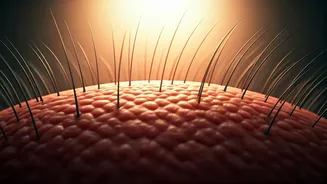
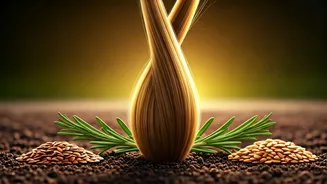
Before attributing growth solely to external treatments like conditioners or masks, it's vital to grasp how hair growth fundamentally works. Hair originates and grows from the root within the scalp, an entirely internal process. Several biological factors dictate this growth rate, including your genetic predisposition, hormonal balance, nutritional intake, and overall physical health. Therefore, no topical product applied to the hair strands, be it an oil, serum, or homemade concoction, possesses the ability to stimulate accelerated growth directly from the root. While external care is important for hair health, the initial growth mechanism is an internal affair, regulated by your body's internal systems and inherited traits.
Moisture's Role in Hair Health
Consider your hair akin to a delicate fabric. When deprived of moisture, it becomes rough, prone to tangling, and tears easily. In contrast, when properly moisturised, it feels smoother, softer, and can withstand minor stresses without succumbing to breakage. This analogy holds true for hair: a lack of moisture leads to increased tangling, breakage during combing, accelerated split ends, and a dull, lifeless appearance. Conversely, well-moisturised hair is significantly easier to manage, exhibits reduced breakage, healthier ends, and possesses a noticeably shinier, more vibrant look. Thus, while moisture doesn't directly increase growth speed, it acts as a crucial protector against damage, thereby enabling the hair to grow to its full potential and retain length over time.
The Science of Hair Cuticles
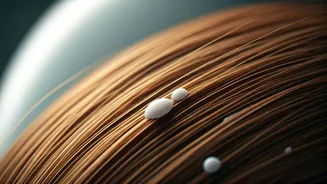
Delving into the science behind hair, each strand is protected by an outer layer known as the cuticle. When hair becomes dry and dehydrated, these cuticle scales lift or separate, leaving the hair shaft exposed, rough, and fragile. Applying moisture helps to smooth down these lifted cuticles, creating a sleeker surface. This process enhances the hair's elasticity, allowing it to bend and flex rather than snap under pressure. Furthermore, smoothed cuticles reduce friction between individual hair strands, which is a common cause of damage. In essence, adequate moisture helps hair endure the daily rigors of combing, styling, and tying without succumbing to breakage or damage.
Why It Appears Faster
The perception that moisture "works" for hair growth often stems from a misunderstanding of length retention versus actual growth speed. Hair naturally grows at a rate of approximately 1 to 1.5 centimeters per month. However, if the ends of the hair are consistently breaking off due to dryness and damage, this inherent growth becomes imperceptible. When you implement a consistent moisturizing routine, you significantly reduce breakage and the occurrence of split ends. This improved length retention means that the hair that *is* growing remains intact, allowing you to observe its progress. Therefore, the hair appears longer more quickly not because its growth rate has increased, but because you are successfully preventing the loss of existing length.
Defining True Moisture
A common misconception in haircare is equating "oil" directly with "moisture." While oils play a role, true moisture primarily comes from water itself. Other essential components that provide moisture include humectants, such as glycerin or aloe vera, which are capable of drawing moisture from the environment into the hair shaft. Conditioners also contribute by softening the hair and smoothing the cuticle. Oils, in turn, are crucial for sealing in this moisture, acting as a protective barrier to prevent its evaporation. A well-rounded haircare approach typically involves first hydrating the hair with water-based products or humectants, followed by applying oils to lock in that hydration. Simply applying oil to dry hair without first introducing moisture is often compared to placing a lid on an empty container – it traps what little is there but adds nothing new.
Signs of Dehydrated Hair
If your hair is currently feeling unmanageable or exhibiting signs of distress, it might be a strong indicator that it's lacking adequate moisture. Key signals to watch out for include a rough and dry texture to the touch, a propensity for constant tangling, the premature appearance of split ends, a dull and lifeless visual appearance, and hair that breaks off easily when being brushed or combed. These symptoms typically don't imply that your hair has stopped growing. Instead, they suggest that the hair shaft is compromised and is not effectively retaining the length that is being produced from the scalp.
Simple Fixes for Dryness
Addressing a lack of moisture in your hair doesn't necessitate an overly complicated or time-consuming routine. Simple, consistent practices can yield significant improvements. Always incorporate a conditioner into your wash routine to replenish lost moisture and smooth the cuticle. If your hair consistently feels dry, consider adding a leave-in conditioner to your regimen for continuous hydration throughout the day. Utilize oils strategically to lock in moisture, rather than relying on them as the sole source of hydration. Avoid over-washing your hair, as this can strip it of its natural oils. Be particularly gentle with the ends of your hair, as they are the oldest and weakest part of the strand. Consistency in these basic habits is far more impactful than employing numerous trendy, complex treatments.
What Moisture Won't Do
It's important to maintain realistic expectations regarding the benefits of moisture for hair. While beneficial for health and appearance, moisture cannot fundamentally alter the intrinsic rate of hair growth originating from the root. It will not correct underlying issues like hormonal imbalances that can lead to hair thinning or hair loss. Furthermore, moisture cannot reverse genetic predispositions to baldness or provide dramatic, overnight transformations. Claims suggesting "double hair growth" solely through hydration should be approached with skepticism, as they often overstate the effects and ignore the multifaceted nature of hair health and growth.
The Real Takeaway
The "moisture theory" is not inherently flawed; rather, it has been widely misinterpreted. Moisture's role isn't to accelerate hair growth from the scalp. Its true power lies in strengthening the hair shaft, thereby enabling the hair to retain the length it naturally grows. This focus on damage reduction and strength is arguably as critical as the growth process itself. Without this internal resilience, any length achieved is quickly lost to breakage, negating the efforts made. Effective haircare doesn't always demand complexity or expense; fundamental practices like maintaining adequate moisture can be incredibly potent. Instead of searching for miracle growth solutions, concentrate on minimizing damage, ensuring hair health, and being consistent with your routine. Your hair is already growing; the real achievement is ensuring it stays around long enough for you to enjoy its length and vitality.