





The Unfolding Crisis
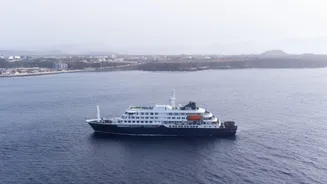
The Dutch-flagged cruise ship MV Hondius became the center of a significant public health concern when a hantavirus outbreak was detected among its passengers.
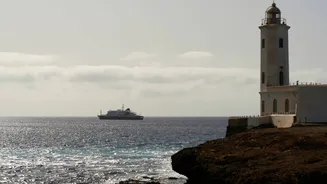
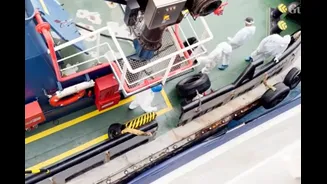
The situation escalated with three confirmed fatalities and at least four individuals falling seriously ill. This rare and potentially deadly viral illness, typically contracted through the inhalation of contaminated rodent droppings, placed the nearly 150 people aboard in a state of quarantine and uncertainty. Footage from the vessel depicted a scene of medical teams in protective gear, with deserted common areas, underscoring the gravity of the situation as the ship waited for directives from health authorities off the coast of Cape Verde. The World Health Organization (WHO) confirmed that passengers were isolated in their cabins, and discussions were underway to potentially move the ship to the Canary Islands, although Spanish officials remained cautious in their decision-making process. The MV Hondius, on an extended polar expedition that began in Argentina, found itself in a precarious position far from its intended destinations, transforming a leisurely voyage into a challenging ordeal at sea.
Passenger Perspectives
Life aboard the MV Hondius took a stark turn as the hantavirus outbreak confined passengers to their cabins. Despite the unsettling circumstances, many passengers reported maintaining a surprisingly high morale, finding ways to occupy their time with activities like reading and watching movies. They described their days as a period of waiting, punctuated by the regular flow of information from authorities regarding the evolving situation. Essential supplies, such as fresh fruit and vegetables, were noted as crucial deliveries that helped sustain their well-being during the extended confinement. The shared experience, encapsulated by one passenger's sentiment of being "in the same boat, literally," highlighted the collective vulnerability and the emotional toll of the outbreak. The realization that a fellow traveler might not survive the journey added a somber layer to their enforced isolation, transforming an anticipated adventure into a test of resilience and patience.
Health Response Efforts
Authorities in Cape Verde swiftly mobilized a comprehensive medical response to the MV Hondius. Teams comprising doctors, surgeons, nurses, and laboratory specialists were dispatched to the vessel, visible in their protective gear as they transferred to a smaller craft. In Praia, the capital, heightened safety protocols were implemented, particularly around port areas, as a precautionary measure against the rodent-borne illness. While hantavirus is not typically known for person-to-person transmission, health officials acknowledged the possibility, prompting enhanced vigilance. Passengers were advised to wear masks and practice social distancing, measures that echoed the protocols seen during the COVID-19 pandemic. The ship's operator, Oceanwide Expeditions, activated its highest-level response plan, incorporating stringent isolation measures, rigorous hygiene practices, and continuous medical monitoring for everyone on board. The WHO indicated that affected passengers would be transferred to the Netherlands for medical treatment, though the exact timeline for these evacuations remained uncertain.
Tracing the Cases
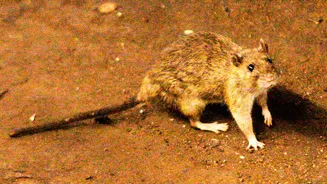
The World Health Organization provided an updated assessment of the hantavirus cases connected to the MV Hondius, identifying a total of seven instances. This count included three individuals who tragically lost their lives, one critically ill passenger who had been airlifted from the ship, and three others onboard exhibiting milder symptoms. Evidence of hantavirus was confirmed in two of these cases: a woman who died and the male passenger who was evacuated. The first recorded death was a Dutch man on April 11, whose body was subsequently removed from the vessel near St. Helena. His wife later became ill and passed away in a South African hospital. Another affected passenger, a British man, was evacuated from Ascension Island to South Africa for intensive care. Investigations are ongoing to determine if human-to-human transmission played a role on the ship, though initial suspicions suggest the first infection likely occurred before boarding. Officials have stated there are no rats currently on board.
Navigating Uncertainties
The path forward for the MV Hondius and its passengers was fraught with logistical and diplomatic complexities. While the WHO initially suggested a move to the Canary Islands, with Spanish authorities reportedly preparing to receive the ship, Spanish health officials maintained a cautious stance. They indicated that a decision on the most suitable port of call was pending, emphasizing that no definitive steps would be taken until further assessments were made, a position that was communicated to the WHO. The potential evacuation of sick passengers to the Netherlands was also a key point of discussion, yet the timing remained unspecified. Meanwhile, health authorities in Argentina confirmed that no passengers exhibited symptoms upon departure, despite the country's history of hantavirus cases, including 28 deaths nationwide in the previous year. The incubation period for hantavirus, which can extend up to eight weeks, added another layer of concern. In South Africa, contact tracing measures were initiated, mirroring strategies employed during the COVID-19 pandemic, though officials stressed that the risk of a widespread public health threat was considered low.