





Shade-Loving Stars
For those garden corners that rarely see direct sunlight, several perennials offer striking beauty without demanding full sun. The Bleeding Heart (Lamprocapnos
spectabilis) is a prime example, flourishing in deep shade and partial sun, gracing the garden with delicate, heart-shaped blossoms in pink, red, or white. These elegant flowers appear for about six weeks in late spring and often offer a surprising rebloom in the cooler temperatures of autumn. Another excellent choice for shadier spots is Astilbe, known for its feathery plumes in shades of pink, red, and burgundy, providing a dramatic visual impact with little upkeep. For those seeking white flowers and an earlier display, the 'Deutschland' variety of Astilbe is a stellar option, and its deer-resistant nature is a significant advantage for gardeners in areas with abundant wildlife. These plants prove that vibrant gardens can thrive even in less-than-ideal light conditions.
Sun-Kissed Sprawlers
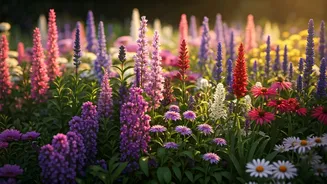
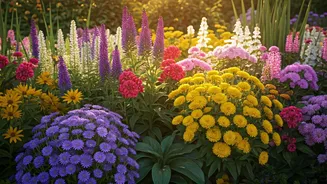
When your garden boasts ample sunlight, a wealth of choices are available for plants that thrive in the light. Garden Phlox (Phlox paniculata) is a quintessential summer bloomer, filling the air with a delightful fragrance and displaying flowers in various hues of pink, lavender, white, and red from mid-June until the first frost. Its appeal is enhanced by its suitability as a cut flower, doubling its value for the home gardener. Yarrow is another robust performer, offering blooms from June through September on sturdy stems that reach two to three feet in height. While traditionally white, its cultivars now come in a spectrum of colors including yellow, pink, red, and lilac. The simple act of deadheading – removing spent flowers – significantly prolongs its blooming period and requires minimal effort. For a classic summer garden aesthetic, Shasta Daisies are unparalleled, presenting white petals surrounding a bright yellow center on tall stems from July until frost, evoking a timeless, cheerful image.
Dual-Duty Bloomers
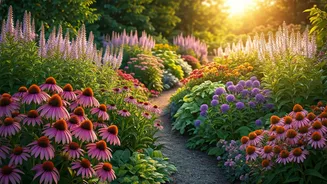
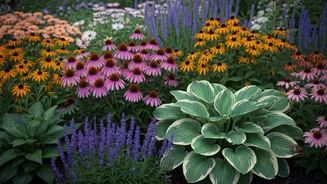
Certain perennials offer exceptional longevity and ecological benefits, making them true garden workhorses. Echinacea, commonly known as the Purple Coneflower, is a standout performer, blooming from early June through September and acting as a powerful magnet for pollinators like bees and butterflies. Beyond its traditional purple, it's now available in a diverse range of colors including white, orange, yellow, and red. This plant is also remarkably drought-tolerant, a valuable trait during dry summer spells. Cardinal Flower (Lobelia cardinalis) takes vibrancy a step further with brilliant red spikes that bloom from July to late September, almost guaranteeing a visit from hummingbirds. For gardeners aiming to attract wildlife, this is an exceptionally effective choice. Coreopsis, particularly the threadleaf varieties, might be the longest-blooming perennial of all, offering continuous flowers from spring until frost. Despite its delicate appearance, it's surprisingly resilient, and a mid-summer shearing can encourage a second wave of blooms, extending its display.
Effortless Excellence
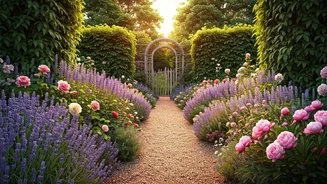
For gardeners who desire maximum visual impact with minimal intervention, several varieties stand out. Knock Out Roses have significantly simplified rose cultivation, blooming prolifically from spring to fall with virtually no demanding care. They bypass complex pruning requirements and fussy treatments, growing to a manageable three to four feet in height and width, and are available in a range of colors from yellow and red to orange, pink, and white. Ice Plant (Delosperma cooperi) is another low-maintenance champion, a ground-covering succulent adorned with purplish-pink, daisy-like flowers from June to October. Thriving in dry, sandy soil and full sun, it requires very little attention. Butterfly Bush offers long, fragrant flower clusters that are highly attractive to butterflies. When selecting a Butterfly Bush, opting for sterile, non-invasive cultivars like 'Blue Chip' or 'Purple Haze' is advisable, especially in regions where certain varieties can become problematic.
Gardening's Mental Boost
Beyond their aesthetic appeal, engaging with perennials offers significant mental health benefits. Research indicates that gardening activities demonstrably reduce stress, anxiety, and depression, even for individuals new to the practice. Studies suggest that tending to plants fosters a profound connection with nature, leading to a genuine sense of accomplishment. Over time, as perennials return with increased vigor and their blooms multiply, the garden transforms from a mere project into a source of pride and personal connection. This sense of steady growth and renewal can be particularly grounding in a world often characterized by rapid change and impermanence, enhancing confidence and self-esteem for the gardener.