




A Rare Planetary Gathering
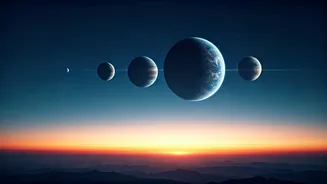
February 2026 is poised to host a remarkable celestial display, with a lineup of six planets visible in the night sky shortly after dusk on the 28th. This
event will feature Mercury, Venus, Jupiter, Saturn, Uranus, and Neptune, all appearing in a remarkable procession. While Mars will not be part of this specific arrangement, the presence of six planets promises a truly special and memorable astronomical occasion. Beyond the visual spectacle of distinct points of light against the vastness of space, witnessing such an alignment serves as a profound reminder of the dynamic and perpetual motion within our solar system. For anyone with even a casual interest in the cosmos, this planetary parade is an unmissable opportunity to connect with the universe.
Viewing After Sunset
To best experience this planetary alignment, observers should turn their attention to the western horizon immediately following sunset. A crucial aspect of stargazing is prioritizing safety; it is imperative to never look directly at the Sun, even with optical aids. Always wait until the Sun has completely disappeared below the horizon before attempting to locate celestial objects. Furthermore, finding a viewing location with an unobstructed, flat horizon, particularly towards the west, will significantly enhance your ability to spot the planets as they appear low in the sky.
Spotting Mercury and Venus
Mercury, being the planet closest to the Sun, typically presents a viewing challenge. In early February, it sets very close to the Sun, making it elusive. However, around February 19th, Mercury reaches its greatest eastern elongation, positioning it further from the Sun in the sky and increasing its visibility after sunset. By the 28th, it will be slightly higher but may still appear faint, suggesting that binoculars could be beneficial for spotting it. Venus, in contrast, shines with exceptional brightness and is situated higher in the sky than Mercury, offering a longer viewing window as it sets later. Towards the end of the month, Venus will be in close proximity to Mercury, acting as a convenient guide for locating its dimmer companion.
Locating Jupiter and Saturn
Jupiter is expected to be one of the most easily identifiable planets during the February 2026 alignment. Although its peak visibility was in January, it will remain prominently high in the eastern sky at sunset on the 28th. Seek it out near the Moon and the celestial markers of Castor and Pollux in the constellation Gemini. If you are only able to identify one planet, Jupiter is the most reliable choice. Saturn, on the other hand, will be visible low in the western sky, alongside Mercury and Venus. By the month's end, Saturn will set shortly after sunset, emphasizing the importance of observing it early. The convergence of Saturn with Venus and Mercury creates a captivating, albeit small, cluster of planets visible in the fading twilight.
Finding Uranus and Neptune
Uranus, while not as luminous as some of its planetary neighbors, benefits from a higher position in the sky, which aids in its location. It will be observable below the well-known Pleiades star cluster in Taurus. To clearly discern Uranus, the use of binoculars or a telescope is recommended. Neptune presents the greatest challenge for observers in this alignment. By February 28th, it will be positioned low in the western sky, quite close to Saturn. Safely observing Neptune requires a telescope and precise timing, and it should only be attempted after complete darkness has fallen and the Sun has fully set.
Tips for Optimal Viewing
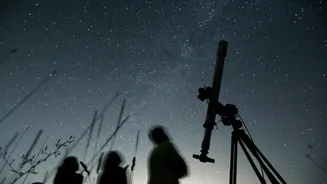
To maximize your enjoyment of this rare six-planet parade, focus on a few practical tips. First, secure a location with an unobstructed view of the western horizon, as Mercury, Venus, Saturn, and Neptune will appear low. Timing is also critical; aim to begin your observations immediately after sunset, before the planets begin their descent below the horizon. For Uranus and Neptune, which are fainter, optical aids like binoculars or a telescope are indispensable. Most importantly, always adhere to safety precautions by never looking directly at the Sun. With a measure of patience and the appropriate viewing conditions, this celestial event promises to be an unforgettable experience.