




Endurance's Space Trials
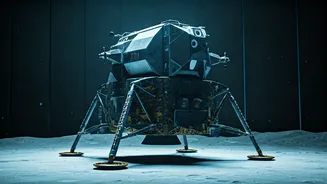
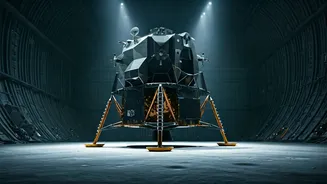
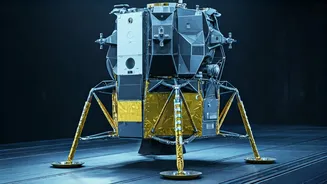
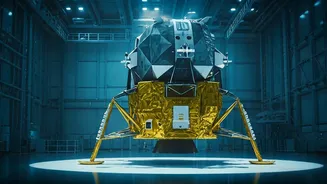
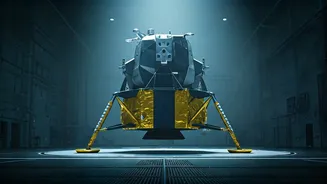
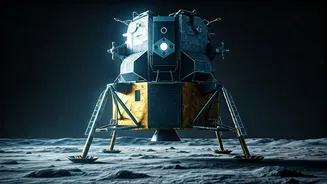
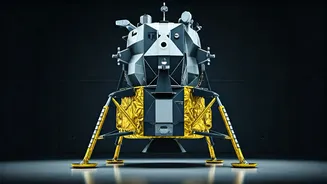
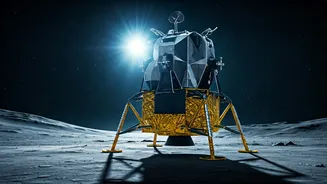
Blue Origin has made significant headway with its unmanned lunar lander, codenamed Blue Moon Mark 1 (MK1) and affectionately called 'Endurance.' This crucial
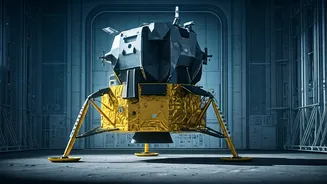
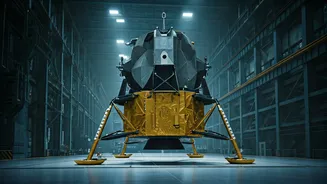
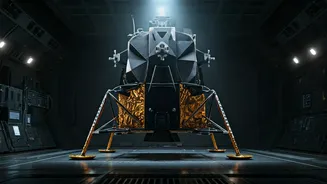
phase involved extensive testing within a specialized thermal vacuum chamber at NASA's Johnson Space Center. The facility, one of the largest of its kind globally, meticulously recreated the harsh conditions of space, including extreme cold and near-vacuum environments, to ascertain the lander's resilience and operational effectiveness. Engineers focused on verifying that the lander's structural integrity, thermal regulation systems, and overall performance were robust enough to endure the journey to the Moon and function as intended. This collaborative testing effort between NASA and Blue Origin, formalized through a Space Act Agreement, is a testament to the shared commitment to advancing lunar exploration capabilities and ensuring mission success.
MK1: Uncrewed Cargo Delivery
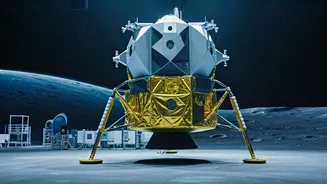
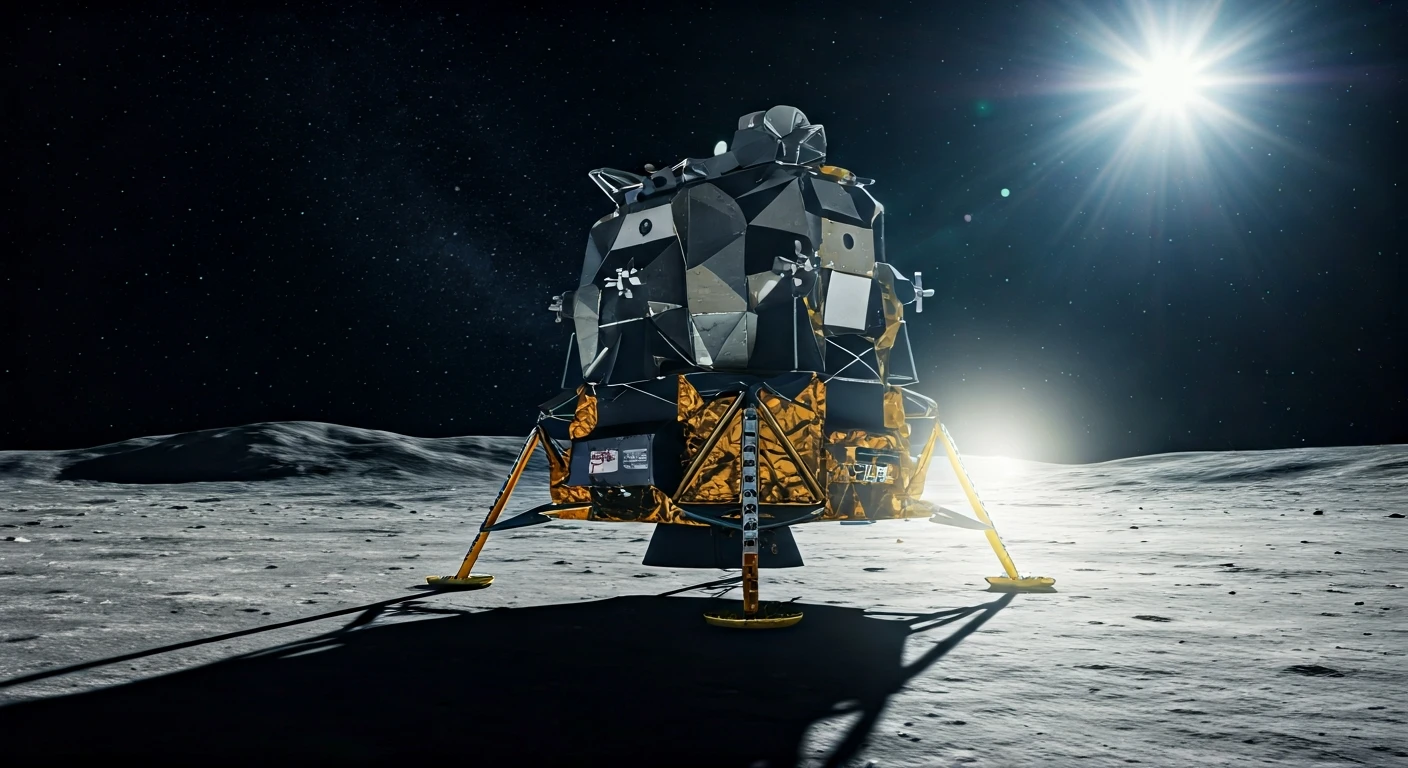
The Blue Moon MK1, or 'Endurance,' is designed as an uncrewed vehicle specifically for delivering vital cargo and equipment to the lunar surface. Its development is intrinsically linked to the ambitious goals of NASA's Artemis program, aiming to establish a sustained human presence on the Moon. The primary objective of the MK1 mission is to validate critical technologies essential for a successful lunar landing. These include precise landing methodologies, the effective utilization of cryogenic propellant systems, and the autonomous operation of guidance, navigation, and control systems. The chosen landing target is the Moon's south pole, an area of significant scientific interest due to the potential presence of water ice, which could serve as a crucial resource for future missions. Beyond its own operational experiments, MK1 will carry scientific payloads, such as the Stereo Cameras for Lunar Plume-Surface Studies, designed to observe the interaction between engine exhaust and the lunar surface during descent, and a Laser Retroreflective Array.
Foundation for Human Landings
Although the Blue Moon MK1 is an uncrewed cargo mission, its role is foundational for future human endeavors on the Moon. The advanced technologies undergoing testing with MK1 are directly contributing to the development of Blue Origin's next-generation lander, the Mark 2 (MK2). This future iteration is engineered to be larger and capable of transporting astronauts between lunar orbit and the surface. The valuable data and operational insights gleaned from MK1's design, rigorous testing, and eventual mission operations are indispensable for enhancing the safety, reliability, and meticulous planning required for subsequent crewed lunar landings. NASA's support through resource provision is instrumental in accelerating this development process without compromising on the stringent safety standards necessary for human spaceflight.
Stepping Towards Lunar Presence
With the critical testing phase now successfully concluded, the Blue Moon MK1 has taken a substantial step towards becoming a reality. This uncrewed lander represents a pivotal component in the broader strategy to establish a tangible human presence on the Moon. The collaboration between NASA and Blue Origin, facilitated by the Space Act Agreement, exemplifies an effective model for leveraging public and private sector expertise to expedite space exploration objectives. The rigorous environmental simulations have validated the lander's design and readiness for its forthcoming lunar journey. Success in this phase signifies not just a technological achievement but a tangible stride forward in the ongoing endeavor to explore and potentially inhabit the Moon.