





Brain Growth Through Play
During the formative toddler years, the brain experiences rapid development, and playful activities are key to stimulating this crucial growth. Engaging
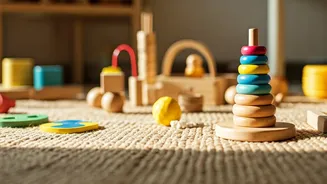
with building blocks, intricate puzzles, creative drawing, and imaginative pretend scenarios encourages toddlers to think critically, spark their imagination, and hone their problem-solving capabilities. Through play, children naturally make choices, experiment with novel ideas, and learn valuable lessons from their experiences and inevitable mistakes. This dynamic process significantly enhances their memory retention, fosters creativity, and sharpens their overall problem-solving skills. While formal teaching might focus on rote memorization of letters or numbers, play teaches a more fundamental skill: how to think effectively, which is paramount for holistic early childhood development.
Language and Communication Flourish
Acquiring new vocabulary and mastering communication skills in toddlers primarily happens organically through playful interactions and conversations, rather than from dry textbooks or formal instruction. When children engage in play with their parents or peers, they naturally participate in discussions, actively listen to others, pose thoughtful questions, and articulate their own ideas and thoughts. Immersive pretend play, such as setting up a miniature kitchen, acting as a doctor, or playing teacher, provides a rich environment for toddlers to absorb and use new words and construct coherent sentences. The act of talking during these play sessions effortlessly expands their vocabulary and refines their communication abilities without the pressure or stress often associated with formal learning settings.
Social and Emotional Mastery
Interacting and playing with other children offers toddlers an exceptionally effective pathway to acquire essential social competencies. This includes learning the art of sharing, understanding the importance of taking turns, practicing cooperation with others, and developing a nuanced understanding of their own emotions and those of others. Toddlers who regularly engage in play with peers cultivate a stronger sense of emotional intelligence. This shared playtime is fundamental for their overall emotional and social maturation. Children who consistently participate in group play tend to exhibit superior emotional intelligence compared to those whose learning primarily involves the passive acquisition of information without interactive social experiences.
Physical Development Gains
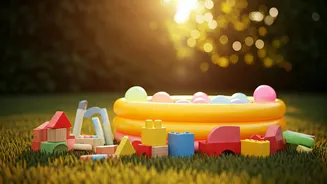
Play serves as a powerful vehicle for toddlers to build physical strength and refine motor skills. Activities like running, jumping, climbing, dancing, and engaging with balls help children develop their gross and fine motor coordination. Outdoor play, in particular, is highly beneficial for a toddler's overall physical health, contributing to better balance, improved coordination of bodily movements, and enhanced general well-being. The importance of physical development is on par with cognitive learning for young children. Through play, toddlers naturally acquire the physical prowess and coordination necessary for healthy growth and exploration of their environment.
Nurturing Curiosity and Creativity
Young children, especially those in the toddler age group, possess an innate sense of curiosity. Play is the ideal mechanism for satisfying this natural inquisitiveness. When a toddler constructs something with building blocks or creates a drawing, they are actively engaging their creative and imaginative faculties. This imaginative capacity is the foundation for developing into a future problem-solver or innovator. Furthermore, when learning is presented in a fun and playful manner, it instills a lifelong love for learning, encouraging continuous exploration and intellectual growth throughout their lives.