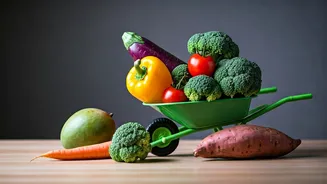







Making Veggies Playful
Transforming a child's perception of vegetables from mundane to magical is key. Instead of serving them as a chore, present them in visually appealing
and engaging ways. Think about crafting plates that resemble smiling faces, preparing colourful vegetable sticks, or setting up 'build-your-own' wrap stations where kids can assemble their own meals. These interactive elements tap into a child's innate curiosity and desire for autonomy, making the experience less about obligation and more about exploration. Even involving children in growing their own produce, perhaps through a small home or herb garden, can foster a sense of ownership and pride, making them more inclined to try what they've cultivated. When the focus shifts from 'eating your vegetables' to 'playing with your food,' resistance naturally diminishes, paving the way for a more positive relationship with healthy foods.
Texture Transformations
Texture plays a surprisingly significant role in a child's acceptance of food, often outweighing taste itself. The unpredictable feel of certain cooked or raw vegetables in their mouths can trigger gagging reflexes and outright refusal. Children are incredibly sensitive to variations in texture, from the softness of cooked peas to the crispness of raw carrot sticks. To navigate this, parents can experiment with different preparations: raw, roasted, grated, or pureed. Identifying a child's preferred texture for a specific vegetable, for instance, a preference for crunchy carrots over soft ones, is crucial. By respecting these preferences and accommodating them, parents build trust. Once a liked texture is established, it can serve as a gateway for trying other vegetables prepared in similar ways, gradually broadening their acceptance.
Conquering Neophobia
Between the ages of two and six, many children enter a phase known as food neophobia, characterized by a fear of trying new foods. Vegetables, often perceived as less sweet and more unfamiliar, are typically the first to be rejected during this developmental stage. This aversion is a natural, albeit challenging, part of growing up. However, resorting to force-feeding or simply hiding vegetables without addressing the underlying fear can actually exacerbate the problem. A more effective approach involves engaging children in the entire process, from grocery shopping and washing vegetables to arranging them on a plate. Simply placing vegetables on their plate without explicit pressure or demand can help alleviate anxiety. When children feel secure and have a sense of control over their environment, their natural curiosity is more likely to overcome their fear, leading to gradual acceptance.
Leading by Example
Children are keen observers, and their eating habits are significantly shaped by the behaviors they witness. When parents enthusiastically share meals and visibly enjoy vegetables, children internalize that these foods are normal and desirable. Conversely, if parents avoid vegetables, they unintentionally communicate that these foods are something to be shunned. Family-style dining, where children serve themselves from communal dishes, further encourages this observational learning and fosters a sense of shared experience. Research consistently shows that repeated exposure, coupled with positive parental influence, is highly effective in increasing children's vegetable intake. Casually and positively discussing vegetables, like mentioning their sweetness, can spark interest without pressure.>;
Low Pressure, Big Wins
Overwhelming children with large portions of vegetables can lead to immediate rejection. The key is to start small. Offering just a bite or a small portion shifts the focus from the daunting task of 'finishing everything' to the manageable goal of 'trying something new.' It's crucial to avoid pressure, force, or using rewards, as these tactics can be counterproductive and instill a negative association with vegetables. A relaxed approach, where children are told 'you don't have to eat it,' paradoxically increases the likelihood of them taking a bite. Each low-stress interaction builds familiarity and comfort. Over time, as children become more accustomed to seeing and tasting vegetables in a non-threatening way, they will begin to eat them more willingly. This method respects their autonomy while gently encouraging dietary diversity.
Understanding Taste Sensitivity
Children possess a heightened sensitivity to bitter tastes compared to adults, attributed to a greater number of taste buds on their tongues. Many vegetables, particularly leafy greens like broccoli or spinach, contain compounds that register as intensely bitter to their developing palates. Biologically, this natural aversion to bitterness may have served them well in ancestral times by helping them avoid potentially poisonous plants. In today's world, however, this innate reaction can lead them to shun nutritious foods. The most effective strategy is a patient and persistent introduction of vegetables in a gentle manner. Scientific studies indicate that it can take between 10 to 15 exposures to a new vegetable before a child begins to accept it, highlighting the importance of consistent, low-pressure offerings.