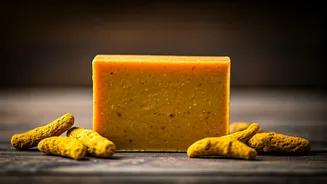









The Golden Glow
Turmeric soap has garnered significant attention, becoming a popular choice for those seeking natural skincare solutions. Its distinctive golden hue is due
to the presence of turmeric, a spice celebrated in traditional medicine for centuries. The trend's rise reflects a broader consumer interest in natural and holistic approaches to skincare, moving away from harsh chemicals and towards ingredients that are believed to be gentler and more beneficial. This shift in preferences has fueled the demand for turmeric soap, making it a staple in many skincare routines. The appeal of turmeric soap isn't solely based on its natural origins; its potential skincare advantages also play a crucial role.
Benefits of Turmeric
Turmeric is widely recognized for its anti-inflammatory and antioxidant properties, which are thought to be its primary benefits in skincare. The active compound, curcumin, is believed to be responsible for these effects. Users often report that turmeric soap can assist in reducing skin inflammation, potentially soothing conditions like acne, eczema, and psoriasis. Additionally, its antioxidant characteristics may help combat free radicals, protecting the skin from environmental damage. Another benefit is its potential for skin brightening, helping to even out skin tone and reduce the appearance of dark spots and hyperpigmentation. Regular use may lead to a noticeable improvement in skin clarity and radiance. Many users integrate turmeric soap into their daily routines for its comprehensive benefits, hoping for healthier and more vibrant skin.
Who Should Avoid?
While turmeric soap offers multiple potential benefits, it isn't universally suitable. Individuals with sensitive skin might encounter irritation or allergic reactions. The compounds in turmeric can be potent, and sensitive skin types may react negatively, leading to redness, itching, or breakouts. It is crucial to perform a patch test before regular use to see how your skin reacts. Those with specific skin conditions, such as rosacea, should exercise caution, as turmeric's active ingredients may exacerbate the condition. People with known allergies to spices within the ginger family should also be careful, as they may have cross-reactivity. If you experience any adverse effects, it's essential to discontinue use and consult a dermatologist. Prioritizing skin health by understanding its individual needs is key.
How to Use It
Incorporating turmeric soap into your skincare routine is relatively straightforward, but careful application is essential to get the best results. Start by wetting your face or body with lukewarm water. Gently lather the soap in your hands or on a washcloth, then apply it to your skin in circular motions. Avoid harsh scrubbing, especially on sensitive areas, to prevent irritation. Allow the lather to sit on your skin for a brief period, typically a minute or two, to maximize its benefits. Rinse thoroughly with lukewarm water, making sure to remove all traces of the soap. Following this, pat your skin dry with a soft towel and apply a moisturizer to help lock in hydration. Consistent use, as part of your daily skincare regimen, can enhance skin health.
Selecting Turmeric Soap
When choosing turmeric soap, it's important to consider certain factors. Look for soaps that contain natural ingredients, such as real turmeric and beneficial oils like coconut or olive oil. Avoid products with excessive chemicals, synthetic fragrances, and artificial colors, which can irritate the skin. The ingredient list is vital; the higher up turmeric is listed, the more of it the soap contains. Check for certifications, which may indicate the product has been tested and meets certain quality standards. Evaluate customer reviews for insights into the soap's effectiveness and any potential reactions. A quality turmeric soap will provide a blend of skincare benefits with ingredients designed to be gentle and effective. Selecting carefully can lead to a more positive skincare experience.