



A Glimpse Into The Past
Curiosity about bygone eras often leads us to historical artifacts and artistic renditions. For those eager to see India's majestic landscapes as they
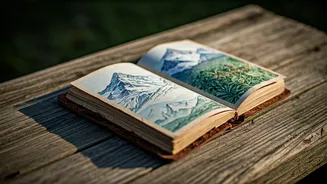
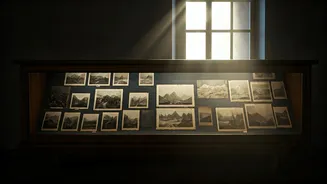
were over a century ago, a unique exhibition presents an extraordinary opportunity. This collection features a remarkable array of paintings and early photographic prints, offering a direct portal to India's past. Specifically, these visuals focus on the awe-inspiring Himalayan region, capturing its essence from approximately 170 years ago. This exhibition serves as a powerful reminder of how much our environment and the way we perceive it can evolve over generations, making these historical records invaluable for understanding both natural and cultural transformations. The visual narratives provide a tangible connection to a time when the world was being meticulously mapped and understood by explorers, presenting a stark contrast to the contemporary perception of these iconic mountains.
The Schlagintweit Legacy
For decades, the photographic and artistic legacy of the Schlagintweit brothers remained largely confined to European archives and academic circles, known primarily to specialists in mountaineering history and Alpine studies. However, this groundbreaking exhibition, titled "Himalayan Encounters: Hidden Views from 170 Years Ago," finally brings these treasures to India, offering the public an unparalleled opportunity to view the Himalayas through the eyes of these three German explorers. The exhibition features 77 historical images, providing a rare and intimate perspective on the upper Himalayan region. This collection represents a significant moment, as it allows Indian audiences to connect directly with visual records of their own heritage, captured during the colonial era when the brothers undertook extensive surveys of what they termed 'high Asia.' The images, a blend of early photography and detailed paintings, document not only the imposing landscapes but also the cultural and human elements of the time.
Navigating Colonial Surveys
In 1854, the East India Company commissioned Adolph, Hermann, and Robert Schlagintweit, accomplished German geologists, to expand the magnetic survey across the Indian subcontinent. While the Great Trigonometrical Survey of India had already made significant progress in mapping the 'great arc,' the northern Himalayan territories remained largely unexplored. The brothers faced a complex geopolitical landscape, navigating permissions from regions like Kashmir, encountering delays from Nepal, and outright refusals from Sikkim. This intricate political terrain shaped their expeditions. As historian Shekhar Pathak notes, the Schlagintweits were pioneers, being among the first Europeans to utilize cameras in their Indian surveys. They complemented their photographic work with paintings, often created over low-resolution prints. Their extensive findings were later compiled into seven volumes, which integrated detailed maps, precise measurements, and the visual documentation of the Himalayan terrain, providing a comprehensive record of their scientific endeavors and explorations.
A Treasure Returns Home
The exhibition in Delhi proudly displays 77 historical images, with at least five making their public debut in India. Among these captivating new reveals is a sweeping panoramic view of Dal Lake in Srinagar, elegantly framed by snow-capped peaks, and a striking depiction of the Bogapani Bridge in what is now Meghalaya, supported by sturdy wooden stilts across a dramatic hillside. The broader collection meticulously captures various facets of the Himalayas from an era defined by colonial ambitions to map the entire globe, including its most inaccessible reaches. Viewers will encounter images of flowing rivers, ancient temples, quaint settlements, and rugged high-altitude landscapes. These high-quality reproductions of the Schlagintweits' original paintings and early photographs are part of a larger archive comprising approximately 700 sketches from India and 'high Asia,' offering an expansive visual library of a past era.
Exhibition's Journey
The idea to bring these significant historical images back to India originated in 2015 when exhibition co-curator Hermann Kreutzmann, inspired by a visit to an exhibition at the Alpines Museum in Munich, encountered paintings of key Himalayan locations such as Nainital, Badrinath, Kedarnath, Kanchenjunga, Ladakh, and Tibetan monasteries. He described this collection as a 'khazana' (treasure) and was immediately inspired to organize an exhibition in India. The current travelling show, after its run in Delhi, is scheduled to move to Dehradun's Doon Library and Research Centre from May 1st to 9th, and subsequently to Nainital's CRST Inter College from May 12th to 18th. This itinerary ensures that audiences in the Himalayan region itself have an intimate opportunity to engage with visual representations of their own history. By reviving the story of the Schlagintweit brothers and their pioneering work, the exhibition not only educates but also underscores the enduring significance of the Himalayas as both a dynamic, living landscape and a repository of historical memory.