




AI's Inevitable Superiority
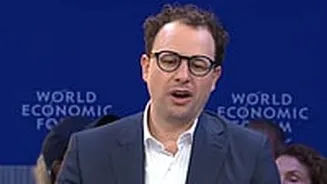
Dario Amodei, a leading voice in artificial intelligence and CEO of Anthropic, has articulated a strong conviction that AI systems are poised to outshine
human performance across a vast spectrum of tasks. In discussions, he has posited that the question isn't if AI will surpass human intelligence, but rather when and how this profound transition will be managed. Amodei emphasizes the critical need for responsible AI development, ensuring that its trajectory remains harmonized with fundamental human values. He highlighted a real-world example in radiology, referencing a nine-year-old prediction by Geoffrey Hinton that AI would displace radiologists. While AI has indeed become more adept at analyzing scans, Amodei observed that human radiologists are still in demand. Their role has evolved; they now focus more on patient interaction and guidance through the scanning process, indicating that while highly technical aspects may be automated, underlying human skills retain value. This dynamic suggests that AI's integration may reshape, rather than simply eliminate, job roles, necessitating a careful, step-by-step approach to its societal adoption based on observable evidence.
The Conundrum of Consciousness
The nature of consciousness represents one of the most significant and perplexing frontiers in AI research, according to Dario Amodei. He candidly admits that our understanding of consciousness in humans remains incomplete, making its replication in artificial systems an even more formidable challenge. Amodei suggests that while AI might develop behaviors that convincingly mimic conscious thought, the experience of subjective awareness could be fundamentally different. He posits that consciousness might emerge in highly complex systems capable of self-reflection, and he anticipates that advanced AI models could eventually develop something akin to consciousness or possess moral significance. Despite these future possibilities, Amodei doesn't view AI systems as being inherently distinct from the human brain in any essential way, hinting that future iterations might indeed cross the threshold into what we perceive as consciousness. The fundamental question of whether AI possesses consciousness, he notes, is an unresolved mystery, deeply intertwined with our own limited comprehension of what constitutes human consciousness.
Societal Shifts and Adaptation
The advancement of sophisticated AI technologies brings with it significant potential societal repercussions, including the possibility of widespread job displacement. Dario Amodei stresses the imperative for proactive planning and the formulation of forward-thinking policies to effectively navigate these upcoming challenges. He advocates for a measured integration of AI into society, emphasizing that its development should be guided by empirical evidence and implemented incrementally. The example of radiology illustrates how automation can lead to a reshaping of work rather than outright elimination. While certain specialized tasks may be automated, human-centric roles are likely to persist and adapt. Amodei's insights underscore the need for societal structures and economic models that can accommodate the evolving landscape shaped by AI, ensuring a smoother transition for the workforce and fostering continued relevance for human skills in an increasingly automated world.