






Masters of Camouflage
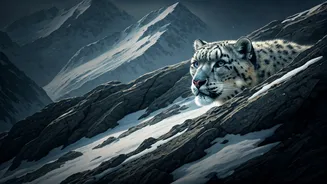
The elusive nature of snow leopards, often dubbed the 'ghosts of the mountains,' stems primarily from their astonishing ability to blend seamlessly into
their harsh, rocky, and snow-covered environments. Their thick, greyish-white fur acts as near-perfect camouflage, making them incredibly difficult to spot even for seasoned wildlife experts. This natural camouflage is not merely for hiding but is a crucial survival tool, aiding them in ambushing prey and evading detection. Wildlife teams can spend extended periods searching for a single individual without success, reinforcing their legendary invisibility. This remarkable ability to disappear against the mountain backdrop is a primary reason why sightings are so infrequent, contributing significantly to their mystique and reputation as spectral inhabitants of the high altitudes.
Leaping Predators
Snow leopards possess a remarkable physical prowess that allows them to navigate their treacherous mountain habitats with incredible agility. They are capable of making astonishingly long jumps, often spanning distances several times the length of their own bodies. This ability is vital for traversing steep ravines, rocky outcrops, and chasms common in their elevated territories. These powerful leaps not only aid in movement but are also integral to their hunting strategy, enabling them to surprise and capture prey in dynamic and challenging terrain. Their athletic capabilities contribute significantly to their survival and their reputation as formidable mountain hunters, moving with a grace and power that belies their elusive nature.
Crepuscular Hunters
Unlike many other predators that are most active during the peak of daylight, snow leopards typically engage in their hunting activities during the transitional hours of early morning and late evening. This crepuscular behavior is thought to be a strategic advantage, offering better opportunities for ambushing prey in the often rapidly changing light conditions of mountainous regions. It also helps them avoid the harsher elements and potentially greater visibility during midday. This preference for dawn and dusk further contributes to their elusive profile, as fewer people are present in their remote habitats during these times, making sightings even rarer and enhancing their mysterious aura.
Solitary Existence
The snow leopard leads a predominantly solitary life, a trait that sets it apart from some other large feline species known for their social structures. These big cats generally prefer to roam and hunt alone, interacting with others primarily for mating or when raising their young. This independent nature means they maintain vast territories and usually avoid unnecessary social encounters. Such a reclusive lifestyle naturally leads to fewer sightings by humans, as they are not typically found in groups or engaging in activities that would draw attention. This inherent solitude is a significant factor in their mystique and the rarity of human encounters, cementing their reputation as independent and solitary beings.
High-Altitude Dwellers
Snow leopards are uniquely adapted to survive in some of the planet's most extreme environments – high-altitude mountain ranges where oxygen levels are low and temperatures plummet to brutal lows. They inhabit regions across parts of India, Nepal, Bhutan, Mongolia, and China, with a significant presence in India's Himalayan belt, particularly in Ladakh and Himachal Pradesh. These harsh conditions, including freezing winters, are challenging for most wildlife, but the snow leopard thrives. Their physiological makeup allows them to endure and prosper in these inhospitable terrains, making them one of the few large predators perfectly suited to such extreme altitudes and climates.
Thick Insulating Fur
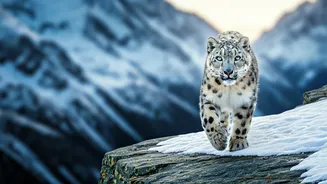
To withstand the dangerously cold weather prevalent in their mountain habitats, snow leopards possess an exceptionally dense and thick coat of fur. This luxurious fur acts as a highly effective insulator, providing vital protection against freezing temperatures and harsh winds. Among big cats inhabiting cold regions, the snow leopard's coat is one of the most substantial, ensuring their survival in environments where hypothermia would be a constant threat to less-adapted animals. This remarkable insulation is a testament to their evolutionary adaptations for life in extreme cold, keeping them warm and comfortable even in the most severe winter conditions.
Exceptional Tail
A striking feature of the snow leopard is its unusually long and thick tail, which is disproportionately large compared to its body size. This magnificent appendage serves multiple critical functions for the animal's survival in its rugged mountain home. Primarily, it acts as a vital counterbalance while the leopard navigates precarious rocky ledges and leaps across steep precipices, providing stability and agility. Furthermore, during intensely cold weather, the snow leopard ingeniously wraps its long tail around its face and body like a scarf, offering an extra layer of warmth and protection against the biting chill, demonstrating a clever use of its anatomy for comfort and survival.
Unique Paws for Snow
The snow leopard's paws are a marvel of natural engineering, specifically adapted for life on snow and ice. They are broad and covered with thick fur, which serves a dual purpose: it provides excellent traction on slippery surfaces and prevents the animal from sinking too deeply into the snow, much like built-in snowshoes. This furry covering also offers insulation and protection from the frigid ground. These large, fur-lined paws are essential for their mobility, allowing them to traverse snowy slopes and icy terrains with greater ease and security, significantly enhancing their ability to hunt and move through their challenging environment.
Silent Vocalizations
Contrary to the powerful roars often associated with big cats like lions, snow leopards possess a unique and much softer vocal repertoire. Instead of roaring, they communicate through a range of gentler sounds, including hisses, growls, yowls, and a distinctive sound known as 'chuffing.' This quieter vocalization is a non-threatening sound also found in some other wild cat species. For an animal that appears so robust and powerful, its subdued vocalizations can be surprising. This difference in vocal behavior contributes to their stealthy and elusive nature, as their communication is less likely to travel long distances or alert potential prey.