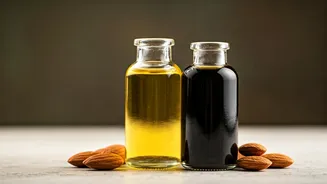







Almond Oil Varieties Explained
Many households have relied on almond oil for generations, often without questioning its source or type. However, a closer look reveals a significant distinction:
sweet almond oil and bitter almond oil. The oil you commonly find in stores labeled simply 'almond oil' is usually derived from sweet almonds, the same kind we eat, and is deemed safe for topical applications on hair and skin. In contrast, bitter almond oil originates from a different type of almond and contains compounds that make it unsuitable and potentially harmful for direct scalp use. Therefore, when seeking benefits for your hair, understanding this difference is paramount to ensure you're selecting the correct product.
Safety and Feel on Hair
When it comes to hair care, safety and texture are primary concerns. Sweet almond oil stands out for its gentleness, making it a universally accepted choice for hair, skin, and even baby products. Its light, non-greasy consistency is a significant advantage, especially in humid climates like India, where heavy oils can feel uncomfortable and weigh hair down. Unlike some generic 'almond oil' products that might feel thick or overly oily, sweet almond oil absorbs effectively into the scalp. Bitter almond oil, however, carries risks if not properly processed due to its chemical composition, rendering it inappropriate for regular hair treatments and primarily relegated to applications like perfumery.
Nutrient Powerhouse for Hair
Sweet almond oil is a rich source of essential nutrients that actively benefit hair health. It is abundant in Vitamin E, a potent antioxidant crucial for maintaining a healthy scalp environment. The oil also contains beneficial healthy fats that combat dryness and keep hair moisturized, alongside magnesium, which has been noted in some studies for its potential to reduce hair fall. These components work synergistically to fortify hair strands, enhance softness, and improve overall resilience against damage, contributing to a healthier hair structure from root to tip.
Promoting Growth and Health
While no single oil can induce rapid hair growth, sweet almond oil significantly contributes to an optimal environment for hair to thrive. It addresses key issues that hinder healthy hair development. By smoothing the hair shaft and infusing moisture, it drastically reduces breakage, making hair appear longer and healthier over time. Furthermore, regular scalp massage with sweet almond oil boosts blood circulation, alleviates dryness, and maintains scalp balance, which are fundamental for robust hair growth. The immediate effects are also noticeable, with hair becoming softer, more lustrous, and easier to manage, creating a positive cycle of hair well-being.
Choosing and Using Wisely
For optimal hair benefits, opt for sweet almond oil, preferably in its cold-pressed form. This method preserves more of the oil's natural nutrients. When purchasing, always verify that the label explicitly states 'sweet almond oil' or confirms it's derived from sweet almonds. Incorporating it into your routine is straightforward: a classic 'champi' (head massage) with slightly warmed oil for 5-10 minutes, left on for an hour or overnight, a couple of times weekly, is highly effective. You can also blend it with other oils like coconut for added moisture or castor oil for a richer treatment. A tiny amount can even be used as a leave-in for ends to combat frizz, but moderation is key to avoid greasiness.
Common Pitfalls to Avoid
To maximize the benefits of sweet almond oil and avoid potential setbacks, be mindful of common mistakes. Using an excessive amount of oil can make hair difficult to wash out thoroughly, leading to a weighed-down feeling. It's also important to manage expectations; significant improvements in hair health and appearance take time and consistent application, not overnight miracles. Furthermore, remember that overall hair health is intrinsically linked to internal factors like diet and hydration. Lastly, always invest in high-quality, pure sweet almond oil to ensure you're receiving the intended nutritional benefits without any unwanted additives or adulterations.