





Termite Mounds: Skyscrapers of Mud
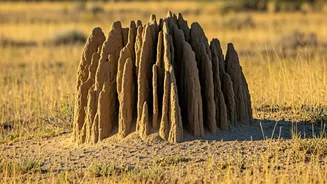
Though individually small, termites achieve monumental feats of engineering with their towering mounds, some reaching over 20 feet into the sky, akin to human
skyscrapers. These aren't haphazard structures; they are meticulously designed edifices featuring complex tunnel networks, climate-controlled chambers, dedicated nursery areas, and even fungus farms for sustenance.Remarkably, these mounds maintain a stable internal temperature despite drastic external fluctuations, a testament to their sophisticated ventilation systems. Colonies often comprise millions of individuals, operating as a cohesive super-organism, transforming their mounds into bustling insect cities that demonstrate incredible collective intelligence and architectural skill.
Prairie Dog Towns: Underground Cities
Prairie dogs excavate far more than simple burrows; they create expansive subterranean metropolises known as 'prairie dog towns'. These interconnected networks can span miles and shelter thousands of these social rodents. Each 'village' is organised into familial units called coteries, with specialized chambers designated for sleeping, raising their young, and providing refuge from predators. They even implement rudimentary lookout systems, utilizing distinct alarm calls to warn of specific threats. From an aerial perspective, these settlements present an organised grid-like pattern beneath the North American grasslands, illustrating sophisticated spatial planning and community organisation.
Beaver Dams: Landscape Transformers
The beaver stands out as a prime example of an ecosystem engineer. By skillfully employing logs, mud, and stones, these industrious animals construct dams that dramatically alter flowing streams into tranquil ponds. Surrounding these newly formed ponds, they erect lodges – their distinctive dome-shaped homes, complete with underwater entrances to ensure safety from aquatic predators. Over time, the accumulation of multiple lodges and a network of waterways fostered by these dams cultivates vibrant wetland ecosystems. These beaver-engineered 'villages' become essential habitats, supporting a diverse array of life including fish, birds, amphibians, and various plant species, thereby fundamentally reshaping entire landscapes.
Ant Colonies: Organized Ecosystems
Ant colonies represent some of the most complex societies found on Earth, showcasing astonishing levels of organization. Beneath the surface, ant nests boast elaborate tunnel systems with precisely allocated chambers for storing food, nurturing larvae, discarding waste, and even cultivating fungi. Leafcutter ants, for instance, practice a form of agriculture by maintaining fungus gardens within their colonies. Some 'supercolonies' can extend for kilometers, housing millions, if not billions, of ants that cooperate with remarkable efficiency. Despite the absence of a central architect or overseer, these colonies operate with an unparalleled level of coordinated effort.
Weaver Birds: Treetop Apartments
Weaver birds elevate the concept of communal living to the treetops, constructing impressive shared nests. Certain species, notably the sociable weaver found in southern Africa, build enormous communal structures capable of housing hundreds of birds simultaneously. These magnificent, thatched dwellings, often suspended from trees or utility poles, are internally divided into numerous individual nesting chambers, functioning much like avian apartment complexes. Some of these nests have been in continuous use for decades, expanding as new generations establish residency. Featuring separate entrances and excellent insulation against extreme weather conditions, these bird settlements serve as exemplary models of cooperative architecture and social living.