



A Culinary Revelation
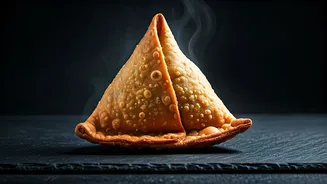
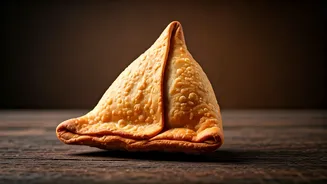
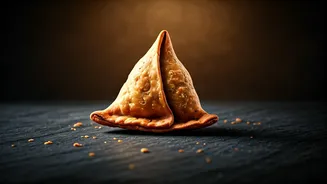
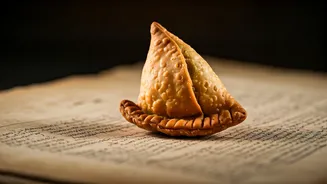
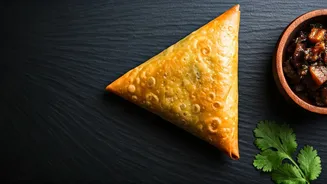
The samosa, a ubiquitous snack in India, is often taken for granted. However, a recent online sensation has brought its historical roots into sharp focus,
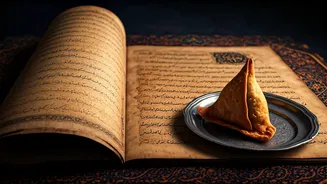
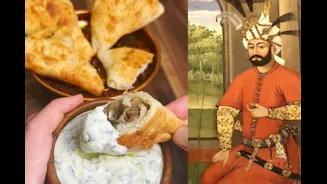
prompting a re-evaluation of its very essence. The conversation isn't about flavor profiles or regional variations but rather about the samosa's authentic composition and, notably, what it once lacked. This shift in perspective was ignited by a viral post detailing an ancient recipe unearthed from a Persian manuscript, purportedly dating back five centuries. This manuscript's journey through history is as intriguing as the recipe itself, having passed through the hands of notable figures like Emperor Akbar and Tipu Sultan before its current custodianship at the British Museum, sparking widespread curiosity and debate.
The Ni'matnama Manuscript
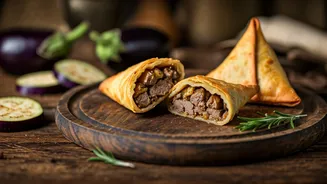
This remarkable recipe is reportedly housed within the pages of the Ni'matnama, aptly translated as the “Book of Delights.” This culinary compendium was penned between 1501 and 1510 for the Sultan of Mandu, a ruler in central India during a period of grand royal kitchens. At this juncture, the samosa was far from the humble street food we recognize today; it was a dish crafted for elite palates. The ingredients listed in the manuscript reflect this opulence: instead of the potato filling that has become standard, this ancient version featured a rich blend of roasted aubergine pulp, dried ginger, and finely minced lamb seasoned with onion and garlic. The entire creation was then meticulously fried in ghee, signifying a dish of considerable refinement and luxury.
Absence of Staples
Perhaps the most astonishing aspect of this historical samosa recipe is the complete absence of potatoes and chillies, ingredients now considered quintessential to the Indian samosa. These components were not integral to Indian culinary practices during the early 16th century when the Ni'matnama was compiled; their widespread adoption occurred much later. Consequently, the samosa of that era would have presented a flavor profile remarkably distinct from the spicy, hearty rendition familiar to contemporary diners. This historical detachment from potatoes and chillies underscores how much the beloved snack has transformed over half a millennium, adapting to new ingredients and evolving tastes as it transitioned through different eras and social strata.
Evolution Through Time
Over centuries, the samosa's journey mirrored societal shifts, transitioning from the exclusive domain of royal banquets to the common fare enjoyed by the masses. As its popularity expanded beyond palatial kitchens, the recipe naturally underwent modifications. Ingredients were simplified, and preparation methods became more accessible, gradually leading to the widespread, easy-to-prepare street food version that has become a staple across India today. This organic evolution highlights how culinary traditions are dynamic, constantly reshaped by availability of ingredients, cultural exchange, and the practical needs of everyday cooking, making the modern samosa a product of a long and varied history.
Online Discourse Ignited
The revelation of this ancient recipe has sparked a vibrant online conversation, prompting many to reflect on the profound connection between food, history, and cultural identity. Internet users have widely shared their astonishment, with many noting how food narratives are intrinsically woven into the fabric of history. Comments frequently express awe at how the samosa, while now deeply associated with India, might have originated elsewhere or at least undergone significant transformations. This discussion also touches upon the migratory nature of cuisine, with some users playfully referring to the samosa as an 'immigrant' dish. However, counterarguments have also emerged, with some asserting the samosa's Indian origins, citing historical accounts of its presence in the subcontinent from earlier centuries, demonstrating the complexity and ongoing debate surrounding its lineage.