





Preemptive Strikes Launched
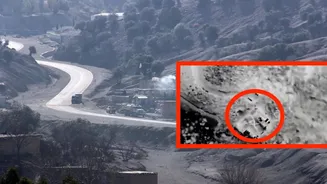
In a significant escalation, Pakistan initiated a series of aerial bombardments across Afghanistan during the night of Thursday and Friday. This operation,
designated 'Operation Ghazab Lil Haq,' targeted key military installations in major Afghan cities including Kabul and Kandahar. Pakistan's justification for these strikes stemmed from what it described as unprovoked gunfire emanating from across the border. The Pakistani government asserted that the operation was effective, claiming to have neutralized critical militant infrastructure and inflicted substantial casualties on the Afghan side, stating that 133 Afghans were killed. This military action followed previous Pakistani strikes on the Nangarhar and Paktika provinces, which, according to the UN mission in Afghanistan, resulted in the deaths of at least 13 civilians. The Taliban government, however, disputed Pakistan's casualty figures, asserting that at least 18 people were killed on their side and rejecting Pakistan’s claim of over 80 militants dead. Both nations also reported instances of cross-border firing on Tuesday, though without immediate reports of casualties on that occasion.
Taliban's Retaliation
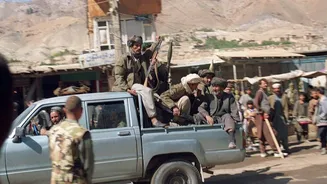
The Pakistani airstrikes were a direct response to earlier actions by Taliban forces. Earlier on Thursday, the Taliban had launched what they termed 'large-scale offensive operations' along the Durand Line, the contested border dividing Pakistan and Afghanistan. This move was presented as retaliation for what the Taliban described as repeated violations by the Pakistani military. The Durand Line itself remains a point of contention, as Afghanistan has never formally recognized it as a legitimate boundary. These escalating military engagements have severely strained the relationship between the two neighboring Islamic countries. In recent months, key land border crossings have frequently been shut down, reflecting the heightened tensions between the governing bodies in Islamabad and Kabul. The Pakistani Prime Minister, Shehbaz Sharif, publicly stated that Pakistan's armed forces possess the full capacity to 'crush' any aggressive ambitions, reinforcing the nation's resolve in the face of perceived threats. He added that the entire Pakistani nation stood united with its armed forces.
Conflicting Casualty Reports
The immediate aftermath of 'Operation Ghazab Lil Haq' was marked by conflicting accounts regarding casualties. Pakistan's information minister, Ataullah Tarar, lauded the operation as 'strong and effective,' noting that it was a response to attacks from Afghanistan. He also reported that two Pakistani soldiers were killed and three others sustained injuries. He further elaborated on X that Pakistan was executing a 'strong and effective response' to what he characterized as an unprovoked assault from Afghanistan, vowing continued action. Mosharraf Ali Zaidi, a spokesperson for Pakistani Prime Minister Shehbaz Sharif, corroborated this, stating that 'a total of 133 Afghan Taliban are confirmed killed, more than 200 wounded. Many more casualties estimated in strikes in Kabul, Paktia and Kandahar military targets.' Conversely, the Taliban government, through its spokesman Zabihullah Mujahid, confirmed the Pakistani airstrikes but vehemently denied any casualties on their side. Mujahid also informed AFP that several Pakistani soldiers had been 'caught alive,' a claim that was subsequently denied by the Prime Minister's office in Islamabad. The Afghan defence ministry, however, did report that eight of its soldiers were killed during the land offensive.
Impact on Civilians
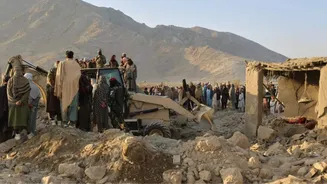
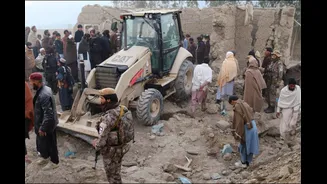
While official statements focused on military targets and personnel, the conflict also had a direct impact on civilians. In Kabul, at least three explosions were reported, though specific locations and immediate casualty information were not readily available. Residents in the Afghan capital described hearing jets overhead followed by multiple loud blasts, with gunfire persisting for over two hours. In Kandahar, a major southern city and the base of Supreme Leader Hibatullah Akhundzada, locals also reported hearing aircraft overhead. More concerningly, an Afghan official stated that several civilians were wounded near the Torkham border crossing. These civilians were reportedly in a camp housing individuals returning from Pakistan. Qureshi Badlun, the information chief in Nangarhar province, detailed that 'A mortar shell has hit the camp and unfortunately seven of our refugees have been wounded, and the condition of one woman is serious.' Although the border has been largely closed since October, Afghan returnees have been granted passage, making the shelling of a refugee camp a particularly grave development in the ongoing hostilities.
Diplomatic Interventions
The escalating tensions and cross-border incidents have prompted diplomatic engagement, albeit with limited success. Saudi Arabia previously intervened earlier this month, playing a mediating role in securing the release of three Pakistani soldiers who had been captured by Afghanistan in October. This incident highlighted the precarious state of relations and the ongoing need for de-escalation. The repeated violations of the initial ceasefire underscore the fragility of peace between the two nations. The current military exchanges, including Pakistan's 'Operation Ghazab Lil Haq,' represent a significant deterioration in diplomatic ties. The international community, particularly regional powers, will be closely observing these developments. The ongoing dispute over the Durand Line and the complex political dynamics within both countries continue to fuel instability. The capture of Pakistani soldiers and subsequent Pakistani strikes demonstrate a dangerous cycle of retaliation that poses a significant threat to regional security and stability.