






What's the Fuss?
A peculiar parenting strategy has swept across social media platforms, captivating parents with its purported ability to swiftly end toddler meltdowns.
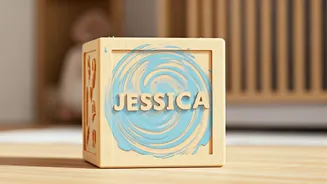
Dubbed 'Where is Jessica?', this seemingly unconventional approach involves a simple, yet surprising, question posed during moments of distress. While its origins might seem unusual, the technique has garnered significant traction among caregivers grappling with the intense emotional outbursts characteristic of early childhood. The core idea hinges on a sudden, unexpected inquiry designed to jolt the child out of their emotional spiral, offering a moment of pause and redirection. This method has become a go-to for parents seeking an immediate reprieve from public tantrums or stressful situations, providing a seemingly effortless solution without escalating the conflict.
The Science of Distraction
At its heart, the 'Where is Jessica?' method operates on the principle of 'pattern interrupt.' Toddlers often experience tantrums when overwhelmed by emotions they struggle to process or articulate. This technique effectively breaks the cycle of intense feeling by introducing an abrupt shift in focus. When a parent poses a question about an unknown individual, like 'Where is Jessica?', the child's attention is immediately diverted from their distress. This cognitive jolt redirects their energy, pausing the emotional cascade and creating an opening for them to calm down. It's akin to a brief mental detour, steering the child away from the overwhelming emotion and towards a novel, albeit temporary, curiosity.
Parental Appeal
The widespread adoption of the 'Where is Jessica?' trend by parents is largely due to its immediate and uncomplicated effectiveness, particularly in public settings. Navigating a grocery store or a busy park with a crying toddler can be highly stressful, and this technique offers a discreet and rapid way to manage the situation. It allows parents to regain control without raising their voices or resorting to more forceful disciplinary measures, preserving a sense of calm for everyone involved. The beauty of this method lies in its simplicity; it requires no special preparation or props, making it a readily accessible tool for any caregiver in a moment of need, offering a quick fix for a common parenting challenge.
Expert Reservations
Despite its practical advantages, the 'Where is Jessica?' trend has sparked a debate among child development experts. While acknowledging its efficacy as a short-term distraction, many psychologists express concerns about its potential impact on a child's emotional development. They argue that while it may quickly halt a tantrum, it doesn't address the underlying emotions driving the outburst. Over-reliance on such 'shock therapy' might hinder a child's ability to learn healthy coping mechanisms for their feelings. Some specialists even caution that repeated use of these sudden distractions could inadvertently lead to confusion or distress in young children, potentially impacting their long-term emotional resilience and self-regulation skills.
Deeper Connections
While the 'Where is Jessica?' tactic can serve as a useful temporary measure, experts emphasize that fostering emotional intelligence in children requires a more profound approach. The cornerstone of effective tantrum management involves genuine emotional connection and support. This includes actively acknowledging and validating a child's feelings, remaining present and attuned to their emotional state, and responding with empathy and understanding. Offering choices can also empower children and help them navigate difficult emotions. These strategies aim to equip children with the skills to comprehend and express their powerful emotions constructively, building a stronger foundation for emotional well-being than mere distraction can provide.