



Nature's Perfume Potions
Indian Ittar is a testament to the enduring allure of natural fragrances, standing apart from modern synthetic perfumes. Its creation is a time-honored
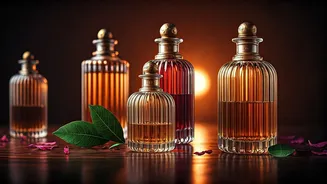
practice deeply rooted in traditional Indian perfumery, relying entirely on the potent essences extracted from various botanical elements. Unlike colognes or eau de parfums, which often contain alcohol and synthetic compounds, Ittar is a pure, concentrated aromatic oil. This oil is derived through a labor-intensive process, typically involving distillation, where the volatile oils from flowers, herbs, spices, and even woods are meticulously collected. The resulting product is an unadulterated scent, capturing the very soul of the plant it originated from. Each drop is a concentrated essence, requiring a vast quantity of raw material to produce, making it a precious commodity. The art of Ittar making is not merely about scent; it's about preserving nature's aromatic legacy in its most authentic and potent form, offering a sensory experience that is both deeply personal and universally enchanting.
The Art of Distillation
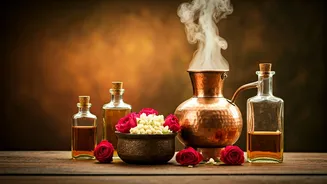
The heart of Ittar production lies in the ancient technique of hydro-distillation, a process that has been refined over centuries. This method, often carried out in copper or brass vessels known as 'deg' and 'bhapka', involves heating plant material, such as flower petals, leaves, or roots, with water. As the mixture heats up, the aromatic compounds within the plant turn into steam. This aromatic steam then travels through a bamboo pipe to a condenser, where it is cooled and liquefies. The resulting liquid is a mixture of water and essential oil. This oil, being lighter and immiscible with water, separates and floats on top, and is then carefully collected. To achieve the high concentration and purity characteristic of Ittar, this process often requires multiple distillations, sometimes referred to as 'attar phookna'. This painstaking repetition ensures that every possible aromatic molecule is extracted from the source material, resulting in an incredibly potent and long-lasting fragrance. The careful monitoring of temperature and time is crucial, as even slight variations can affect the final scent profile, demanding immense skill and experience from the perfumer.
Floral Essences Unveiled
The diversity of Indian flora provides a rich palette for Ittar creation, with each flower lending its unique character to the final scent. Rose Ittar, perhaps the most iconic, is crafted from the petals of Damask or desi roses, requiring an astonishing number of blossoms – sometimes up to 5,000 kilograms – to yield just one liter of pure oil. Similarly, Jasmine Ittar, known for its heady, intoxicating aroma, is painstakingly extracted from night-blooming jasmine flowers, often harvested by hand just before dawn to capture their peak fragrance. Other popular floral Ittars include Kewda, derived from the fragrant pandanus flower, which imparts a sweet, almost fruity scent, and Motia, made from the delicate white jasmine flowers, offering a cleaner, more refined floral note. The extraction process for these flowers is highly sensitive; for instance, jasmine and tuberose are often subjected to a process called 'pomade' extraction, where their fragrance is absorbed by a fatty substance, which is then further processed to isolate the aromatic oil. Each floral Ittar is a tribute to the ephemeral beauty of its source, capturing a moment in nature's bloom.
Beyond Blossoms, Aromatic Woods
While floral essences often dominate the world of Ittar, the craft extends to the rich, deep aromas of woods and other botanicals, offering a different spectrum of olfactory experiences. Sandalwood Ittar is a prime example, renowned for its smooth, woody, and calming fragrance. Traditionally, this Ittar was made by distilling sandalwood logs, a practice that has become increasingly regulated due to the endangered status of the Indian sandalwood tree. The resulting oil is highly valued for its complex aroma and therapeutic properties. Agarwood, also known as oud, is another precious material used for Ittar production. This dark, resinous wood, formed when a specific type of mold infects certain trees, produces an intensely rich, leathery, and musky scent that is highly sought after. The extraction from agarwood is a lengthy and intricate process, contributing to its high cost and desirability. Beyond woods, Ittars can also be derived from spices like vetiver, which provides an earthy, smoky, and grounding aroma, or even from ingredients like saffron, imparting a subtle yet luxurious note. These non-floral Ittars showcase the versatility of the distillation technique and the vast aromatic potential found across the plant kingdom.