




Ant Colony Architects
Ants are remarkably skilled at creating their homes, a testament to their social structure and survival needs. Depending on the species, these industrious
insects construct elaborate underground networks featuring numerous tunnels and specialized chambers for different colony functions, such as sleeping, storing food, or rearing young. Other ant species prefer above-ground constructions, meticulously arranging twigs, sand, or gravel. A particularly fascinating example is the weaver ant, which employs a unique method of pulling leaves together and using silk produced by its larvae to securely bind them, forming a cohesive nest. These carefully built structures are not merely shelters; they are vital for the colony's organization, protection, and efficient daily operations, reflecting a sophisticated level of natural engineering.
Termite Mega-Structures
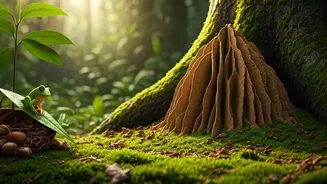
Termites are responsible for some of the most complex and impressive nests found in the animal kingdom, often referred to as mounds. These self-contained environments are engineered to maintain precise conditions essential for the colony's survival. The internal climate is carefully regulated, keeping the nests warm, humid, and dark to prevent desiccation and provide optimal conditions for the termites. Many termite mounds incorporate sophisticated ventilation systems that actively control airflow, regulate temperature, and manage humidity levels, creating a stable and protective microclimate. Some species even extend their nest structures deep underground, creating vast subterranean complexes alongside the iconic above-ground mounds, effectively creating natural, climate-controlled habitats that are marvels of biological architecture.
Fishy Nest Builders
The art of nest building extends to the aquatic realm, with certain fish species exhibiting remarkable parental care through construction. A prime example is the three-spined stickleback, a small fish known for its intricate nest-building behavior. The male stickleback undertakes the task of constructing a nest primarily from fragments of aquatic plants. To hold these materials together, he employs a unique adhesive substance secreted from his kidneys, essentially a form of biological cement. The purpose of this carefully crafted nest is twofold: it serves as an attractive display to entice potential mates, and crucially, it provides a safe haven for the eggs. This nesting behavior is intrinsically linked to reproduction and the instinct for parental protection among these fish.
Amphibian Foam Homes
Certain species of frogs have adopted an extraordinary method of protecting their offspring by constructing nests out of foam. These unique structures play a critical role in ensuring the survival of their eggs. The frothy mass created by these frogs provides a protective barrier, shielding the eggs from a variety of threats, including potential predators, harmful parasites, and the damaging effects of excessive heat or dryness. The foam is remarkably stable, capable of maintaining its integrity for several days, even in challenging tropical climates. This ingenious survival strategy guarantees a consistently moist and secure environment for the developing eggs until they are ready to hatch, demonstrating a highly adaptive reproductive technique.
Squirrel Drey Dwellings
When it comes to arboreal homes, squirrels construct what are known as dreys, which are essentially cozy nests nestled high in trees. These structures are typically spherical in shape and are intricately woven from twigs, creating a robust framework. To enhance comfort and insulation, squirrels line their dreys with soft materials such as mosses, dried grass, fallen leaves, and pieces of tree bark. These dreys are strategically built at elevated positions, often close to the main trunk of the tree. This placement offers significant protection from ground-dwelling predators, making the drey a secure and safe refuge for the squirrel and its young, showcasing a practical approach to predator evasion in their natural habitat.