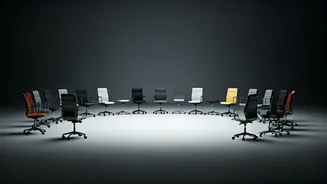








The Reliable Co-Pilot
Opting for Chair 1 signifies a desire to be an active participant and a supportive force. Individuals who gravitate towards this position see themselves
as essential team members, closely aligned with leadership. They are the dependable individuals who ensure tasks are completed, especially when challenges arise. This choice isn't about seeking dominance but rather about ensuring smooth operations and contributing effectively to the group's objectives, demonstrating a proactive and supportive stance within the established structure.
The Diplomatic Buffer
Choosing Chair 2 suggests a preference for being well-informed without being in the direct line of fire. This position is indicative of an observant and diplomatic personality, allowing one to gauge the room's atmosphere before fully engaging. It provides enough proximity to understand the leader's intentions while maintaining a comfortable distance. This approach prioritizes harmony and thoughtful observation, suggesting a strategic patience in contributions and a careful assessment of the situation before immersing oneself.
The Thoughtful Analyst
Selecting Chair 3 points to a personality that values deep contemplation and a measured approach. These individuals are not inclined to fill silences unnecessarily, preferring to let discussions unfold. They meticulously analyze all facets of a conversation, often arriving at crucial insights others have overlooked. This reserved nature is a strength, enabling them to process information deliberately and offer well-considered perspectives, thereby maintaining composure even in high-pressure environments.
The Skeptical Insider
Picking Chair 4 indicates an engaged yet critically minded participant. Those who choose this seat are analytical and may not readily agree with prevailing opinions. They tend to scrutinize proposals, identifying potential weaknesses or alternative outcomes that others might miss. This tendency stems from a commitment to truth and optimal results, rather than a desire to obstruct. They are comfortable voicing dissenting opinions, understanding that constructive skepticism often leads to superior solutions.
The Direct Confrontationalist
Chair 5 is chosen by individuals with a high degree of self-assurance and a straightforward communication style. They directly express their viewpoints without hesitation or embellishment. When faced with tension, they tend to engage rather than withdraw, relishing robust debate and respecting others who share their candor. This position signifies a willingness to confront issues head-on and a commitment to open, honest dialogue.
The Observant Outsider
Drawn to the periphery, individuals choosing Chair 6 are often keen observers. They excel at understanding group dynamics and non-verbal cues, learning much from silent observation. While they may not speak frequently, their minds are actively processing information. Their contributions, when they come, are typically based on unique perspectives that others might have missed, deriving strength from their position on the fringes and processing information thoroughly before engaging.
The Selective Strategist
Selecting Chair 7 suggests a conscious management of mental energy, avoiding meeting theatrics and extraneous details. These individuals remain mentally present but are selective about their participation, akin to a strategist waiting for the opportune moment. They speak only when necessary, conserving their energy and preventing burnout by focusing on impactful contributions rather than constant engagement.
The Empathetic Unifier
This seat is for those who act as the emotional core of a group. They are highly attuned to the feelings of others and use their presence to foster a more welcoming atmosphere. Often providing warmth, initiating light conversation, or using humor, they help to create a comfortable and open environment, making others feel at ease and more likely to connect.
The Dedicated Follower
Choosing Chair 9 indicates a strong desire for guidance and clear instruction. Proximity to leadership is sought for a sense of security and support, marking a dedicated approach to following direction. Staying close to the authority figure ensures alignment and draws confidence from being part of the influential inner circle.