

A Vision in Art
Shalini Passi's Delhi abode is far more than just a residence; it's a testament to the symbiotic relationship between living space and artistic expression.
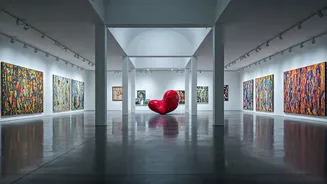
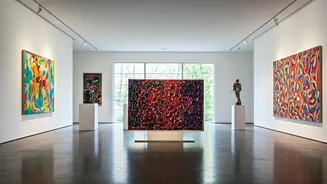
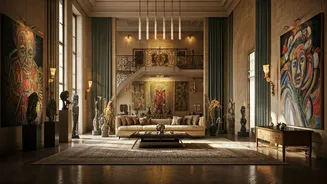
Spanning an impressive 20,000 square feet in the prestigious Golf Links area, this bungalow is a meticulously crafted environment designed to stimulate the senses and foster creativity. Passi describes its creation over five years as a profound 'labour of love,' where every element is intentionally placed to reflect a personal philosophy and curate an immersive experience. The architectural design itself is a statement, featuring a graceful, curved facade that opens onto meticulously maintained grounds. Dominating the landscape is a striking 25-foot Buddha head sculpture by the renowned artist Subodh Gupta, an anchor point for the property's aesthetic. The exterior embraces a minimalist palette of white walls, natural wood, and expansive glass panels, setting a serene stage for the vibrant, maximalist interiors. This deliberate contrast between the understated exterior and the richly detailed interior creates a layered and dynamic sensory journey for anyone stepping inside. The home functions as a living gallery, continually showcasing a diverse collection of artworks, from paintings and sculptures to intricate installations, complemented by designer furnishings and decorative pieces, making it a unique reflection of Passi's personal taste and dedication to art.
Design for Living
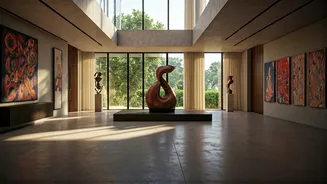
The design of Shalini Passi's residence extends beyond mere visual appeal, focusing on creating an environment that is both stimulating and comforting. The central living area boasts cathedral-like proportions, bathed in natural light thanks to enormous glass windows that artfully frame both internal and external artistic displays. These windows not only illuminate the space but also seamlessly integrate the surrounding nature into the interior design. The floors are adorned with a luxurious combination of marble and plush carpets, including exquisite Persian rugs, adding layers of texture and warmth. Lush crystal chandeliers hang from above, casting a sophisticated glow, while intricate woodwork details lend an artisanal touch throughout. Outside the main structure, carefully designed spaces such as a serene garden, a refreshing swimming pool, and a tranquil gazebo offer pockets of calm amidst the grandeur, providing opportunities for relaxation and reflection. This thoughtful balance between visual opulence and an open, airy atmosphere ensures the home offers both invigorating stimulation and a peaceful retreat, catering to a variety of moods and needs for its inhabitants.
Creativity and Wellbeing
The profound impact of living in a space as artfully curated and expansive as Shalini Passi's 20,000 sq ft Delhi mansion can be significant for mental wellbeing and creative output. According to Sonal Khangarot, a licensed rehabilitation counsellor and psychotherapist, richly detailed, maximalist environments, like Passi's home, offer a visually stimulating atmosphere brimming with art, varied textures, and layered objects. Psychologically, such environments can foster creativity by providing a constant stream of sensory input that can spark new ideas and encourage imaginative thinking, particularly for individuals who thrive on dynamic surroundings. The inherent presence of art serves as a catalyst for emotional expression and imbues the space with personal meaning, contributing positively to overall wellbeing. However, Khangarot also cautions that excessive visual stimulation might pose challenges for some, potentially impairing focus, especially for those prone to anxiety or cognitive overload, as the brain continuously processes numerous visual cues, which can lead to mental fatigue or distraction. Therefore, the key to harnessing the benefits of such a space lies in achieving a balance, incorporating areas of visual respite within the maximalist design to allow the mind to periodically reset and recharge.
Minimalism Meets Maximalism
The architectural juxtaposition in homes like Shalini Passi's, where a minimalist exterior meets a richly layered interior, creates a compelling psychological experience. Khangarot explains that the minimalist exterior often evokes feelings of calm, order, and predictability, acting as a gentle cue for the nervous system to relax as one approaches the residence, establishing a sense of restraint and security. Upon entering the maximalist interior, however, the experience shifts dramatically, becoming immersive and intensely stimulating, akin to stepping into an entirely different psychological realm. This transition can significantly heighten emotional engagement, ignite curiosity, and cultivate a sense of discovery, transforming the home into a dynamic environment. The deliberate contrast amplifies the perceived qualities of each space; the simplicity of the exterior enhances the vibrancy of the interior, while the intensity within makes the exterior feel even more grounding and serene. When these contrasting styles are harmoniously integrated, the design allows individuals to fluidly move between states of calm and heightened stimulation within the same dwelling, effectively supporting both relaxation and fostering creative pursuits.