







Roots of Rediscovery
Relocating to a new country often acts as a powerful catalyst, prompting individuals to re-examine their own cultural heritage with a fresh perspective.
When familiar surroundings and daily routines are left behind, the intrinsic value of ingrained traditions can become remarkably clear. Practices that may have once been perceived as ordinary or even unremarkable in one's native land can suddenly acquire a heightened sense of significance and appreciation when viewed through the prism of a different society. This experience of rediscovering one's roots from a distance is a shared narrative among many in the global diaspora. It often brings with it a bittersweet irony, as the very treasures that were perhaps overlooked and taken for granted at home are now lauded as premium, exotic, or highly desirable by others, prompting a moment of profound reflection on what truly constitutes value.
Heritage Repackaged
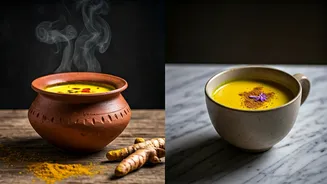
The conversation gained significant traction thanks to Smidha, an Indian woman residing in Australia, who shared her observations on Instagram about the contrasting perceptions of Indian traditions globally. She articulated a sentiment that resonated deeply within the Indian diaspora: the discomfort of seeing familiar customs rebranded and marketed to the West. Smidha pointed out the stark difference in how certain practices are treated domestically versus their reception abroad. A prime example she highlighted was the popular 'turmeric latte,' a beverage commanding premium prices in Australian cafes. She reminisced about her childhood, where 'haldi doodh' (turmeric milk), made with the same ingredients and offering the same comforting warmth, was something she and her siblings often avoided, deeming it unappealing. This vividly illustrates how identical items can be perceived and valued differently based on their cultural context and marketing.
From 'Old' to 'Gold'
Smidha further elaborated on this phenomenon by drawing parallels with handcrafted items, mentioning a handmade dupatta (a traditional Indian scarf) that likely went unnoticed in her home. She noted that this same item, imbued with cultural significance and artisanal craftsmanship, is now sold in Western boutiques for as much as $200. This led her to a poignant realization: "We don’t lose our culture to the West; we just stop seeing the value in it first." Her words struck a chord with many Indians living abroad, who shared similar feelings of estrangement from their own heritage until it was presented anew by external cultures. The sentiment, "We call it old-fashioned; they call it gold," encapsulates the collective experience of many, marking a moment of reawakening to the inherent worth of their traditions and prompting a reevaluation of what they once dismissed as outdated.
Digital Echoes of Pride
The online response to Smidha's insights was overwhelmingly affirmative, with social media users readily sharing their own experiences and observations. A common theme in the comments was the realization that the true value of one's culture often becomes apparent only when it is presented in an appealing or novel way by others. One user perfectly encapsulated this, stating, "This is so true. We realise the value of our culture only when someone else packages it beautifully." The haldi doodh-to-turmeric latte transformation was frequently cited as the quintessential example of this trend. Many expressed a sense of nostalgia and pride, with one commenter observing, "Our grandmothers knew everything before it became a wellness trend." This collective sentiment highlighted a renewed appreciation for traditional wisdom and a sense of vindication in seeing ancestral practices gain global recognition and acclaim, fostering a deeper connection to their origins.