




Eclipse Timing Insights
On March 3, 2026, skygazers in India will have the opportunity to witness the year's inaugural lunar eclipse, also known as Chandra Grahan. This astronomical
event requires no special equipment, just a clear view of the evening sky. For many across the nation, it will present a brief yet captivating moment to look upwards. The eclipse's phases, according to Indian Standard Time, are as follows: the penumbral phase begins at 4:58 PM IST, with the start of totality occurring simultaneously at 4:58 PM IST. The peak of the total eclipse will conclude at 5:32 PM IST, and the penumbral phase will finally end at 7:53 PM IST. However, a crucial detail for Indian observers is that the Moon will already be in an eclipsed state as it rises. Consequently, only the latter portion of the eclipse will be observable. The most significant phase for viewers in India is anticipated around sunset, with an estimated visible window lasting approximately 20 minutes as the Moon gradually emerges from Earth's shadow. This means staying up late is unnecessary; a step outside around dusk to gaze at the rising Moon will be sufficient.
Visibility Across Cities
Data from Time and Date indicates that several northeastern cities will experience the full glory of the total lunar eclipse, featuring 100 percent obscuration of the Moon. For instance, in Dibrugarh, Assam, the eclipse begins at 14:14 IST, reaches its maximum at 17:11 IST, and concludes at 19:53 IST, with a total duration of 3 hours, 27 minutes, and 8 seconds. Similarly, Dispur, Assam, and Guwahati, Assam, will witness 100 percent obscuration, with the maximum eclipse occurring at 17:25 IST, and the same overall duration. Itanagar in Arunachal Pradesh also sees 100 percent obscuration, with its maximum at 17:17 IST. Shillong, Meghalaya, will experience its peak at 17:25 IST, with totality lasting for the same extended period. These locations are highlighted for offering complete coverage during the total phase, as evidenced by the 100 percent obscuration figures.
Understanding Lunar Eclipses
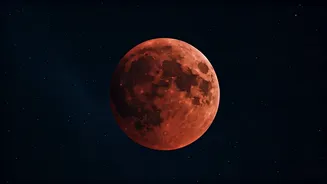
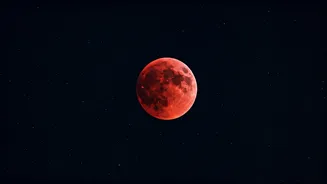
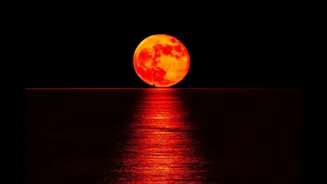
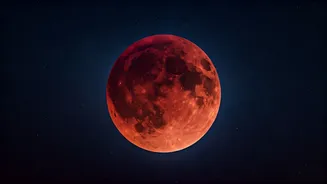
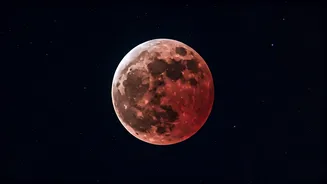
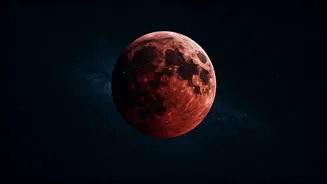
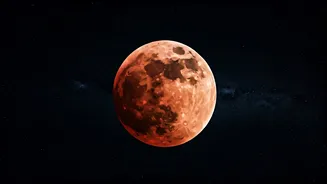
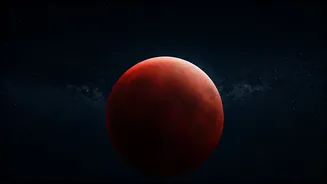
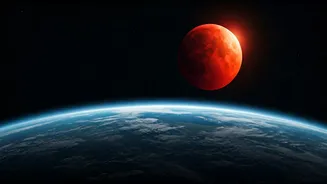
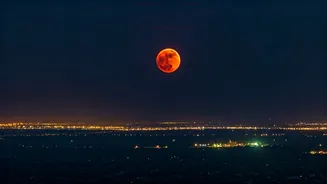
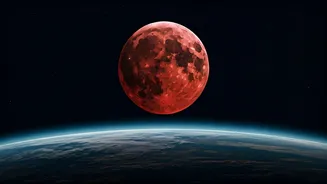
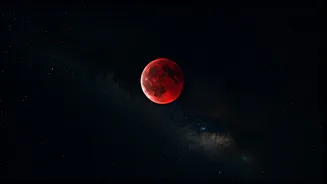
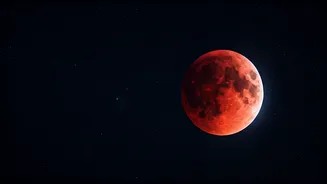
A lunar eclipse occurs when the Earth positions itself directly between the Sun and the Moon, casting its shadow upon the lunar surface. This alignment causes the Moon to appear dimmer than usual, and in some instances, it may even take on a reddish hue, often referred to as a 'blood moon.' Lunar eclipses are relatively frequent occurrences, happening a few times each year. However, not all of these celestial events are visible from every part of the globe, making the March 3, 2026, eclipse a noteworthy occasion for those in India.
Viewing the Eclipse
Observing a lunar eclipse is an uncomplicated affair. Unlike solar eclipses, which necessitate specialized protective eyewear, lunar eclipses are entirely safe to view with the naked eye. As long as the sky is clear, one can simply step outside and direct their gaze towards the Moon. While binoculars can offer a more magnified perspective and enhance the viewing experience, they are by no means essential. Even without any optical aids, the noticeable alteration in the Moon's appearance during the eclipse will be readily apparent. As March draws nearer, this date is one that many amateur astronomers and casual skywatchers will want to mark. Although the visible portion may be brief, sometimes even a fleeting glimpse of the cosmos can be a truly special and memorable experience.