





A Silk Legacy Unfolds
An extraordinary four-day exhibition has opened its doors in Bengaluru, presenting a magnificent collection of 105 silk saris. This event is a vibrant
celebration of South India's deep-rooted connection to the iconic six-yard garment. Far from becoming obsolete, the sari continues to be a beloved textile, evolving with contemporary tastes while holding onto its historical essence. The exhibition aims to dispel any notions of its decline, instead emphasizing its persistent relevance and the enduring passion it ignites. As a testament to this, the brand hosting the event marks its 105th anniversary, underscoring its century-long journey in preserving and promoting silk weaving traditions. The curated collection, aptly named the “Royal 105,” serves as a tribute to this enduring legacy and the artistry involved in creating these exquisite drapes. The event seeks to immerse visitors in the intricate world of silk weaving, showcasing the craftsmanship passed down through generations.
Artistry in Every Thread
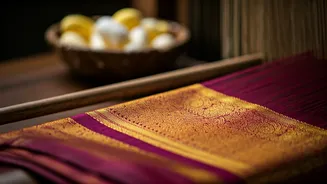
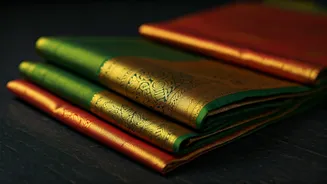
The 'Royal 105' collection draws profound inspiration from the opulent heirloom saris once cherished by the royal family of Mysuru. This meticulously curated selection features a diverse range of silk weaves, including the resplendent Kanjeevarams, the delicate Mysore crepe, and the intricately patterned Banarasis, all newly crafted specifically for this commemorative occasion. Organizers liken the exhibition experience to visiting an art exhibit, but with saris as the focal point of artistic expression. The Kanjeevarams on display are particularly striking, adorned with a rich tapestry of traditional motifs. These designs, such as the mythical ganda berunda (a two-headed eagle), the majestic yali (a legendary creature), and the delicate kuyilkan (resembling a cuckoo's eye), transform the saris into stunning canvases for creative experimentation. One vividly colored Kanjeevaram, woven from Karnataka silk and pure gold zari, exemplifies this artistry, featuring classic motifs like the 'annapakshi' (celestial swan), 'kuthare' (horse), and elephants, demonstrating the saries' potential as wearable art.
Reviving Lost Techniques
The creation of this remarkable collection involved an extensive journey into the past, delving into over 100 years of design history. The saris presented showcase not only designs painstakingly revived from older, perhaps forgotten, weaving techniques but also offer fresh, contemporary interpretations of traditional weaves. This ambitious project demanded considerable effort, including poring over old photographs and ledgers, reaching out to family members and long-standing patrons to borrow precious heirloom saris, and reconnecting with master weavers who were instrumental in creating the original pieces decades ago. A particularly poignant aspect of this endeavor was the recreation of a 60-year-old sari for the Mysuru royal family. This task held special significance as the weaver commissioned for its revival was the grandson of the original artisan. His father had previously worked on a similar creation for the brand years ago, making this a full-circle moment that spanned generations for both the brand and the weaving family. The project also focused on reviving specific weaving techniques, such as the 'korvai' or 'kuttu' Kanjeevaram, where the body and border are woven separately and then hand-interlocked on the loom. Additionally, Kanjeevaram tissue saris, distinguished by their fine metal threads interwoven with silk, were recreated. These processes are inherently time-consuming, labor-intensive, and costly, contributing to their decline, but their recreation for the exhibition underscores their critical importance in the region's textile heritage.
A Glimpse into Retail Evolution
Collaborating on this project as a researcher provided a unique perspective on the evolution of retail culture itself, as observed by Ahalya ‘Ally’ Matthan, the founder of Registry of Sarees. The brand's trajectory mirrors Bengaluru's own growth as a retail hub, transitioning from its origins as a store in the traditional 'pete' market to establishing a presence in the bustling commercial district of MG Road, and ultimately expanding into the multi-format retail spaces prevalent in the city today. An especially captivating discovery during the research was an old ledger dating back to 1920, filled with handwritten vendor invoices. This manual record-keeping stands in stark contrast to the sophisticated digital accounting software used universally today. While seemingly minor, these fragments—bills, invoices, tickets, and photographs—collectively function as living archives for a brand. However, this crucial aspect of historical documentation often goes overlooked in the country. Recognizing this gap, the brand has initiated a more diligent approach to documentation across all its departments. This includes capturing details from commercial photoshoots, marketing campaigns, and production processes. The objective is to document the entire lifecycle of a sari, from the initial yarn color selection and design conception to the final weave, in close collaboration with their network of weavers. The long-term aspiration is to cultivate an archive that serves as a comprehensive memory box of this era, offering a valuable lesson for legacy silk textile brands aiming to remain relevant by meticulously recording their unfolding history.