





Ideal Growing Conditions
Cultivating these sweet, water-rich fruits is a rewarding endeavor, perfect for hot Indian summers. Muskmelons, which are approximately 90% water, thrive
in warmth and require ample sunlight to transform starches into sugars, ensuring their characteristic sweetness and aroma. For best results, aim to sow seeds between late February and April. The ideal temperature range for their growth is between 25°C and 35°C. Planting during the monsoon or colder months can lead to melons that are watery and lack the desired fragrance and sweetness. Therefore, choosing the right season is paramount for a successful and flavorful harvest.
Space-Saving Cultivation
You don't need sprawling farmland to enjoy homegrown muskmelons. Even with limited space, successful cultivation is achievable. If you have a backyard, provide the sprawling vines with four to six feet of ground space to spread out naturally. For those with balconies, vertical gardening is the solution. Utilize large pots, at least 12 to 15 inches deep, and install a wooden frame or trellis. This structure will encourage the vines to grow upwards, maximizing your growing area and keeping the fruit off the ground. This method is not only space-efficient but also aids in managing the plants as they develop.
Planting and Care Steps
Successful muskmelon growth begins with proper preparation and consistent care. First, enrich your soil by mixing in compost or well-aged cow manure to provide essential nutrients, giving your plants the energy needed to produce substantial fruits. When planting, create holes about an inch deep using your knuckle. Place 2-3 seeds in each hole, ideally near the root tip. Once seedlings emerge and reach a few inches in height, select the strongest one and snip away the weaker ones to ensure optimal growth. Water the soil directly, avoiding the leaves, as wet foliage can lead to powdery mildew, a common fungal issue appearing like spilled flour on the leaves. Maintain moist soil, but prevent it from becoming waterlogged. As the melons grow heavier on vertical supports, use old netting or soft cotton fabric to create slings, supporting the fruit and preventing the vine from breaking under its weight.
The Crucial Slip Test
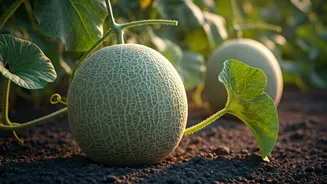
A common pitfall for novice growers is harvesting muskmelons prematurely, impacting their flavor and texture. Recognizing the signs of ripeness is key to enjoying the best possible fruit. One significant indicator is the change in skin color; the area beneath the characteristic 'webbing' will transition from green to a light tan or yellowish hue. Another vital sign is the aroma. Gently smell the stem end of the melon. A ripe fruit will emit a sweet, distinct perfume. Finally, the definitive 'slip test' involves applying gentle pressure with your thumb to the stem. If the stem detaches with a soft 'pop,' the melon is perfectly ripe and ready for harvest. If you find yourself needing to pull hard or use a knife, it's still too early.