




Ancestral Fire & Healing
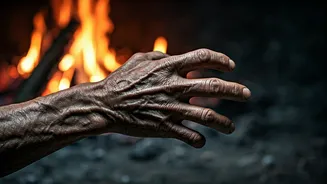
For millennia, humans have coexisted with fire, a relationship that may have deeply influenced our evolutionary trajectory. While most animals shun flames,
humanity learned to harness its power for warmth, cooking, and toolmaking. This intimate dance with fire, however, came with inherent risks, leading to frequent minor burns. Scientists posit that this constant exposure to heat, a unique aspect of human experience, likely acted as a powerful selective pressure. Individuals whose bodies were better equipped to manage and recover from these injuries would have had a survival advantage. This repeated evolutionary challenge might explain distinct biological adaptations in humans, particularly concerning skin repair and the body's inflammatory responses, setting us apart from other species and potentially laying the groundwork for our complex biological systems today.
Evolutionary Fire Adaptation
A pivotal study suggests that our evolutionary journey was significantly impacted by consistent exposure to burn injuries. Researchers hypothesize that natural selection favored humans with enhanced abilities to recuperize from minor to moderate burns. Burns are particularly perilous as they compromise the skin, our primary defense against pathogens. Prolonged breaches in this barrier invite infection. The study proposes that this ongoing threat spurred the evolution of accelerated inflammation, swifter wound closure mechanisms, and heightened pain perception in humans. These adaptive traits would have been crucial for minimizing further harm and preventing rampant infections in our ancestors. While beneficial for smaller injuries, these very same evolutionary adaptations might explain the severe reactions, excessive inflammation, and organ failure observed in critical burn cases today, suggesting ancient responses ill-equipped for massive trauma.
Genetic Echoes of Fire
To substantiate their theory, researchers meticulously analyzed human genetic data, juxtaposing it with that of other primates. Their findings revealed that genes associated with wound healing, immune system function, and inflammation have undergone more rapid evolution in the human lineage compared to our closest relatives. These genetic divergences are thought to underpin specific human skin characteristics, such as its notable thickness and the deeper placement of sweat glands. This evolutionary perspective offers a compelling explanation for persistent challenges in burn treatment, suggesting that treatments derived from animal models might be less effective due to these fundamental biological differences shaped by ancestral fire exposure. The research also hints at future avenues for understanding individual variations in burn recovery, with genetic predispositions potentially explaining why some individuals heal swiftly while others face prolonged complications.