







Caterpillar Cuisine
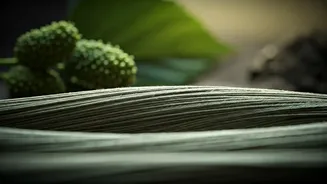
The tactile experience of silk begins with the silkworm's diet, a crucial factor dictating the thread's final character. Mulberry silk, the smooth, almost
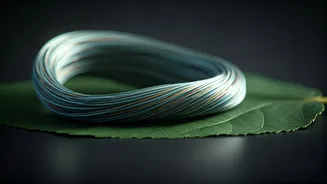
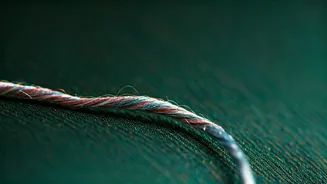
frictionless fabric often found in mass-produced garments, is spun by the Bombyx mori silkworm. These silkworms are carefully cultivated in controlled indoor environments, exclusively fed mulberry leaves. This monotonous diet results in a continuous, perfectly uniform, and round filament, yielding silk that possesses an unparalleled smoothness and a 'liquid glass' feel. In stark contrast, the caterpillars responsible for what are known as Vanya silks, such as Tussar, Muga, and Eri, are wild foragers. They thrive in open forest settings, consuming a diverse range of leaves including oak, castor, and juniper. This varied and nutrient-rich diet, replete with tannins, significantly influences the protein structure of the silk they produce. The resulting threads are typically shorter, thicker, and exhibit considerable irregularity. This natural variation is precisely what imparts raw, wild silk with its characteristic rich, breathable, and almost linen-like texture, often described as 'slubby'.
Silk's Terroir
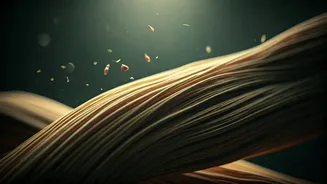
Just as fine wines carry the imprint of their geographical origin, or 'terroir,' silk also possesses unique characteristics influenced by its environment. Silk is fundamentally composed of two primary proteins: fibroin, which forms the solid core of the thread, and sericin, a sticky gum that binds the filament together. The ambient climate where the cocoon is spun profoundly affects how these proteins develop and interact. For instance, the humid, heavy atmosphere of Assam encourages local silkworms to spin Muga silk. This silk naturally develops exceptional tensile strength and a distinctive, lustrous golden sheen, adaptations to survive in its specific environment. Conversely, the dry, arid heat prevalent in regions like Chhattisgarh and Bhagalpur, in the central Indian belt, leads to the production of Tussar silk. Silk from these arid areas tends to be highly porous, effectively trapping air. This porous nature makes Tussar silk an excellent natural insulator, providing a crisp feel in cooler weather and a wonderfully airy sensation during intensely hot summers, much like those experienced in Delhi.
The Human Weave
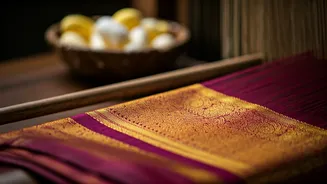
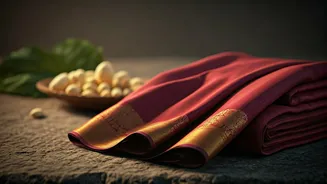
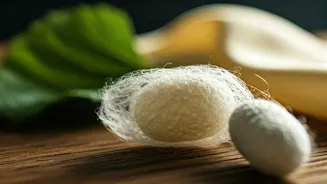
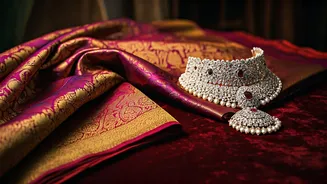
Before silk fibers can be transformed into fabric, they undergo a boiling process to remove the sericin gum that holds the cocoon together. The degree to which this gum is stripped away significantly impacts the final textile's feel. Manufacturers aiming for a commercially appealing, highly drapey, and limp fabric often aggressively boil the silk, removing almost all traces of sericin. However, skilled regional weavers possess a nuanced understanding of silk's properties. They deliberately leave a specific proportion of the natural sericin gum intact during the boiling process. This intentional retention of sericin is the key to achieving the characteristic crispness, almost paper-like stiffness, and the architectural volume found in many traditional and heritage silk weaves. Furthermore, the tension applied during the weaving process plays a crucial role. Mechanical power looms operate with relentless, uniform tension, resulting in a perfectly flat and consistent fabric surface. In contrast, handlooms are operated by human hands, introducing a natural rhythm and subtle inconsistencies. A human weaver artfully incorporates microscopic pockets of air into the weave, bestowing the finished textile with a softer drape and an organic, yielding texture. Therefore, when you encounter a handwoven silk, you are appreciating more than just threads; you are experiencing a material woven with a history of varied diets, local climates, and the inimitable touch of human craftsmanship.