






Cactus' Nighttime Bloom
The Night-Blooming Cereus stands out as a group of cacti renowned for their spectacular, yet fleeting, nocturnal flowers. Some of these species grace the world
with their blooms for a single evening, transforming a rare sighting into a truly memorable experience. These pale, often white blossoms are perfectly evolved for pollination by night creatures, typically wilting and disappearing before the first light of dawn. This ephemeral beauty is a testament to nature's intricate timing and specialized reproductive strategies, ensuring these unique cacti continue their legacy under the cover of darkness, captivating moths and other nocturnal visitors with their allure.
Elegant Moonflower Vine
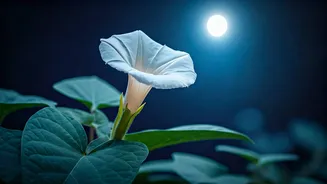
Ipomoea alba, commonly known as the Moonflower, is a vigorous vine that captivates with its large, fragrant white flowers. These blossoms begin to unfurl as dusk settles and gracefully close with the arrival of morning. Their luminous white petals are particularly striking when illuminated by moonlight, making them a quintessential choice for any moon garden. The Moonflower's appeal lies not only in its visual splendor but also in its role as a beacon for night-feeding moths, drawing them in with its delicate scent and inviting appearance, thus playing a crucial part in the nocturnal pollination cycle.
Primrose's Evening Show
The Evening Primrose earns its name by opening its delicate flowers in the early evening, allowing them to remain open throughout the night before fading the following day. This precise timing is a clever adaptation, ensuring that nocturnal pollinators can easily access the nectar offered. With blooms often appearing in soft yellow or delightful pink hues, the Evening Primrose adds a gentle, persistent beauty to gardens specifically designed to be appreciated in the twilight and nighttime hours, providing a vital food source for creatures of the dark.
Four O'Clock's Delight
True to their name, Four O'clocks begin to open their flowers late in the day, continuing to bloom vibrantly all through the night. These plants boast a spectrum of fragrant and colorful blossoms that act as a magnet for moths, which are particularly active visitors after sunset. Renowned for their ease of cultivation, Four O'clocks are an excellent choice for gardeners seeking to introduce a burst of vivid color that reliably appears just as the sun dips below the horizon, extending the garden's visual appeal well into the darkness.
Tuberose's Perfumed Night
Tuberose is highly esteemed for its waxy white flowers, which emit a powerful and intoxicating fragrance that intensifies after dark. This potent nocturnal scent is a primary reason for the plant's widespread use in the creation of perfumes and its inclusion in traditional ceremonies. Its remarkable ability to release a strong aroma in the absence of sunlight makes it a cornerstone of any classic night garden, providing an olfactory experience that is both unique and deeply enchanting, drawing in pollinators with its potent perfume.
Night Phlox's Sweetness
Often referred to as 'midnight candy', Night Phlox is cherished for the delectably sweet and noticeable fragrance its flowers release after dark. This charming plant is consistently featured among garden selections designed for nighttime appeal and is frequently incorporated into moon garden designs. Despite the relatively small size of its individual flowers, their strong and pervasive scent ensures they make a significant olfactory impression in the evening air, creating a delightful sensory experience for those who linger outdoors after sunset.
Jasmine's Evening Aroma
Cestrum nocturnum, commonly known as Night-Blooming Jasmine, exhibits a fascinating characteristic: its flowers unfurl exclusively at night, releasing an intensely sweet and pervasive fragrance. This plant is celebrated for the remarkable potency of its scent, which becomes particularly pronounced after dusk, effectively attracting night-flying insects. It stands as one of the most well-recognized and cherished fragrant plants for gardens designed to be enjoyed and admired during the evening hours.
Dragon Fruit's Grandeur
The dragon fruit plant presents the world with magnificent, highly fragrant flowers that are exclusively nocturnal in their blooming cycle. These substantial and impressive blossoms open under the cloak of night, serving as a critical food source and attraction for nighttime pollinators. Following successful pollination, these same flowers develop into the delectable dragon fruits we recognize. Their sheer size and striking beauty often make the flowers themselves one of the plant's most captivating features, offering a visual spectacle as impressive as the fruit they eventually produce.